

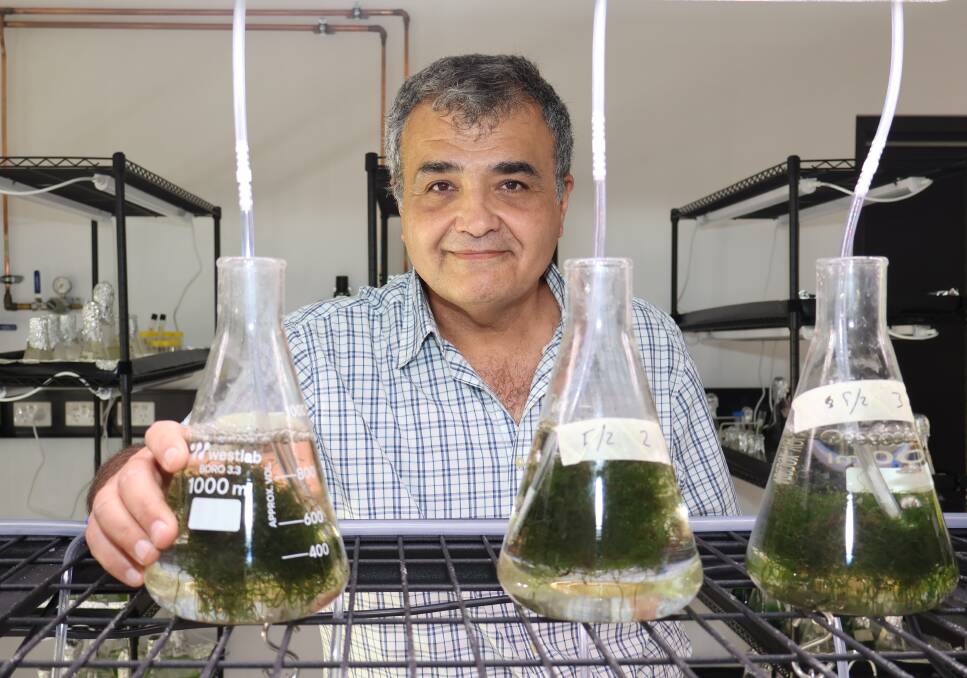

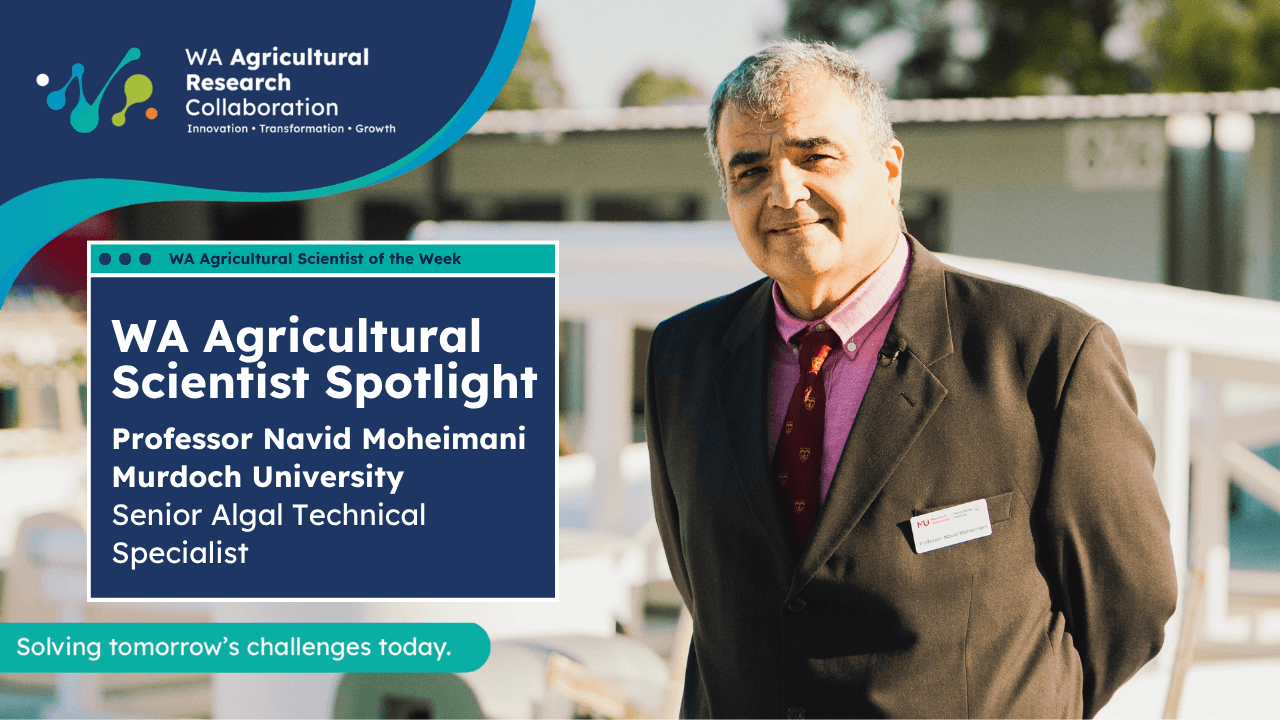
Every fortnight, the WA Agricultural Scientist Spotlight shares the stories of the people helping shape Western Australia’s agricultural future, highlighting their career journeys, research achievements and the ideas driving progress across the sector.
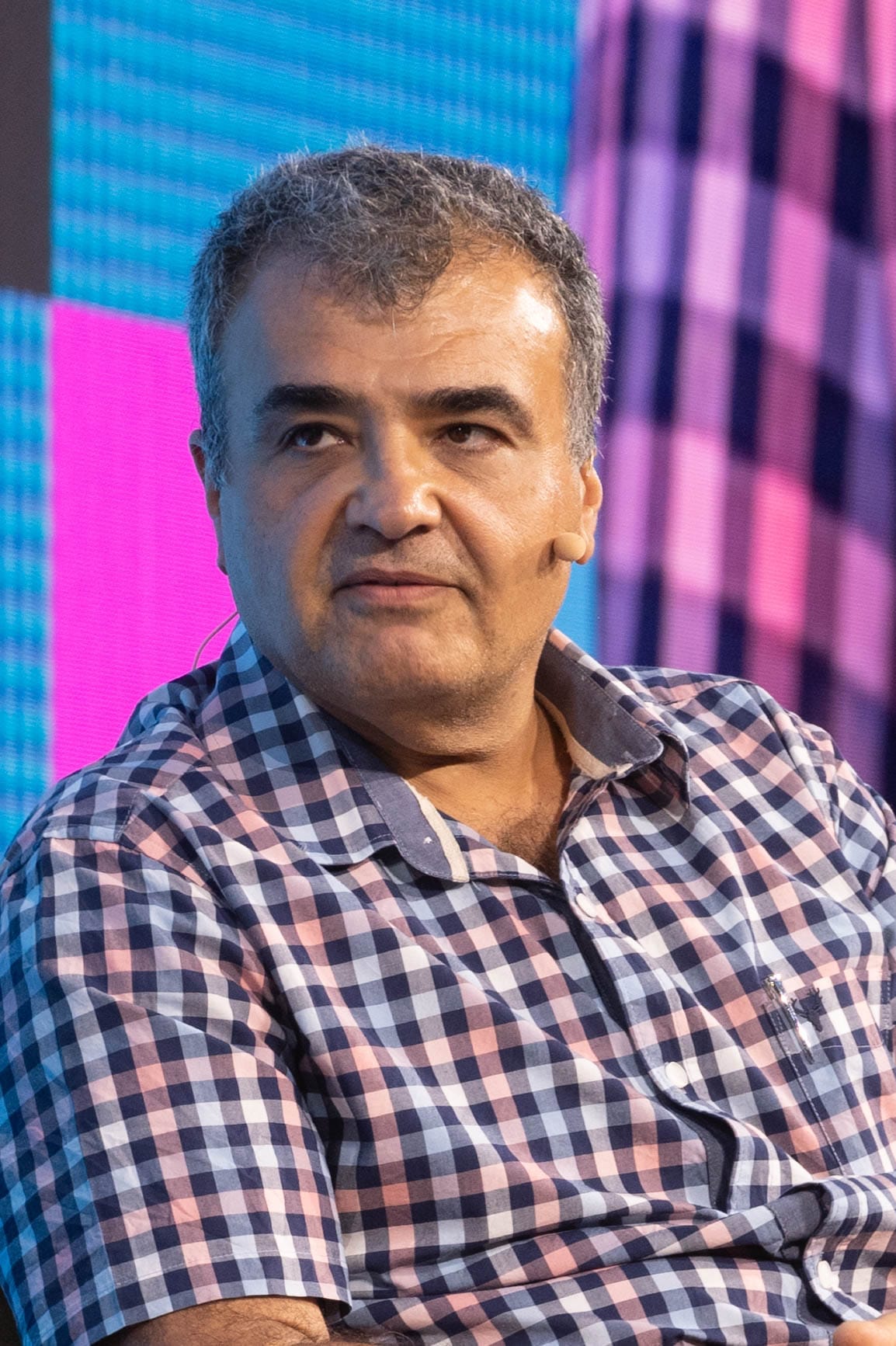
This edition features Professor Navid Moheimani, Senior Algal Technical Specialist at Murdoch University, whose career has been built around turning algae into practical solutions for farming, food production and regional industry.
Across decades in research, industry and commercial development, Prof Moheimani has worked to demonstrate that microalgae can do far more than exist in laboratories.
His work has shown they can treat waste streams, create valuable new products, reduce environmental pressure and help agriculture make better use of land and water resources.
A career shaped by science and problem-solving
Prof Moheimani’s pathway into agricultural science began through biology rather than traditional farming systems.
Early in his career, he was drawn to the potential of microalgae to produce niche, high-value agricultural products that traditional farming systems often struggle to supply efficiently or sustainably.
That interest grew as he recognised the efficiency of microalgae as production systems.
“As my work in applied phycology developed, it became clear that microalgae offer a uniquely versatile biological platform,” Prof Moheimani said.
“They grow rapidly, thrive in saline or marginal environments and can convert low-value inputs, including agricultural waste, into valuable outputs.”
Those qualities convinced him that algae could help agriculture address emerging pressures around sustainability, productivity and resource use.
His formal studies began in microbiology, where he completed undergraduate and postgraduate qualifications before broadening into biotechnology, food science and environmental science.
That interdisciplinary training later became a strong foundation for applied agricultural research.
He eventually moved to Murdoch University to complete a PhD in Applied Phycology, focused on long-term outdoor cultivation systems for carbon dioxide bioremediation.
“During my PhD, I recognised the extraordinary potential of microalgae to address sustainability challenges linked to agriculture, nutrient management and circular resource use,” Prof Moheimani said.
“My training across microbiology, biotechnology, food science and environmental science positioned me well to work at the intersection of biology, engineering and agriculture.”
Rather than specialising in a single discipline, he developed a career model built on connecting fields that are often treated separately.
Bridging research and industry
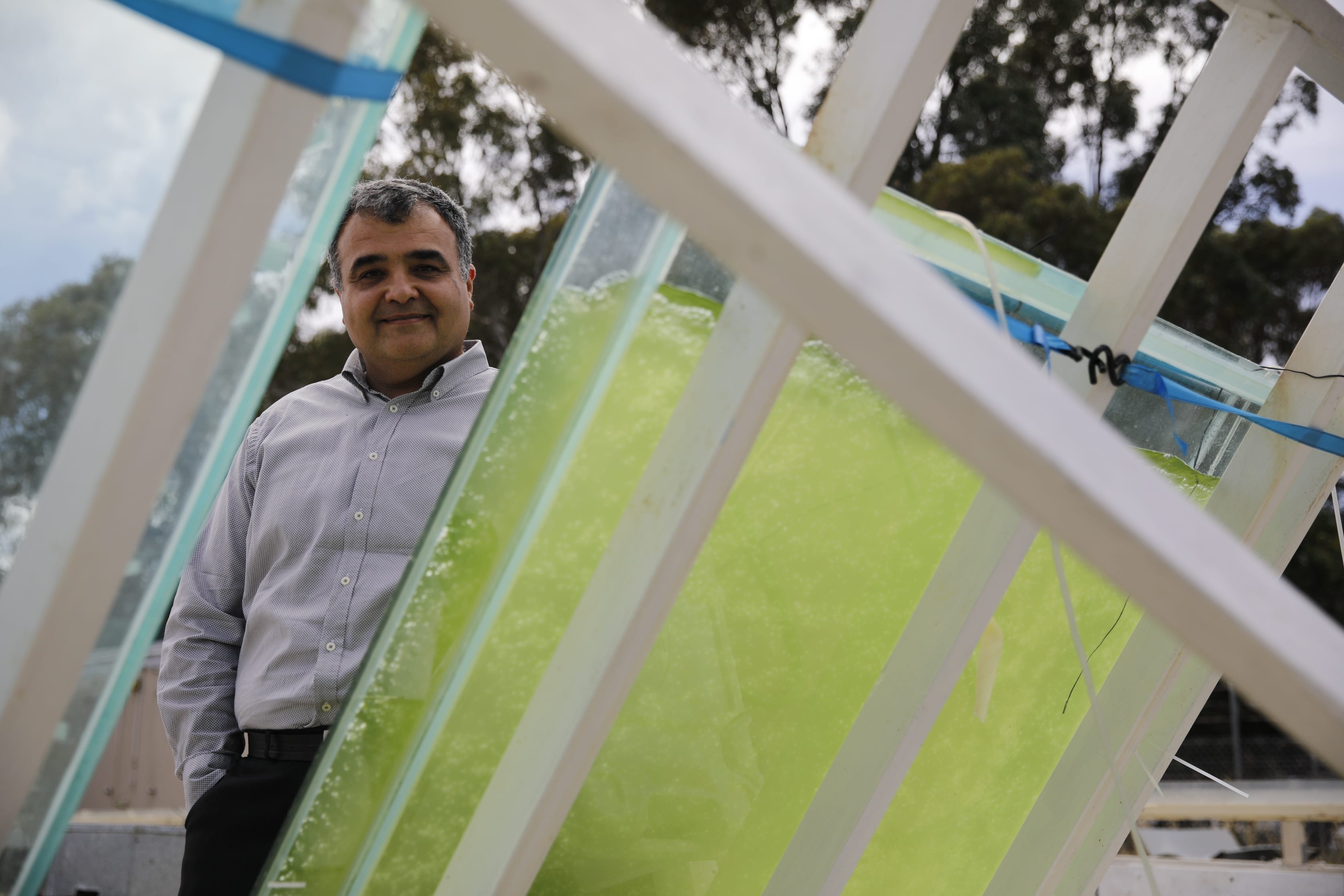
After completing his PhD, Prof Moheimani spent several years in industry working on large-scale algal biomass systems.
That period gave him practical experience in process optimisation, engineering constraints and the realities of commercial production.
“This combination of scientific and industrial experience has strongly shaped my applied, solution-focused approach to agricultural research,” he said.
Prof Moheimani’s career has consistently focused on using algae to add value to agricultural and industrial systems.
He served as Chief Scientist at Biofuels Pty Ltd, contributing to industrial-scale photobioreactor development and algal biomass production, before leading biological research on one of Australia’s earliest pilot-scale integrated algal cultivation projects in the Pilbara.
Later, he became Director of Murdoch’s Algae Research and Development Centre, where he led programs in wastewater treatment, nutrient recovery, saline microalgal cultivation and high‑value bioproduct development for the agricultural sector.
Most recently, Prof Moheimani led the establishment of Murdoch’s spin-off company, Algae Harvest, which was created to commercialise innovations in algal cultivation, waste-to-profit systems and nutrient recovery.
Alongside that, he leads Murdoch’s Algae Innovation Hub, a dedicated facility focused on pilot-scale systems, industry partnerships and advanced bioproduct development.

“Together, these roles allow me to bridge academia, engineering and commercialisation while working closely with agricultural industries across Australia and internationally,” Prof Moheimani said.
“My interest in agriculture has always been intertwined with my belief in algae as a transformative agricultural technology – one capable of reducing environmental footprints, improving productivity and opening new revenue streams for regional industries.”
Prof Moheimani’s current role combines scientific leadership, student supervision, commercial engagement and collaboration with industries looking for practical solutions.
A typical week involves balancing scientific leadership, industry engagement and commercial translation, ensuring research delivers tangible outcomes for Western Australia’s agricultural sector.
Turning constraints into productive systems
Prof Moheimani’s current research is centred on building agricultural systems that make productive use of resources often considered constraints, including wastewater, saline water and marginal land.
Rather than relying solely on conventional inputs, his work explores how algae can help convert underused resources into valuable outputs while reducing environmental pressure.
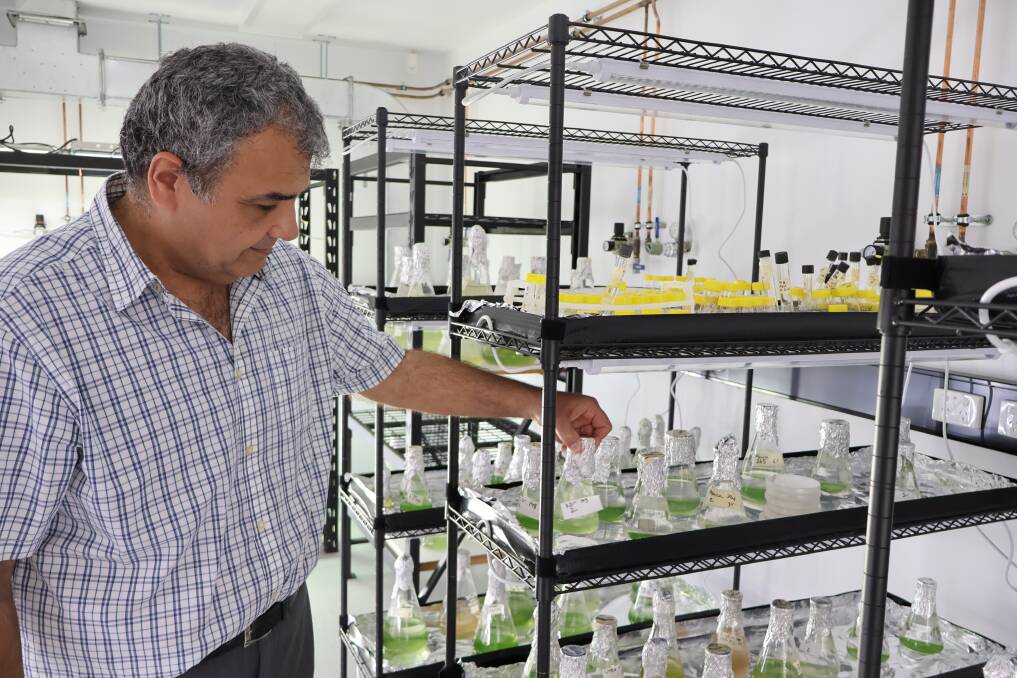
His team is investigating how microalgae can be used to treat agricultural and food-processing wastewater while simultaneously producing commercially useful biomass.
From that biomass, researchers can extract high-value compounds such as heme, fucoxanthin, omega-3 oils and phytosterols, while also creating feed, fertiliser and energy products.
“A major focus is designing integrated saline algae biorefineries that fully utilise algae grown on brackish or reject water, extracting high-value products, producing feed and fertiliser fractions, recovering energy and recycling nutrients,” Prof Moheimani said.
The model reflects a broader shift toward circular production systems, where waste streams become inputs, nutrients are recovered and new revenue opportunities can be created alongside existing agricultural enterprises.
For Prof Moheimani, that practical transition is one of the most satisfying parts of the job.
“The most rewarding aspect is seeing research translated into real-world agricultural solutions, systems that reduce waste, lower emissions, generate new income streams and strengthen regional communities,” he said.
That impact is already being seen through the trial and adoption of algal technologies in piggeries, abattoirs and wastewater facilities across Australia, where operational waste can be redirected into more productive use.
“Knowing that our algal technologies are being trialled and adopted in piggeries, abattoirs and wastewater facilities across Australia is particularly fulfilling,” Prof Moheimani said.
“I’m motivated by helping agriculture transition toward circular, low-waste, high-value production models.”
The work is particularly relevant in Western Australia, where salinity and limited water availability remain long-term challenges across many agricultural regions.
In the Wheatbelt, systems capable of using brackish groundwater and salt-affected land could create new industries while complementing existing farming enterprises.
“My research supports the transition toward circular, resilient and water-efficient agricultural systems by transforming waste streams into valuable resources, reducing reliance on freshwater, recovering nutrients and capturing carbon,” Prof Moheimani said.
Prof Moheimani also sees broader potential in renewable energy pathways that do not compete with food production.
By producing biofuels from saline microalgae on non-arable land, these systems could reduce pressure on farmland and freshwater currently used elsewhere for energy crops.
“In WA, the Pilbara region is particularly well suited to this approach, offering world-class solar resources, saline water and non-arable land that enable biofuel production from microalgae while avoiding competition with agricultural land and freshwater resources,” he said.
Backing the next generation of innovators
While Prof Moheimani’s research has delivered practical outcomes for industry, he has also contributed to the next generation of scientists.
“I am most proud of mentoring more than 30 PhD students who are now contributing to agriculture, biotechnology and environmental science,” he said.
That commitment continues through current students developing practical biological solutions for industry.
Among them is Ben Camer-Pesci, a participant in WAARC’s Postgraduate Research Scholarship Program, whose research is exploring seaweed-based approaches to dairy farm effluent management.
For students and early-career researchers, Prof Moheimani sees agriculture as a field where ideas from many disciplines can be brought together to solve increasingly complex problems.
“My advice is to embrace interdisciplinary thinking – modern agriculture increasingly intersects with engineering, environmental science, data analytics, chemistry and the resources sector,” he said.
“The most impactful solutions often emerge where traditional boundaries dissolve.”
That mindset is especially important as agricultural knowledge is applied in new contexts, including mine-waste treatment, water remediation, tailings management and post-mining land rehabilitation.
For Prof Moheimani, this broader application reflects a future where agriculture is increasingly connected to food, feed, carbon management, renewable fuels and environmental repair.
“Technologies like microalgae, once seen as niche, now sit at the centre of global strategies across food and feed production, carbon management, wastewater treatment, renewable fuels and environmental rehabilitation,” Prof Moheimani said.
Prof Moheimani’s career shows how applied science can open new possibilities for agriculture, from using waste and saline resources more productively to supporting future researchers.
His work reflects the kind of interdisciplinary thinking needed to help Western Australian agriculture become more resilient, resource efficient and globally relevant.
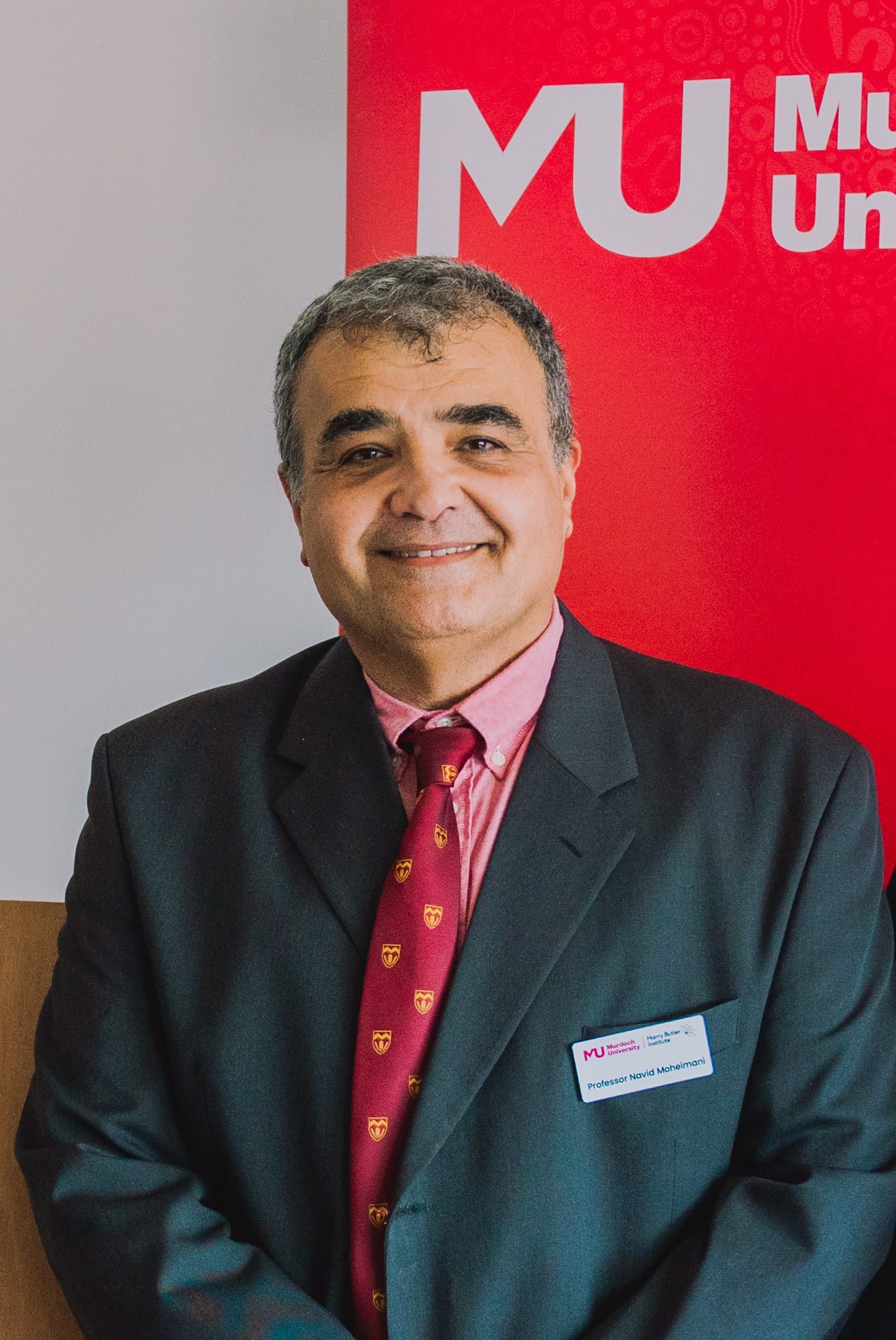
Through the WA Agricultural Scientist Spotlight series, WAARC celebrates the contributions of researchers like Navid Moheimani, whose work exemplifies the dedication and innovation needed to advance agricultural science in Western Australia.
By sharing their stories, the series aims to inspire a new generation to pursue careers in this vital field, ensuring the State remains at the forefront of agricultural research and sustainability.