

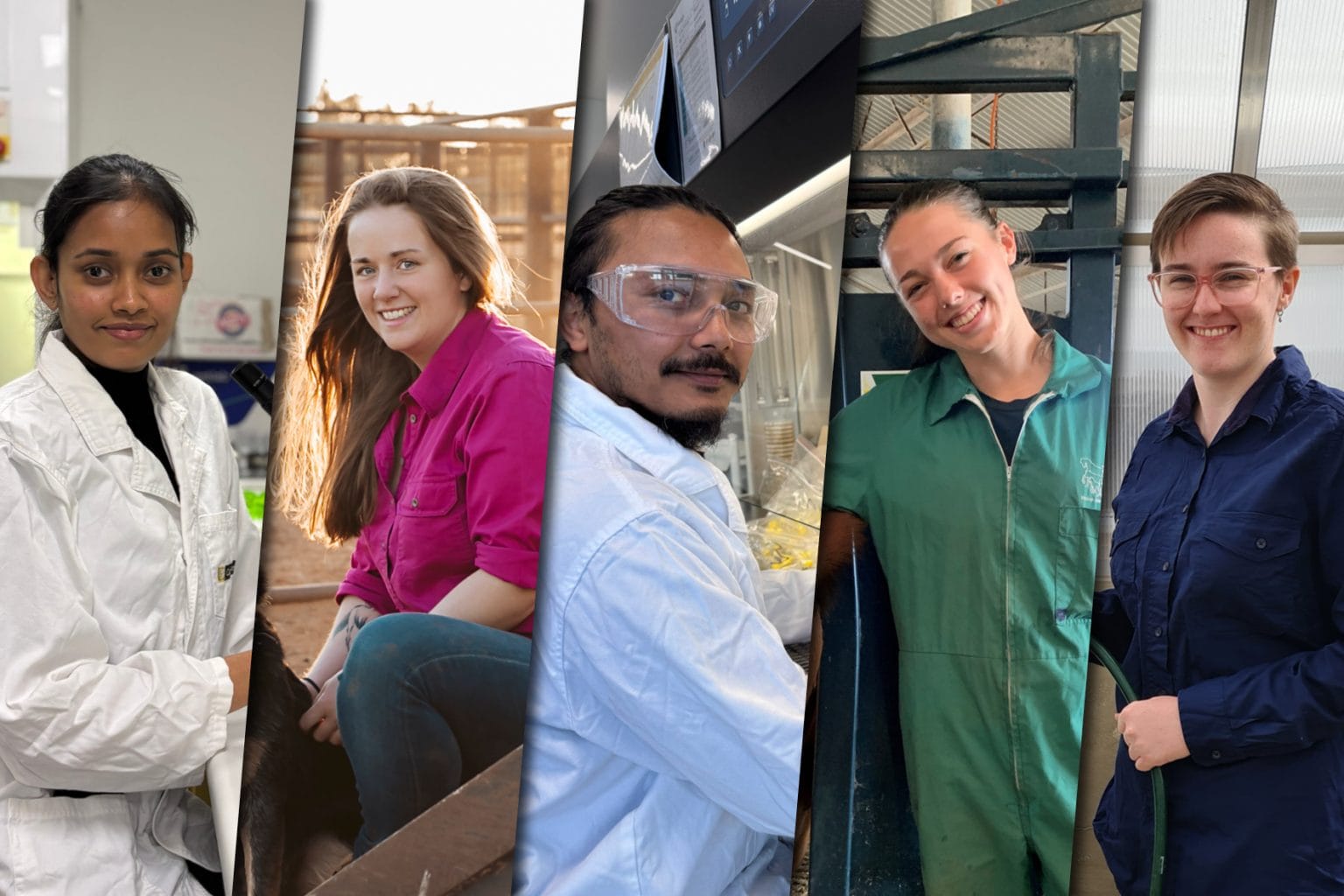

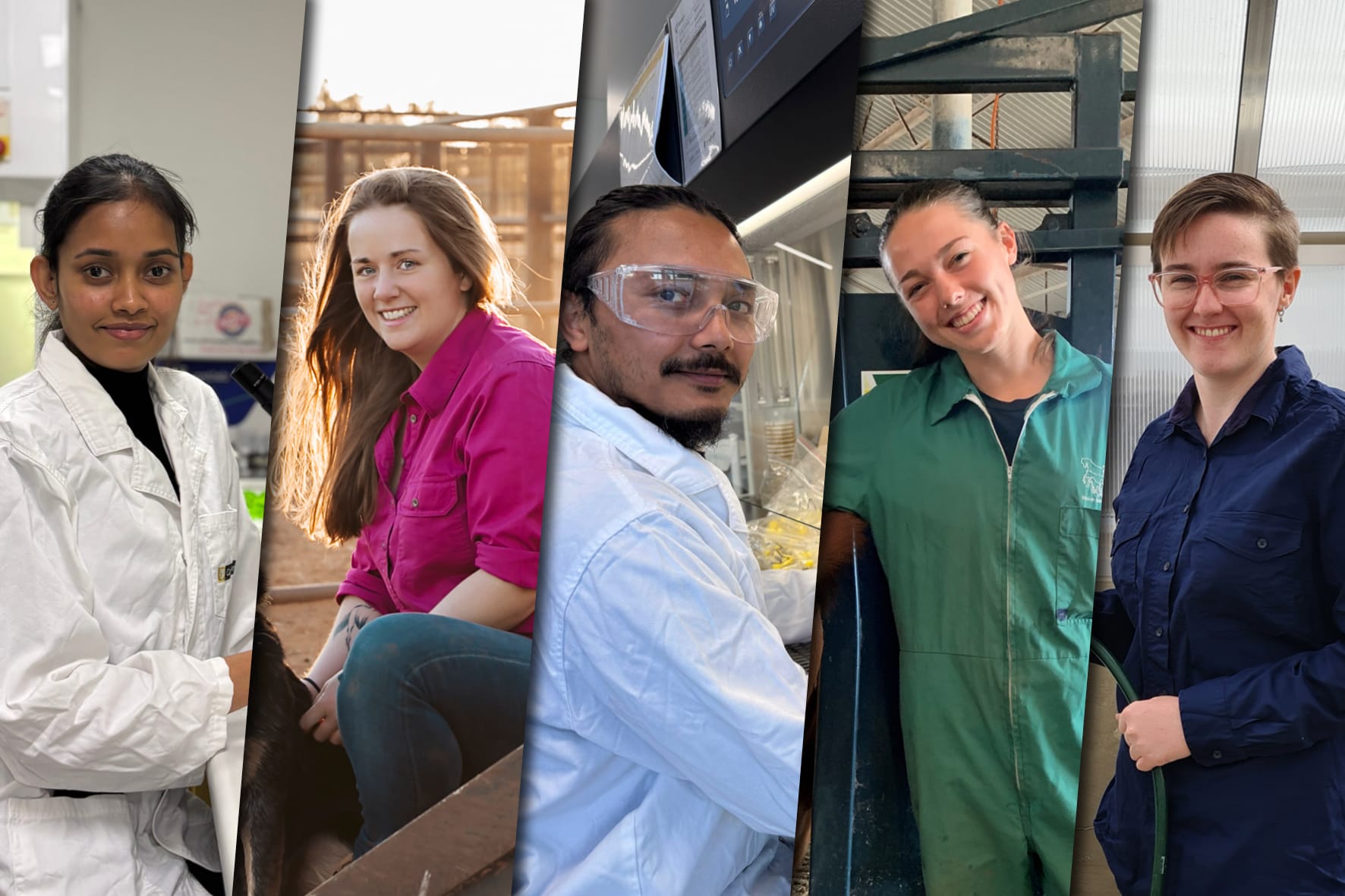
Five postgraduate students have showcased their research to industry leaders at the 2026 Young Professionals in Agriculture Forum, with the WA Agricultural Research Collaboration (WAARC) continuing its involvement in judging the event for the third consecutive year.
Hosted by the Ag Institute Australia (WA Division) in partnership with the Department of Primary Industries and Regional Development (DPIRD) on March 12, the annual forum provides a platform for early-career researchers to present their work, build confidence and strengthen connections with industry.
Following in the footsteps of WAARC Director Dr Kelly Pearce, WAARC Capacity Building and Extension Program Lead Jenny Crisp joined the judging panel, alongside DPIRD Research Scientist Beth Paganoni, assessing both the scientific merit of the research and communication skills of the presenting students.
Ms Crisp said the forum played an important role in strengthening the pipeline of future agricultural researchers in Western Australia.

“The Young Professionals in Agriculture Forum is a valuable opportunity for postgraduate students to develop their confidence in communicating research and to engage directly with industry and the agricultural research sector more broadly,” she said.
“As an organisation committed to building capacity across the agricultural RD&E sector, WAARC sees real value in supporting initiatives that help early-career researchers refine both their technical work and their ability to clearly articulate its relevance.”
Building capacity through communication and connection
The five young professionals presented research spanning animal health, crop protection and biological control, highlighting the breadth of innovation emerging from WA’s universities.
Ms Crisp said the judging process focused on both scientific rigour and the ability to connect research outcomes to real-world applications.
“We were looking for research projects with a clear and compelling rationale, appropriate methodology and strong analysis, alongside an understanding of how the work fits into the broader industry context,” she said.
“Equally important was the ability to communicate that research effectively, both in written form and through oral presentation.”
Recognising excellence in emerging research
Taking out first place overall and the Noel Fitzpatrick Medal was Murdoch University veterinary graduate Dr Ann-Katrin Wolf, who was also awarded joint best presentation.
Dr Wolf’s research investigated the effect of blood removal and prostaglandin F2α on blood cell and protein concentration in cattle.
Her research was a pilot study which provides insight into ways to reduce haemorrhaging after surgical spaying.
Results and future research could have particular relevance in field/remote animal production settings.
“Dr Wolf’s work stood out for its strong rationale, clear execution and direct relevance to industry challenges,” Ms Crisp said.
“It was also presented with a high level of clarity, making complex concepts accessible to a broad audience.”
Second place was awarded to Curtin University Master’s graduate Subash Gautam, whose research explored the expression and purification of the fungal enzyme ferrochelatase (FC) as a potential target for new fungicides.
Conducted through the Centre for Crop and Disease Management, the work demonstrated that FC could be successfully reproduced in the laboratory, laying the groundwork for future investigation into antifungal applications.
Third place overall, and joint winner of the best presentation prize, went to Murdoch University Honours student Chloe Elsegood.
Her research examined the potential of native ladybird species as a biological control for Russian wheat aphid, with early glasshouse findings showing successive generations of ladybirds can feed on the pest throughout their lifecycle.
Ms Crisp said the quality of research and presentations reflected the strength of Western Australia’s emerging agricultural science community.
“The calibre of this year’s participants highlights the depth of talent coming through WA’s universities and the important role these young professionals will play in addressing future challenges in agriculture,” she said.
WAARC’s continued involvement in the forum reflects its broader commitment to building research capacity, supporting early-career scientists and strengthening connections between research and industry across Western Australia.