


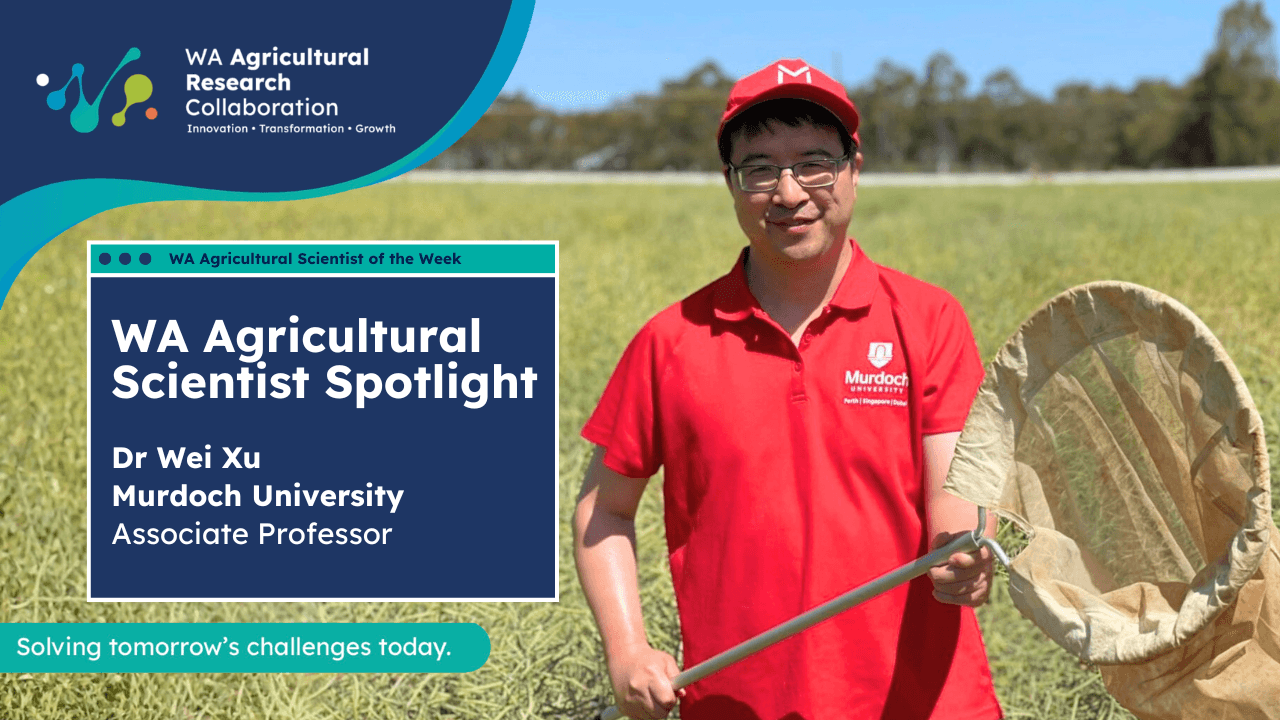
The WA Agricultural Scientist Spotlight series highlights the people behind Western Australia’s agricultural innovation – the researchers whose work is helping shape more productive, resilient and sustainable farming systems.
Each fortnight, the series explores the career journeys, motivations and research of leading agricultural scientists working across the state, offering insight into both the science itself and the people driving it forward.
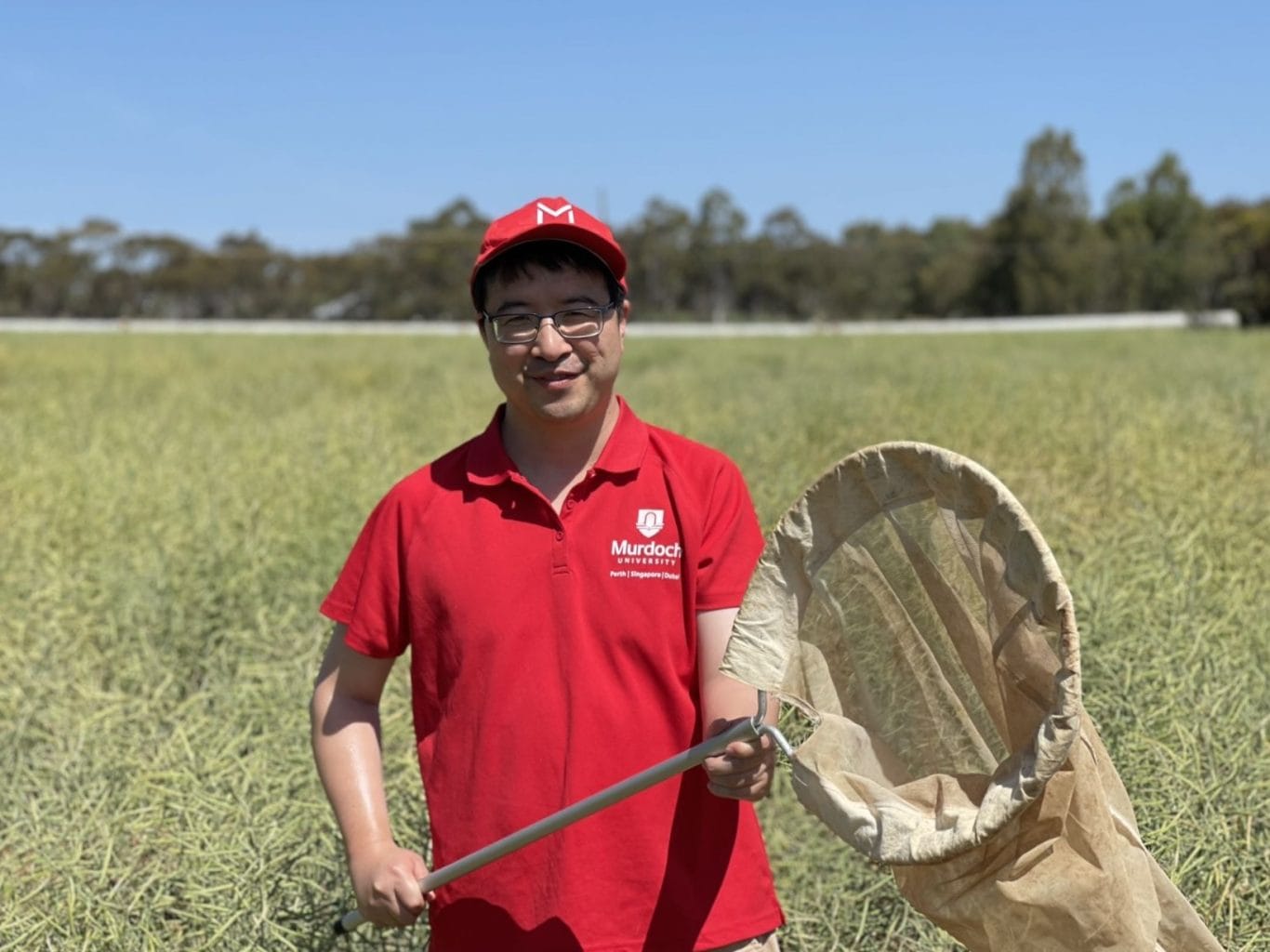
This edition features Dr Wei Xu, Associate Professor at Murdoch University, whose research sits at the intersection of insect biology, chemical ecology and agricultural pest management.
Through a career spanning international study, national research organisations and academic leadership, Dr Xu has built a research program focused on understanding insect behaviour and developing practical solutions to emerging pest challenges affecting agriculture in WA and beyond.
From biology to agriculture
For Dr Xu, a career in agricultural science was not part of an early plan but rather the result of a scientific journey that gradually revealed the real-world impact of research.
“My interest in agriculture developed over time rather than being something I set out to pursue from the beginning,” he said.
“I was initially drawn to biology more broadly and thought I might become a medical biologist.”
That early fascination with biology laid the foundation for a career grounded in scientific curiosity.
However, as his research evolved, so too did his understanding of how biological systems intersect with agriculture and food production.
“Working on insect species that directly affect crops and environment helped me realise the real-world impact that agricultural science can have, particularly in supporting growers and improving food security,” Dr Xu said.
What began as an academic interest soon became a professional motivation.
The ability to apply biological knowledge to practical agricultural challenges ultimately shaped the direction of his career.
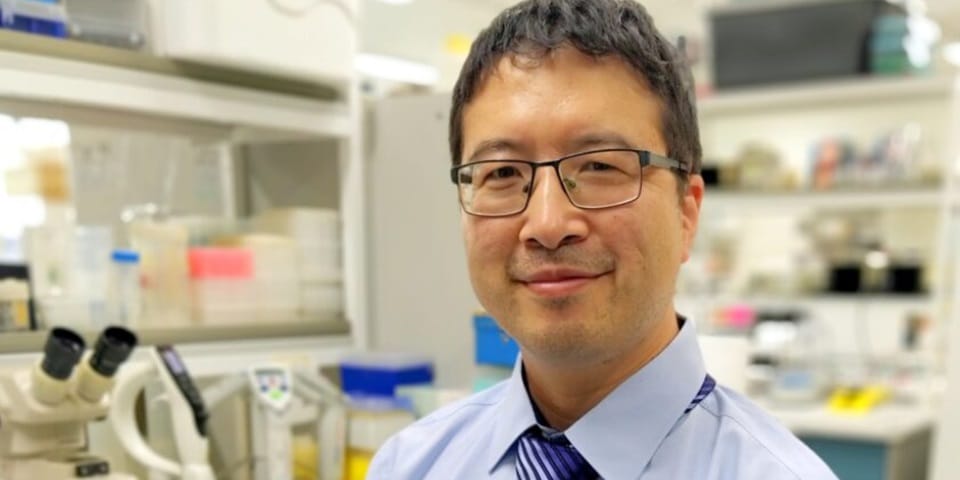
“Over time, this connection became a strong motivating force in my work,” he said.
Dr Xu’s educational pathway reflects this gradual transition from fundamental science toward applied agricultural research.
He completed undergraduate training in microbiology and a Master of Science in biochemistry at Sun Yat-sen University in China before pursuing a PhD in Agricultural and Environmental Chemistry at the University of California.
During his doctoral studies, he developed expertise across insect biology, molecular biology and insect–plant interactions – disciplines that would later underpin his work in agricultural pest management.
Following his PhD, Dr Xu undertook postdoctoral research with CSIRO at Black Mountain, where he gained experience working on pest species of agricultural importance, an area that has remained central to his research ever since.
“This combination of strong fundamental training and exposure to agricultural research shaped my pathway into agricultural science and ultimately led to my academic position at Murdoch University,” he said.
Building a research program with real-world impact
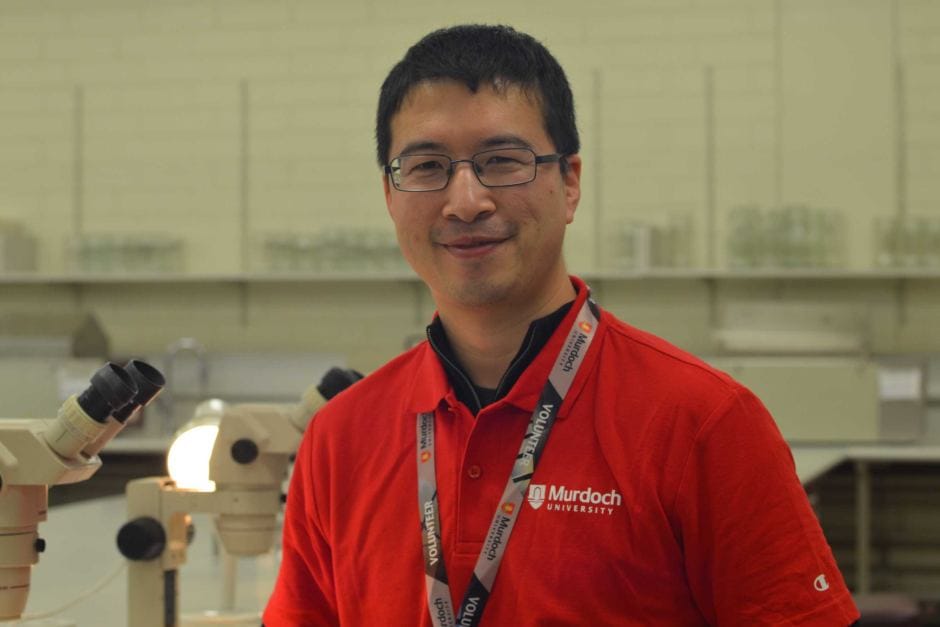
Since joining Murdoch University in 2015, Dr Xu has established a research program focused on understanding insect pests and developing sustainable management strategies informed by chemical ecology and behavioural science.
His role involves a balance of research, teaching, student supervision and collaboration with a wide range of partners across Australia’s agricultural innovation system, including universities, government agencies and industry organisations.
Dr Xu’s current research focuses on a range of insect pests and invasive species that present growing risks to agricultural productivity and environmental health, including chilli thrips, aphids, snails, and polyphagous shot-hole borer (PSHB).
A key theme across this work is understanding insect behaviour and chemical ecology – how insects interact with plants and environments through chemical signals – to develop more precise and sustainable management strategies.
“The most rewarding aspect of being an agricultural scientist is knowing that my research can make a tangible difference,” he said.
“Whether it’s improving pest management strategies, contributing to biosecurity preparedness, or supporting growers with evidence-based solutions, it’s very satisfying to see science translate into real-world impact.”
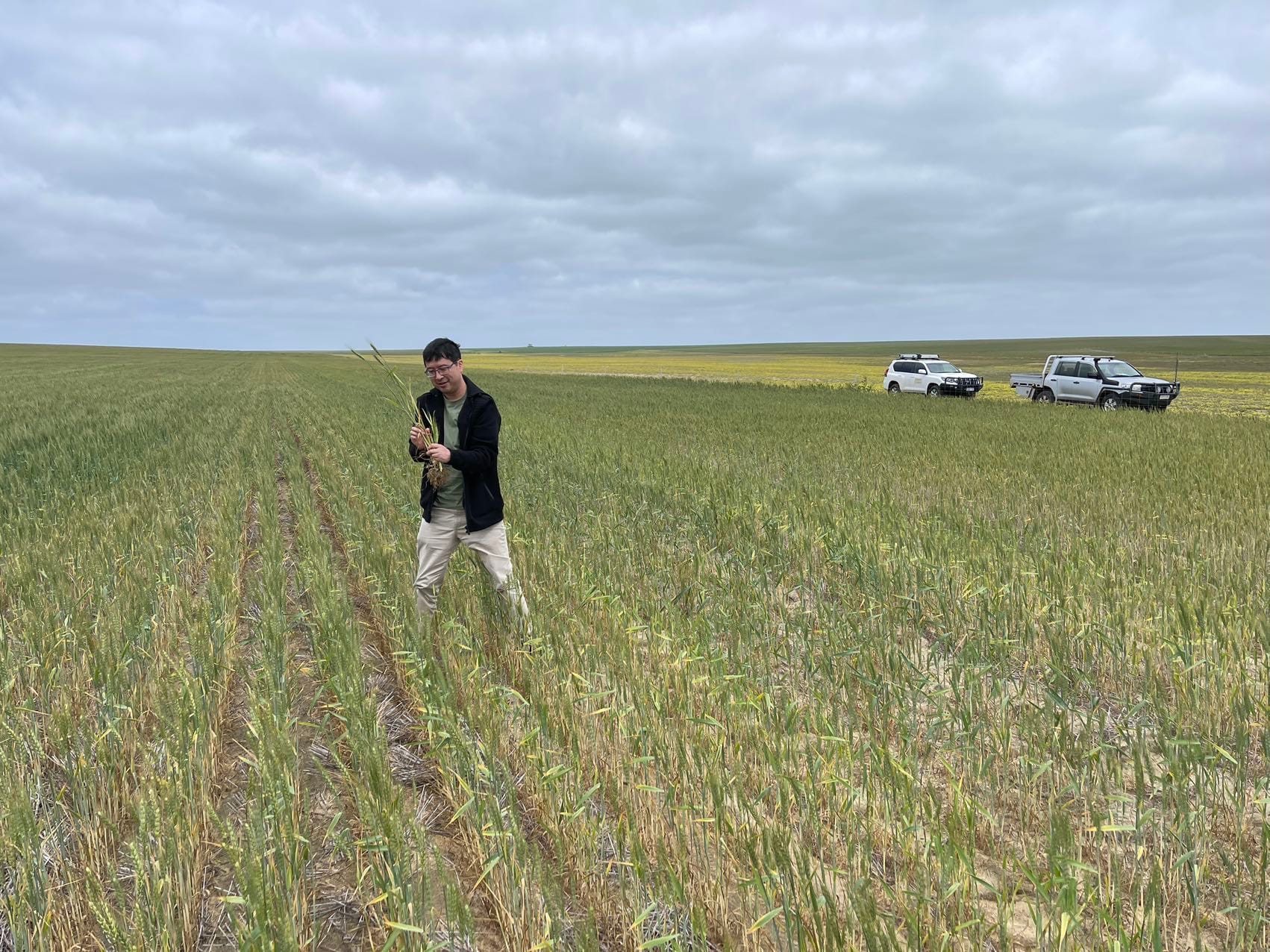
Dr Xu is involved in one of three WA Agricultural Research Collaboration (WAARC) projects focused on addressing the threat of PSHB in WA.
The Murdoch University project, developing an integrated pest containment strategy for polyphagous shot-hole borer (fusarium dieback) to facilitate long-term control, recently achieved a major milestone with researchers successfully establishing the first stable laboratory colony of PSHB in the state.
Led by PhD student Md Shahidul Islam Khan and supervised by Dr Xu and Associate Professor Rob Emery, the breakthrough provides a powerful research platform to study PSHB biology and behaviour and support the development of innovative long-term management strategies.
For Dr Xu, his research reflects a broader shift within agricultural science toward solutions that reduce reliance on broad-spectrum interventions and instead leverage biological understanding to improve effectiveness and sustainability.
“In Western Australia, my research contributes to improving pest management strategies that are tailored to local cropping systems and environmental conditions,” Dr Xu said.
“This includes supporting biosecurity efforts and helping industries respond to emerging pest threats.”
While grounded in local challenges, the implications of this work extend well beyond the state.
The increasing movement of pests across borders, driven by global trade and climate change, means that advances in one region often have international relevance.
“Globally, many of the pests and challenges we study are shared across regions, so insights gained here can inform international management strategies and contribute to more sustainable agriculture worldwide,” Dr Xu said.
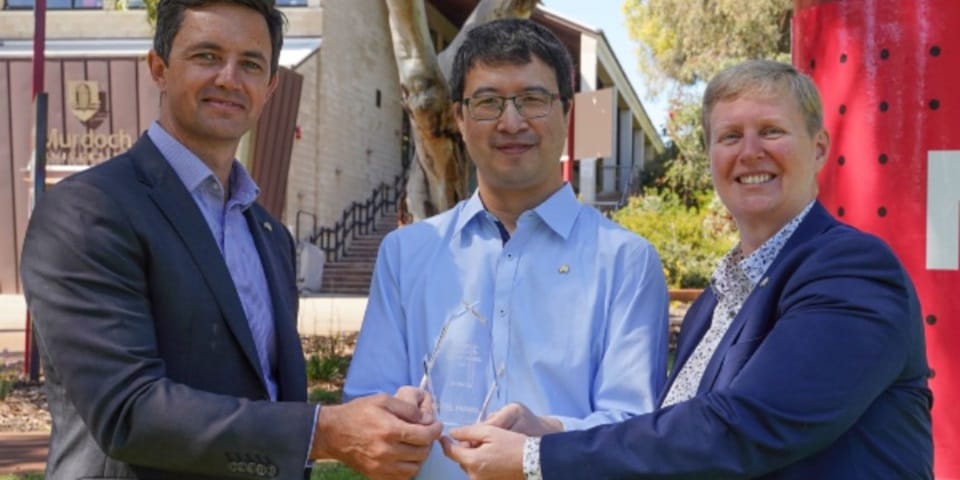
Investing in the next generation
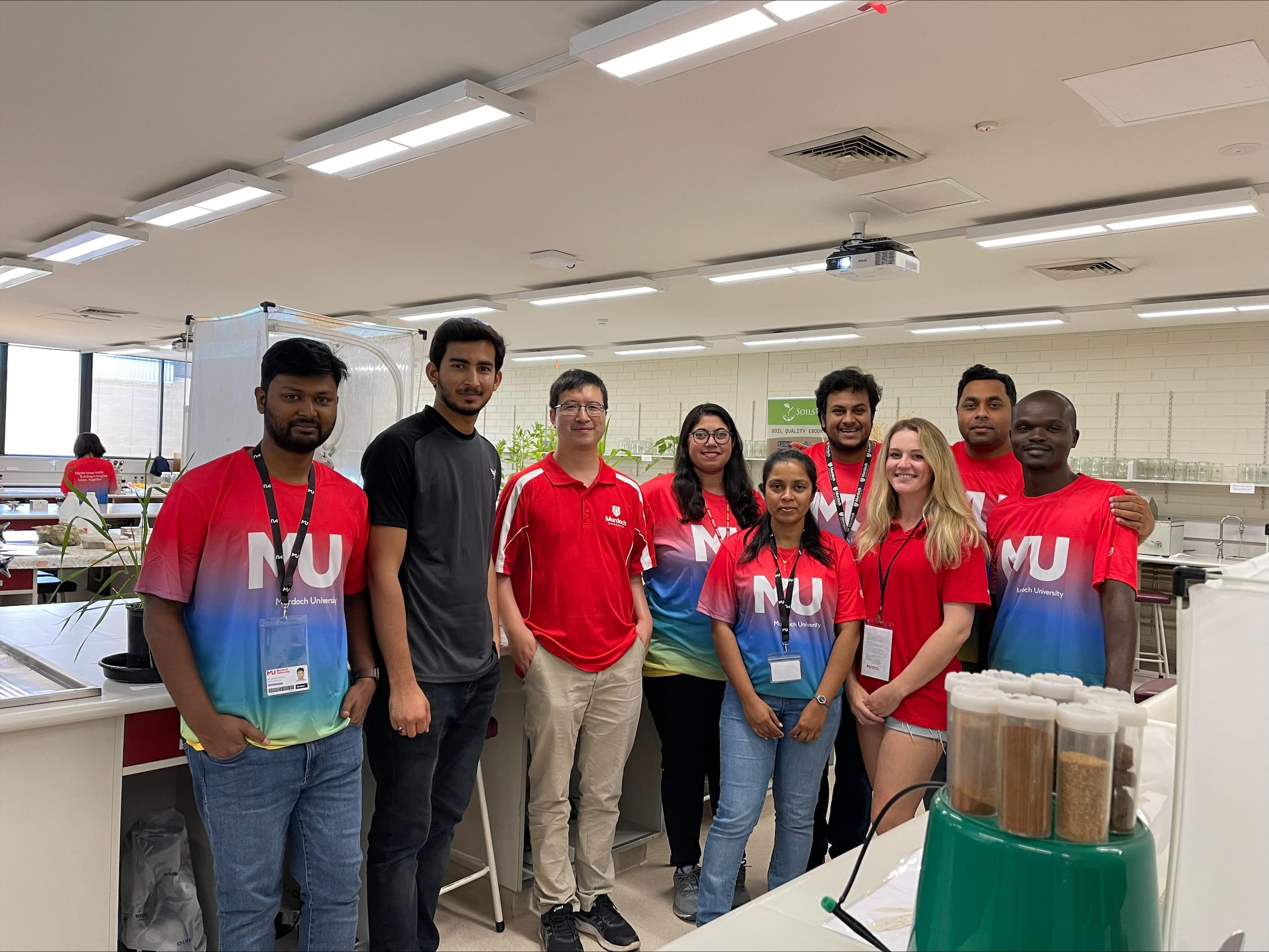
Supervising students and early-career researchers forms a significant component of Dr Xu’s role at Murdoch University, and he views this responsibility as essential to the long-term strength of agricultural science.
Mentoring those students and watching them grow into confident scientists is also one of the most fulfilling parts of his job.
“Seeing my students go on to careers in research, industry and government, and knowing I’ve played a role in that journey, is something I value greatly,” he said.
Looking ahead, he believes agriculture offers significant opportunities for emerging scientists willing to embrace its interdisciplinary nature and admits learning how to communicate with industry stakeholders is as important as technical expertise.
“My advice would be to stay curious and open-minded, and to seek out opportunities that expose you to both fundamental and applied research,” he said.
“Most importantly, don’t be afraid to take on challenges – agricultural science offers meaningful opportunities to make a real difference.”
As WA’s agricultural industries continue to face evolving biosecurity risks, environmental pressures and productivity challenges, scientists like Dr Xu play a critical role in bridging fundamental research and practical application.
Through research, collaboration and mentorship, his work contributes not only to solving today’s pest challenges but also to preparing the next generation of scientists who will shape the future of agriculture.
Through the WA Agricultural Scientist Spotlight series, WAARC celebrates the contributions of researchers like Wei Xu, whose work exemplifies the dedication and innovation needed to advance agricultural science in Western Australia.
By sharing their stories, the series aims to inspire a new generation to pursue careers in this vital field, ensuring the State remains at the forefront of agricultural research and sustainability.