


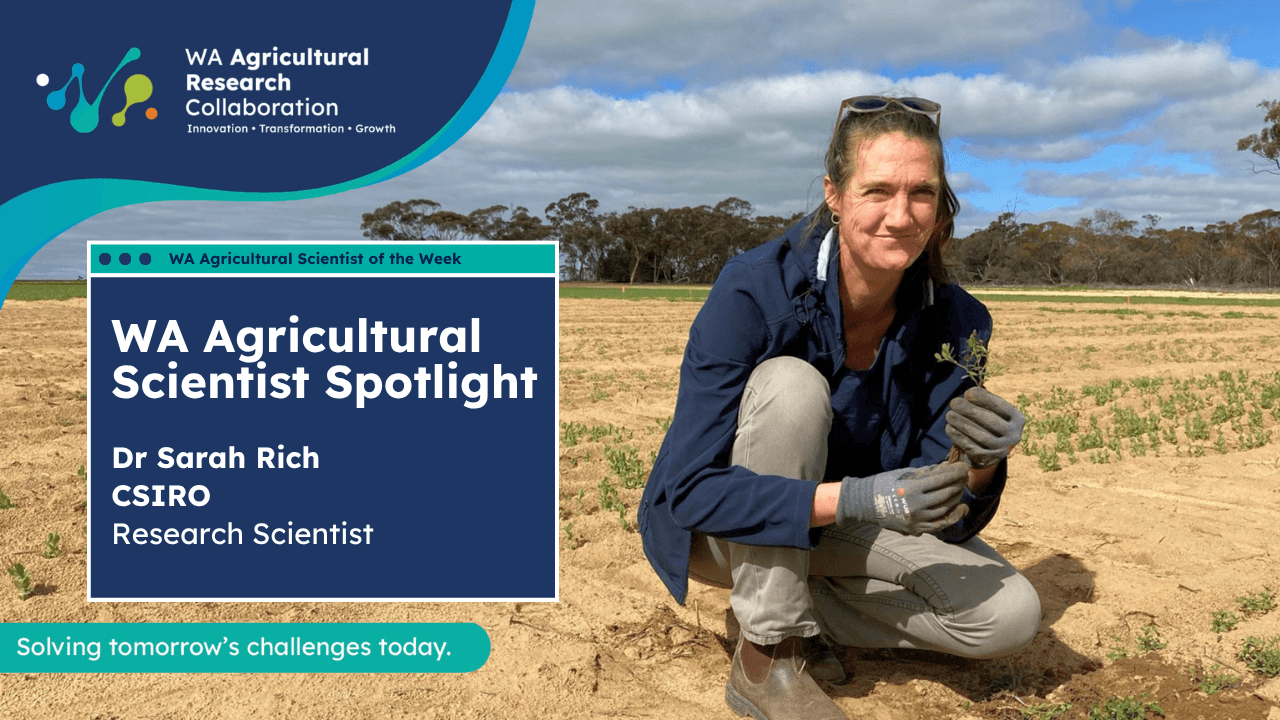
Every fortnight, the WA Agricultural Scientist Spotlight shares the stories of the people helping shape Western Australia’s agricultural future, highlighting their career journeys, research achievements and the ideas driving progress across the sector.
This edition features Dr Sarah Rich, a Research Scientist at CSIRO, whose work focuses on climate-resilient farming systems across crops and forages.
Based in Perth, Dr Rich examines plant germination, emergence and establishment, with a particular interest in how below-ground processes influence crop success.
A career that took root over time
Dr Rich’s path into agricultural science was not a straight move from school into farming or crop research.
While she may have grown up on a hobby farm at Mount Helena, Dr Rich has lived in Perth’s inner-city since she was 12 and worked in the arts industry as a theatre lighting electrician.
That was before she took a major career turn in her mid-20s and undertook a Bachelor of Science in zoology and botany at The University of Western Australia (UWA).
“I don’t think I really thought about agriculture until I was well into my university education,” Dr Rich said.
“My PhD at UWA was in pure plant physiology, working on wetland native plants – I loved trying to understand how plants respond to their environment.
“Part of my interest in plant roots comes from how responsive they are, it makes them a pain to study but they are fascinating.”
Dr Rich moved into agricultural research during her first postdoctoral role at CSIRO in Canberra, where she worked as part of the crop adaptation group on an Australian Centre for International Agricultural Research (ACIAR) project with the University of Queensland and three groups in India.
It was here that she began applying her plant science background to farming systems and grower-focused questions.
“We ended up in Canberra by total chance – I had a fresh Phd, a new baby, and was applying for jobs all over the world,” Dr Rich said.
“While I was initially sad not to go overseas, it turned out to be great as it set me up to work in Australian agriculture, which is something I’ll always be happy about.
“I quickly realised I really enjoy the on-ground impact agricultural research can have and have found farmers amazing to work with due to their broad knowledge base and willingness to try new things and make really astute inputs into research projects,” Dr Rich said.
Finding new skills through change
Dr Rich’s career in agriculture hasn’t been a straight line, including time away from research, a move back to Western Australia and several unexpected shifts in focus.
After her first postdoctoral position, she had her second child and took five years away from research.
During that period, Dr Rich returned to WA with her family, had her third child and spent time as a stay-at-home parent.
Her return to research came by way of a second postdoctoral role, once again with CSIRO, but this time focused on pulse crop establishment.
“COVID hit during my second year and I ended up cancelling my field trials as I couldn’t get permission to travel to the regions to monitor them,” Dr Rich said.
“Unable to work regionally, I learnt lots of new skills developing new controlled environment experiments and learning agricultural modelling,” she said.
After her second postdoctoral position, Dr Rich worked across several short-term contracts on diverse projects before securing her current ongoing role as a Research Scientist with CSIRO.
Research for climate-resilient farming systems
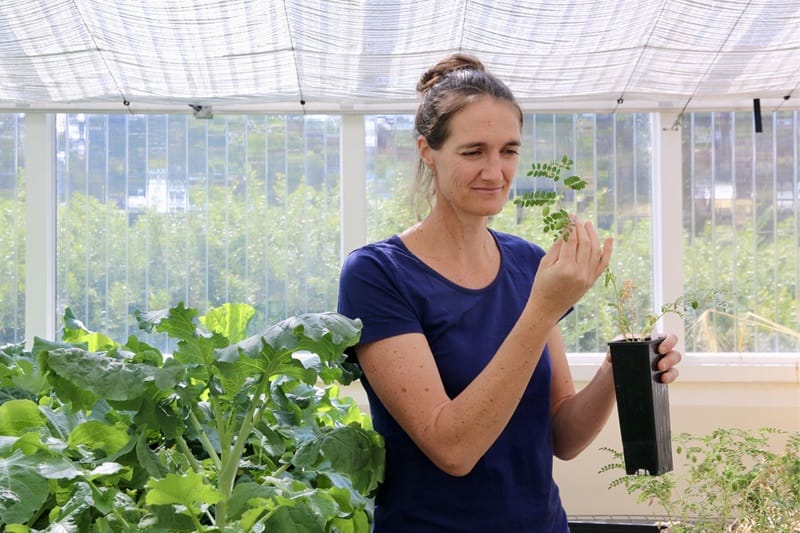
Today, Dr Rich works within CSIRO Agriculture and Food based in Perth, contributing to projects across a range of crops and forages.
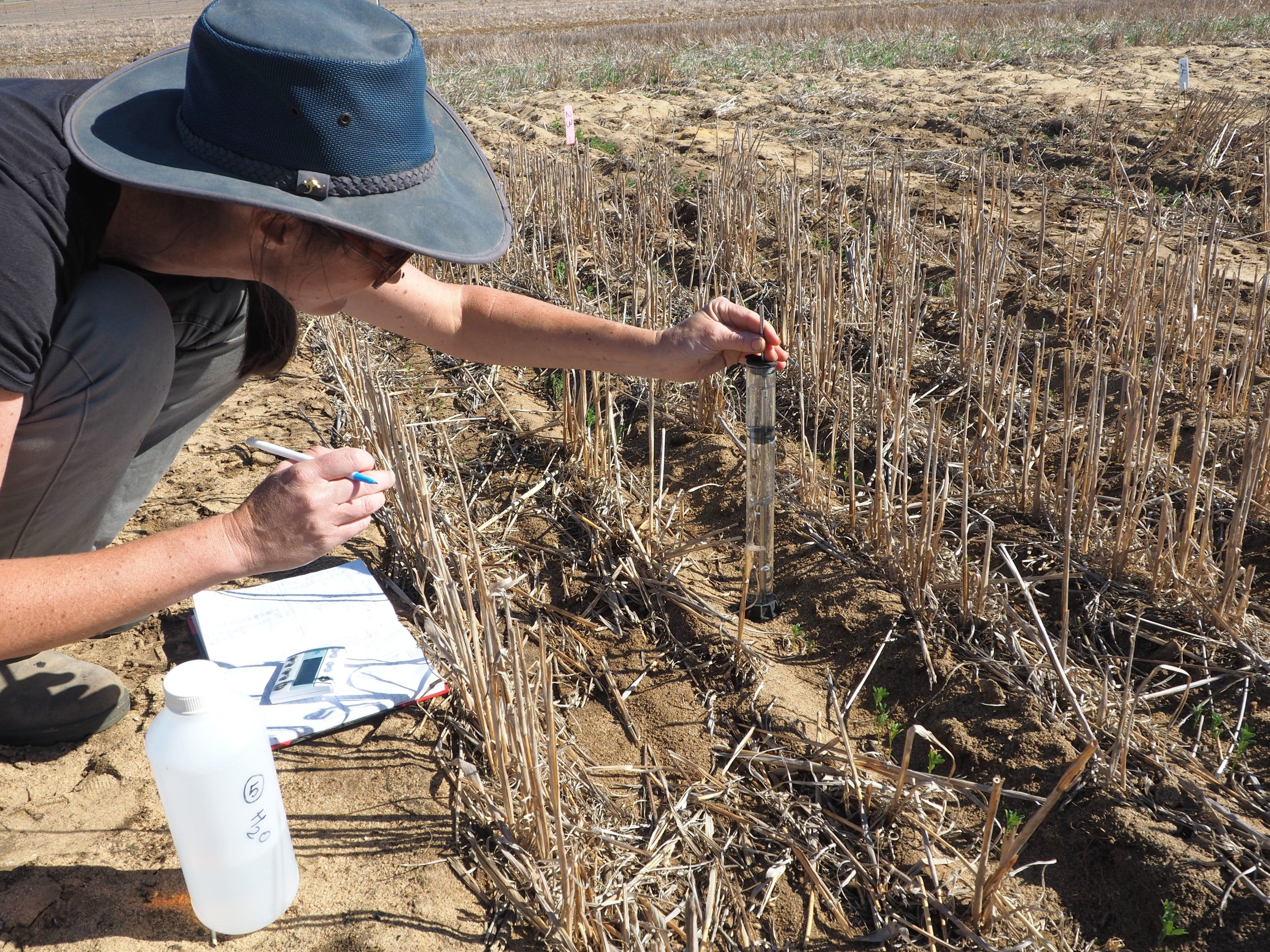
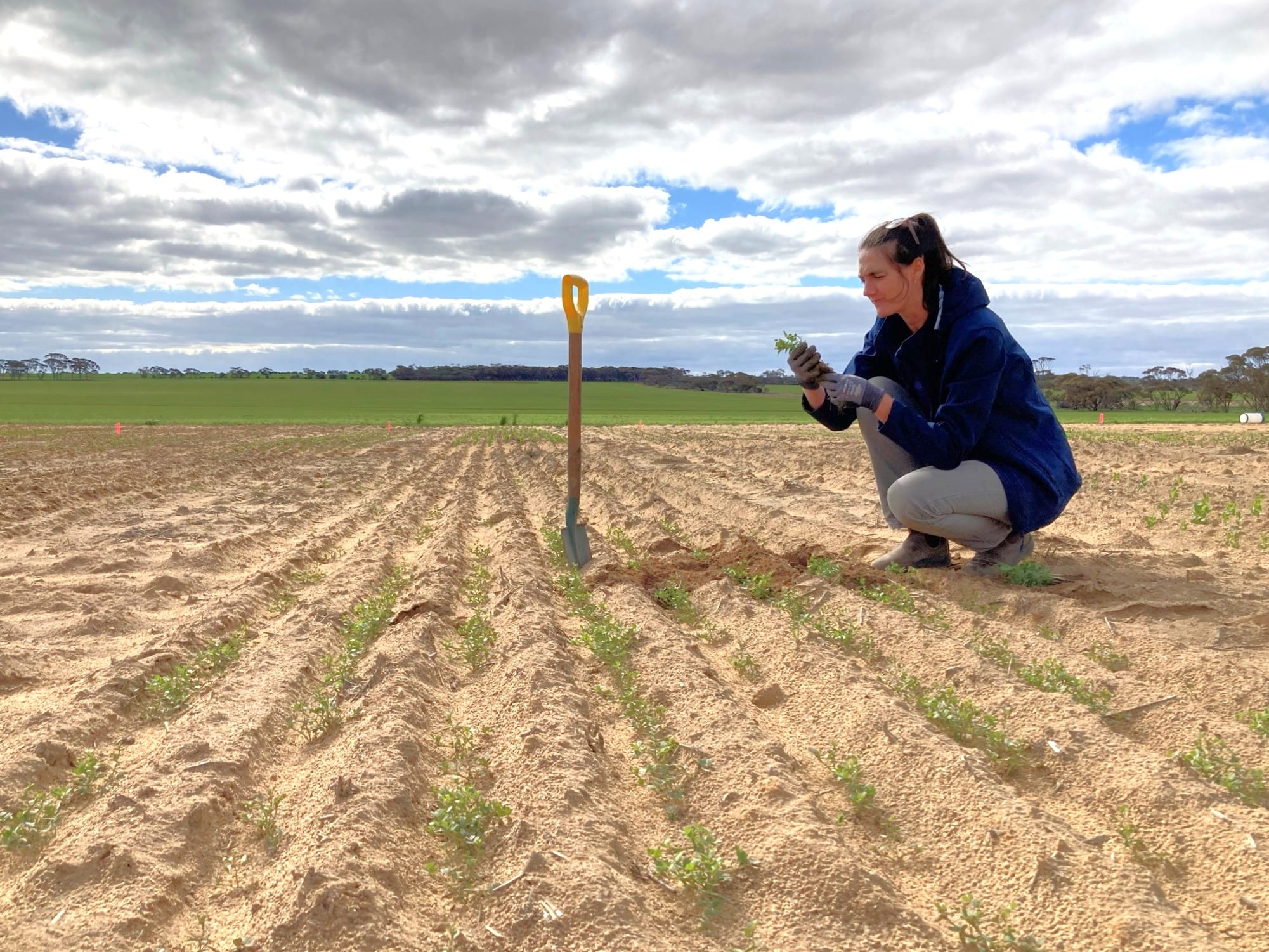
Depending on the season and project, her work can involve glasshouse or laboratory experiments, visits to field trials across grain-growing regions, or desk-based planning, analysis and writing.
“I work across a range of projects – sometimes I’m thinking about individual seeds or a single plant’s root system, and other times about how a whole crop is growing as part of a year-on-year rotation,” Dr Rich said.
“My key research focus is climate resilient farming systems – particularly plant germination, emergence and establishment – and how the interactions between genetics, environment and management, as well as below-ground processes, impact crop success.”
Her role involves a balance of hands-on science work and days which are spent planning, analysing data and writing in front of a computer.
That variety is one of the parts of agricultural science Dr Rich enjoys most, even when it requires quick shifts in focus.
Her current projects include perennial forage establishment, deep sowing strategies and modelling soil-water conditions across different soil types to better understand changing sowing opportunities.
“Increasing climate variability, including more frequent droughts, heat events and unpredictable rainfall, is placing significant pressure on our production systems,” Dr Rich said.
“I love working in areas that aim to help ensure agriculture will remain both productive and sustainable into the future.”
Supporting agriculture locally and globally
Dr Rich’s research is into the development of sustainable climate-resilient agricultural systems.
It explores approaches for both cropping and mixed-farming systems, with a focus on reducing reliance on inputs and seasonal rainfall, improving ground cover and resource-use efficiency, and supporting more stable production.
“While grounded in WA farming systems, this work addresses challenges common to dryland agriculture globally, contributing to improved resilience, productivity and food security under increasingly variable climates,” she said.
For students and early-career scientists, Dr Rich’s advice reflects her own pathway into agricultural research, encouraging emerging scientists not to measure their careers against narrow expectations of what success should look like.
“I’d say find an aspect of science you enjoy and follow it and if you get opportunities to work regionally take them,” she said.
“We are all going to have different careers that balance our interests, talents and outside lives.
“I’m a firm believer that if you are enjoying what you do for work, regardless of what that is or at what level, then you are successful.”
Dr Rich’s career shows how curiosity about plant responses can grow into research with direct value for agriculture.
Through her work on seeds, roots, establishment and climate resilience, she is helping build knowledge to support more adaptable and sustainable farming systems in Western Australia and other dryland regions.
Through the WA Agricultural Scientist Spotlight series, WAARC celebrates the contributions of researchers like Sarah Rich, whose work exemplifies the dedication and innovation needed to advance agricultural science in Western Australia.
By sharing their stories, the series aims to inspire a new generation to pursue careers in this vital field, ensuring the State remains at the forefront of agricultural research and sustainability.