


Through the WA Agricultural Scientist Spotlight, we explore career journeys, current research, and personal insights into the vital work shaping the future of our food and farming systems.
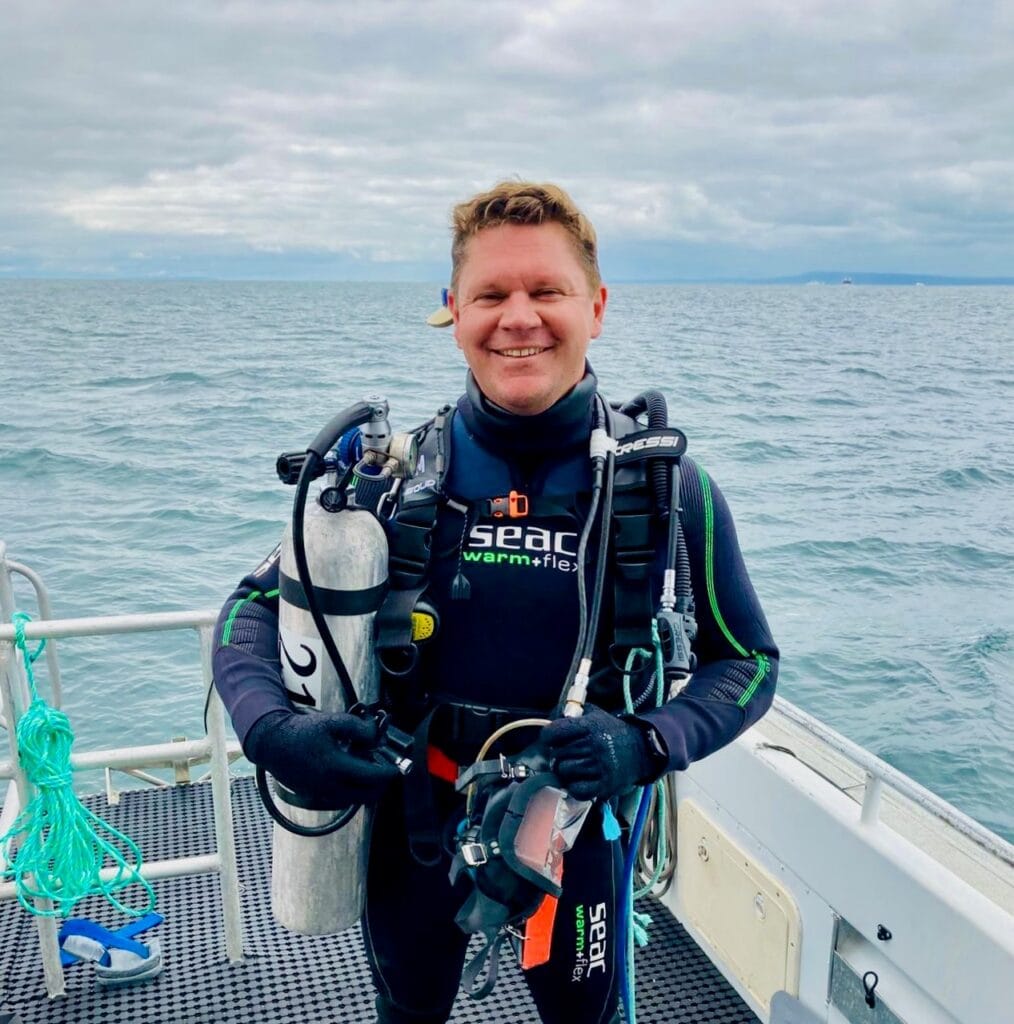
This fortnight, we shine a spotlight on Dr John Statton, the new Strategic Research Manager at WAARC, whose career spans marine science, environmental restoration, agricultural innovation, and sustainable production systems.
Dr Statton has applied scientific research to real-world challenges – from restoring seagrass ecosystems and developing citizen science programs, to pioneering seaweed-based solutions that reduce livestock methane emissions. He has demonstrated a unique ability to translate complex research into tangible impact for communities, industry, and the environment.
From marine biology to applied research
“I’ve always believed that our journeys are often shaped by people who either believe in us, or who dare us to rise to a challenge,” Dr Statton said.
“My story begins with both.”
At 14, he moved from Victoria to Western Australia and skipped a school year, joining his new school halfway through Year 10.
His grades initially fell short of university entry requirements, but a supportive science teacher issued him a challenge.
“The deal was simple – lift your grades from a C to an A over the next six months, and I’ll back you to sit TEE without repeating the year,” Dr Statton recalls being told.
“That moment flipped a switch.”
That challenge transformed his approach to learning.
He changed the way he approached learning, and became determined to succeed, rising to the top in science in his school, and earned his place at The University of Western Australia (UWA) to study Marine Biology.
After graduating in 2003, he pursued Aquaculture at the University of Tasmania, drawn by the hands-on nature of ocean farming.
“There was something about ocean farming that was really appealing,” Dr Statton said.
“I thrived, learning the industry hands-on at a salmon farm, and back at the uni managing fish and microalgae for the research team, and building aquaculture systems while discovering a natural aptitude for aquaculture.”
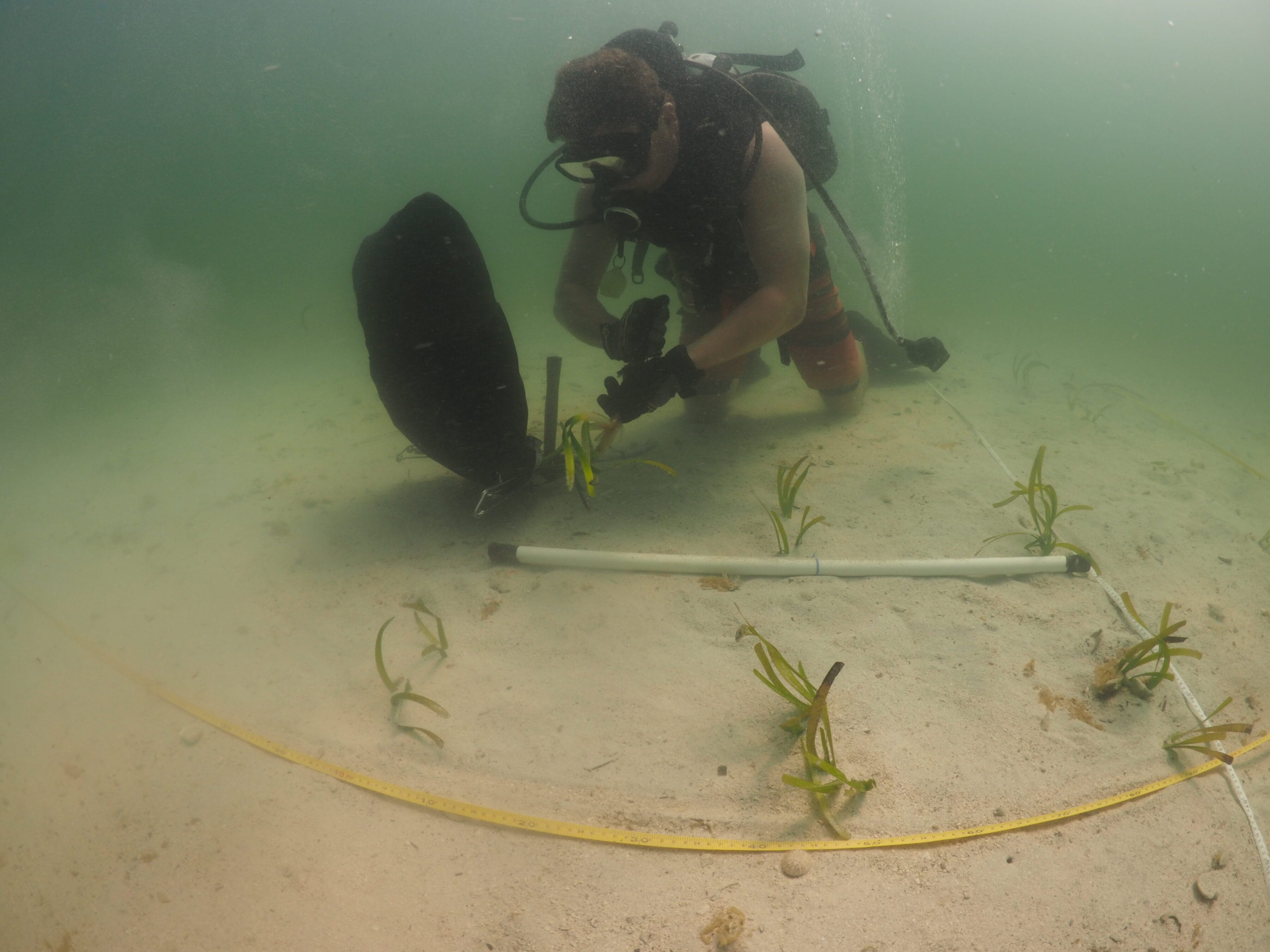
His return to Perth introduced him to Professor Kingsley Dixon, who posed a bold challenge: could aquaculture be used to grow seagrass from seed?
This idea led Dr Statton into the Seagrass Research and Rehabilitation Program, a collaborative initiative involving multiple universities, industry partners, and government agencies.
It also became the foundation of his master’s project with Prof Dixon, Prof Gary Kendrick, and Dr Marion Cambridge.
Early success, including a published paper, led to his master’s being upgraded to a PhD.
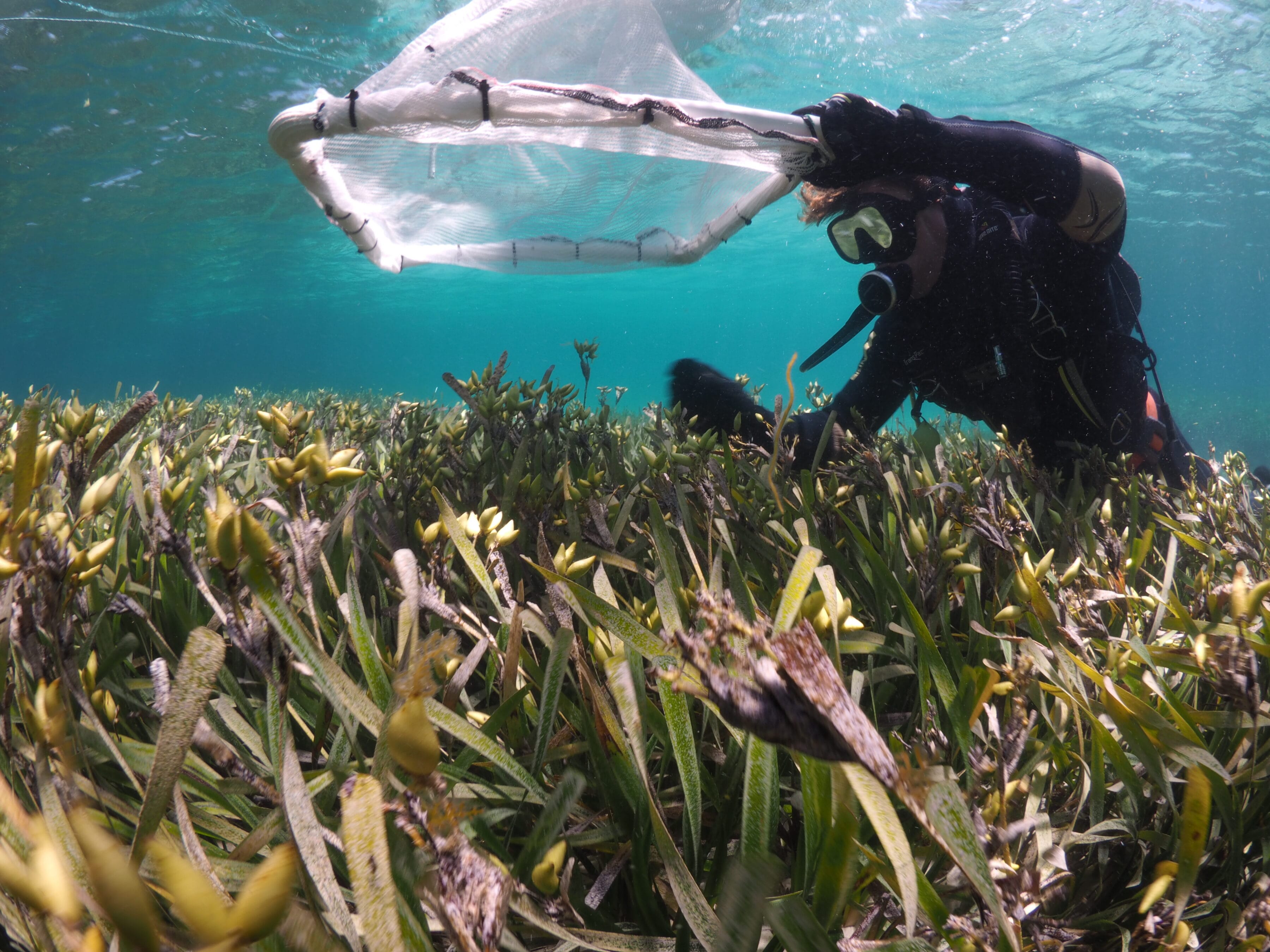
For three years, Dr Statton worked almost independently at the Watermans Bay Marine Research Facility, designing and conducting research that expanded seed-based seagrass restoration.
“I emerged with three published papers, a PhD, and a conviction that science could not only explain the world, it could transform it,” he said.
Since then, Dr Statton has published nearly 50 research articles, 20 technical reports, and two book chapters, securing millions in research funding and collaborating across sectors in Australia and abroad.
His work has spanned collaborations with mining, aquaculture, international environmental organisations, farmers, large corporations, not-for-profits, start-ups, and research institutions across Australia.
His research has taken him around the country and the world, working alongside some of the leading minds in marine science, restoration ecology, aquaculture, livestock scientists, and farmers.
Shaping a career through challenges
Dr Statton’s transition into agricultural science was marked by strategic choices and pivotal experiences.
In 2010, he stepped into his first postdoctoral role, witnessing Prof Dixon negotiate a seagrass restoration trial in Shark Bay, a World Heritage Area.
“It was my first glimpse of science in action, where research meets industry, and ideas become reality,” Dr Statton said.
“He crafted a compelling argument and brought the science into context for industry.
“It was at this point that I discovered something important about myself – I genuinely enjoyed strategically scoping and developing research.”
Soon after, Dr Statton joined another project in the eastern embayment of Shark Bay, alongside 14 scientists from UWA, CSIRO, and Florida International University.
During the first campaign, the 2011 marine heatwave swept through, destroying almost 100,000 hectares of seagrass and crippling fisheries and tourism.
“It should have been a triumph, but nature had other plans,” Dr Statton said.
“I knew then, I didn’t yet have the tools to solve problems of this scale, but I also knew one day, I would.”
Determined to tackle such challenges, Dr Statton earned commercial diving certification and a Coxswain’s ticket, enabling him to lead field teams directly from the seabed and the skipper’s chair.
Between 2013 and 2016, he secured two Australian Research Council (ARC) Linkage grants, pushing seed-based restoration into new territory alongside Prof Kendrick, Prof Dixon and the world-renowned Prof Bob Orth from Virginia Institute of Marine Science.
“It meant juggling months of intense training with a full postdoc workload,” Dr Statton said.
“But if resilience is built through fire, those years forged mine.”
His expertise expanded further when he joined the Western Australian Marine Science Institution (WAMSI) Dredging Science Node in 2016, applying aquaculture systems design to test seagrass responses to dredging.
In 2017, he co-founded Seeds for Snapper with Prof Gary Kendrick, inspired by a conversation with OzFish Unlimited during a presentation in Canberra.
What began with a small team of university divers collecting fruit by hand each summer evolved into a national movement.
“Tens of thousands of seeds became millions,” Dr Statton said.
“Volunteers – boaters, fishers, everyday people – were suddenly part of large-scale restoration.
“By the time the program spread to South Australia and Victoria, it had become one of the largest citizen science seagrass initiatives in the world.”
Venturing into seaweed innovation
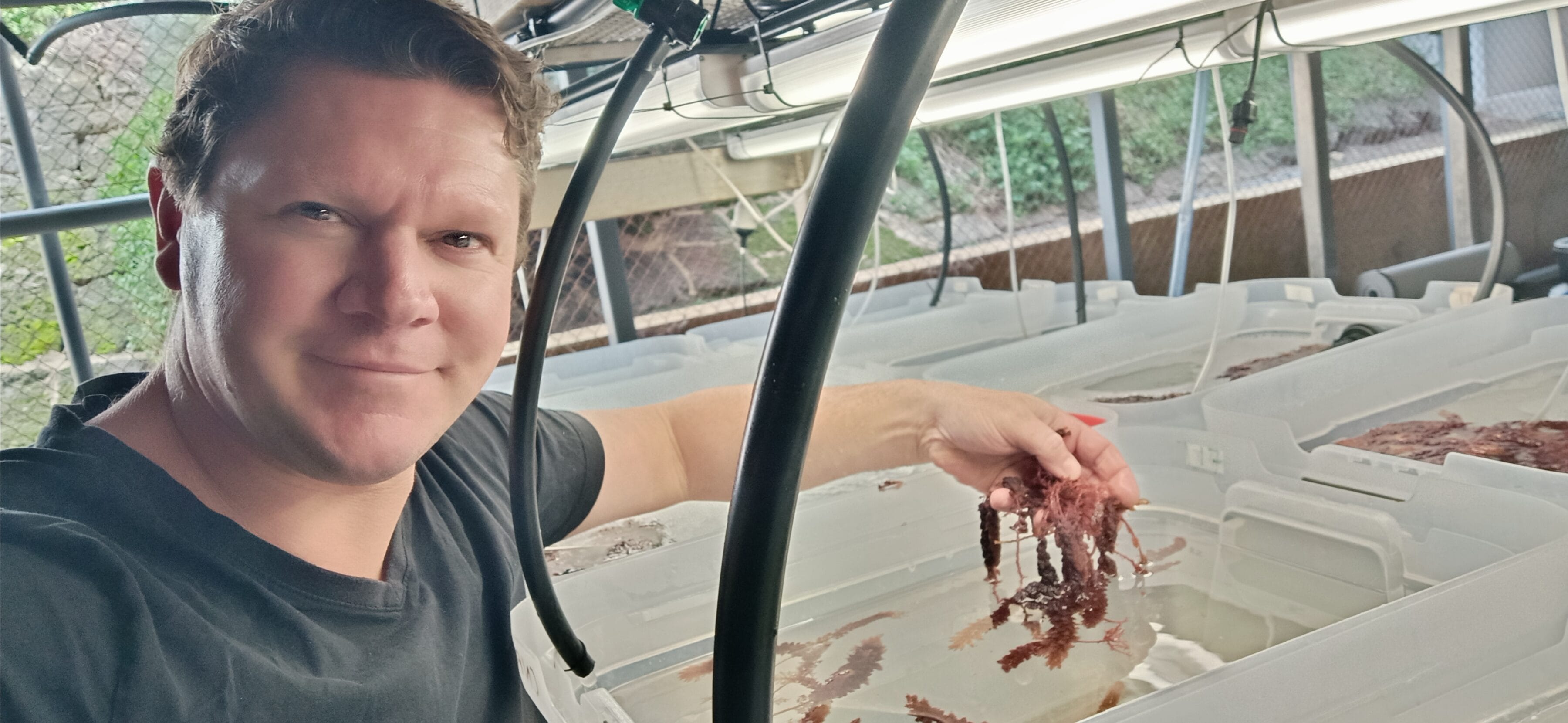
By 2019, Dr Statton expanded his focus to seaweed farming, co-founding the start-up Immersion Group, which focused on Asparagopsis, a red seaweed with a naturally produced compound, bromoform, that could slash methane emissions from ruminant livestock.
Their first farm in Port Phillip Bay showed early promise, producing staggered crops, until disaster struck when a once-in-50-year storm poured freshwater into the bay, killing the entire crop.
“It could have been the end, instead it was the turning point,” Dr Statton said.
The team pivoted, building patented onshore systems that de-risked supply, ensuring consistent quality, and partnering with one of the largest seafood producers in the world.
They developed methods to enhance bromoform bioavailability, improving impact where it mattered most – inside the stomachs of cattle.
In doing so, they transformed setbacks into innovation.
“Today, that spirit carries through everything I do,” Dr Statton said.
“Because resilience isn’t just about surviving challenges, it’s about using them as fuel to innovate, to collaborate, and to create solutions bigger than the problems we face.”
Strategic leadership at WAARC
Throughout his 15-year academic and commercial career, Dr Statton has learned to listen carefully to producers, industry, scientists, indigenous leaders, and community to identify the core of a problem.
Then bring the right people, funding, and resources together to deliver solutions.
This ability to translate challenges into well-structured, collaborative programs sits at the heart of his new role as Strategic Research Manager at WAARC.
While he’s only about a month into the role, Dr Statton expects to position WAARC as a system integrator, mapping stakeholders, identifying gaps, and aligning investments across research, industry, government, and community.
He will develop business cases that frame agricultural R&D as state-building, attract co-investment, and leverage WA’s unique fiscal position.
“Ultimately, I see this role as stitching together WA’s agricultural research system into something stronger, more inclusive, and more future-ready,” he said.
Dr Statton finds the most reward in applied research that delivers tangible outcomes for producers and communities.
“Agriculture sits at the intersection of environment, economy, and community,” he said.
“It’s not just about producing food, it’s about sustaining livelihoods, regenerating landscapes, and building resilience for the future.
“When I see researchers, producers, and communities rally around a shared solution, I know I’m exactly where I’m meant to be.”

Current research and future horizons
Dr Statton’s research portfolio encompasses Northern Agriculture, Grains Transformation, Agricultural Technologies, and Aboriginal Science Engagement.
Locally, the projects in his portfolio are designed to deliver practical solutions, whether it’s improving efficiency through robotics and AI, unlocking new value streams, or embedding Aboriginal knowledge in land management.
These initiatives build resilience for farmers, create regional opportunities, and ensure WA’s agriculture remains competitive.
Globally, the same projects speak to shared challenges, reducing emissions, diversifying value streams, developing circular bioeconomy solutions, and scaling regenerative practices.
“By positioning WA as a leader in agricultural innovation and collaboration, my portfolio not only delivers local benefits but also contributes knowledge, technologies, and models that can be applied worldwide,” Dr Statton said.
Dr John Statton’s career demonstrates how curiosity, collaboration, and resilience can drive innovation across agriculture, environmental restoration, and sustainability.
His journey from a determined teenager in Year 10 to Strategic Research Manager at WAARC exemplifies the impact of applied research that engages communities, integrates knowledge, and creates tangible benefits for both Western Australia and the global agricultural sector.
Through the WA Agricultural Scientist Spotlight series, WAARC celebrates the contributions of researchers like John Statton, whose work exemplifies the dedication and innovation needed to advance agricultural science in Western Australia.
By sharing their stories, the series aims to inspire a new generation to pursue careers in this vital field, ensuring the State remains at the forefront of agricultural research and sustainability.