

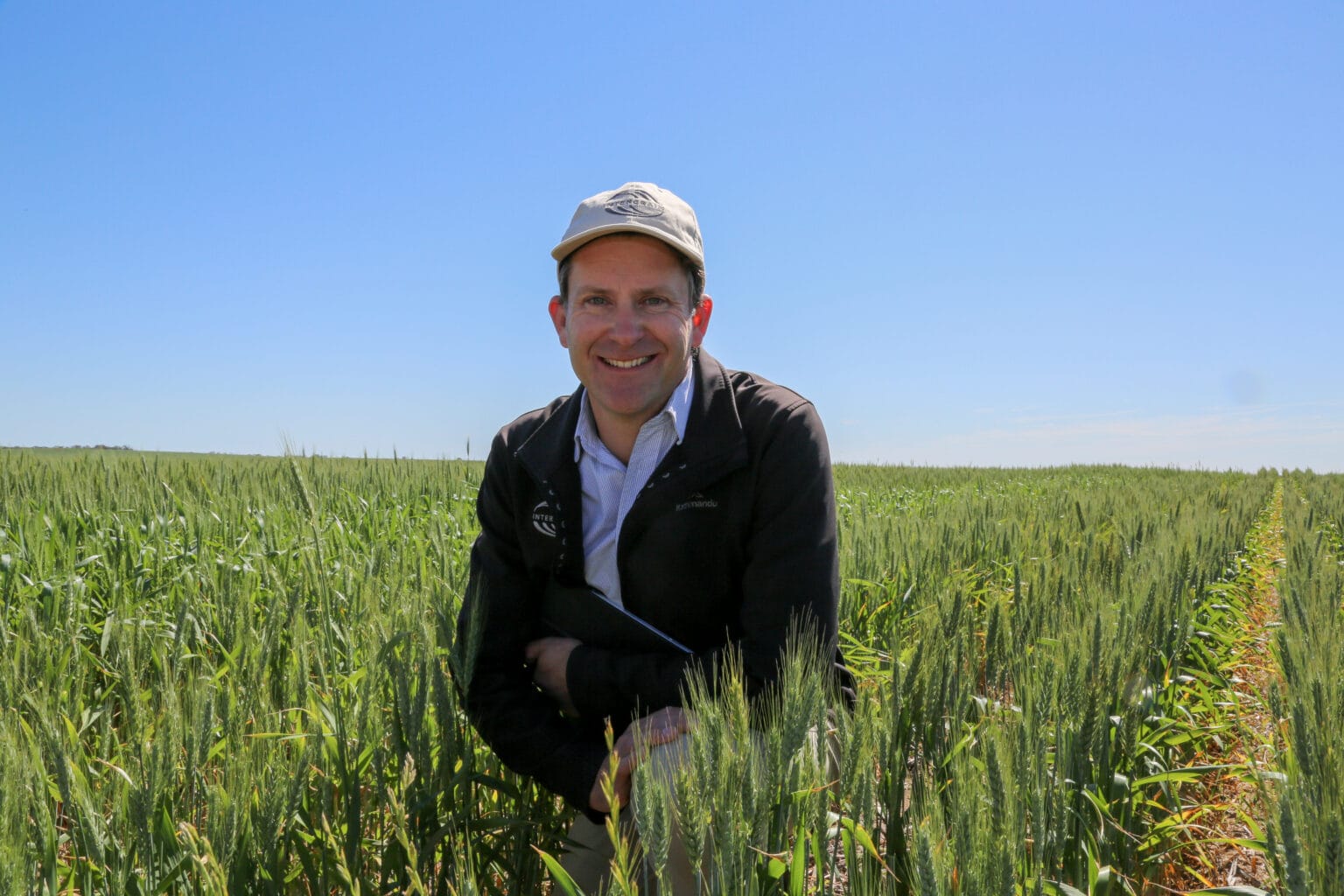

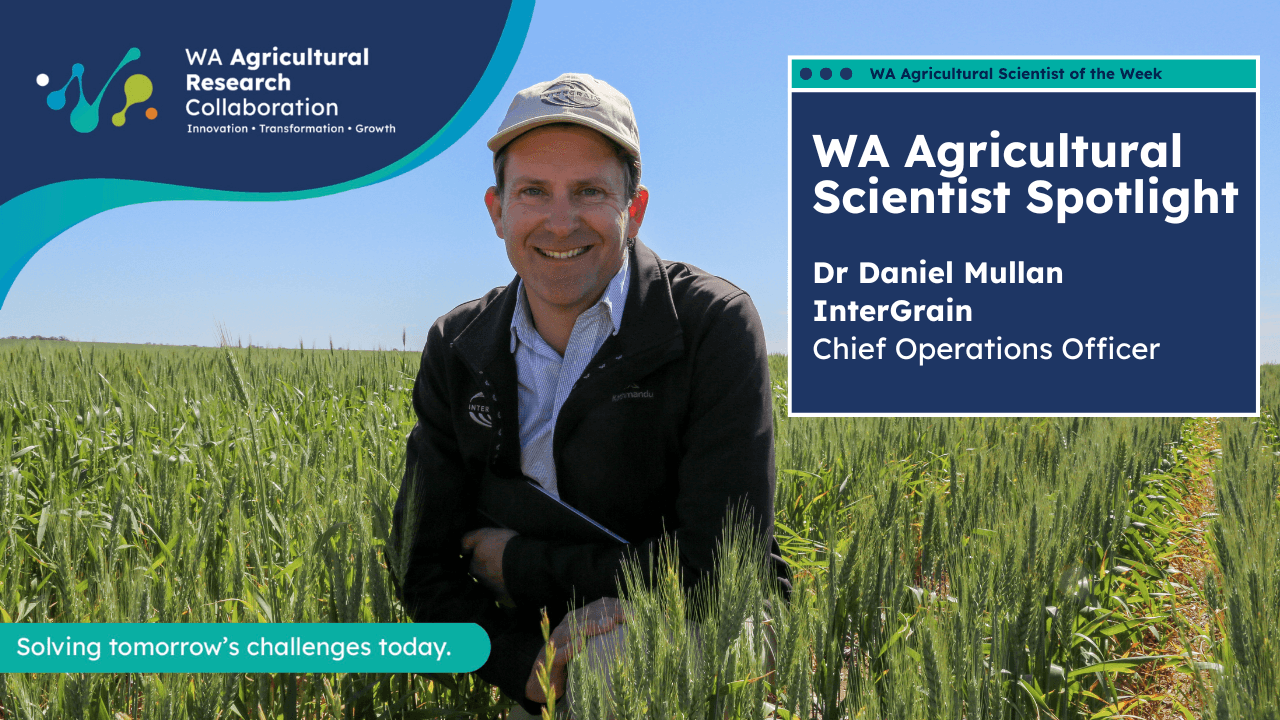
Every fortnight, the WA Agricultural Scientist Spotlight highlights one of the researchers helping shape the resilience, performance, and future direction of agriculture in Western Australia.
This series explores the diverse career paths of scientific leaders across our state, offering insights into their work, their motivations, and their contributions to agricultural innovation.
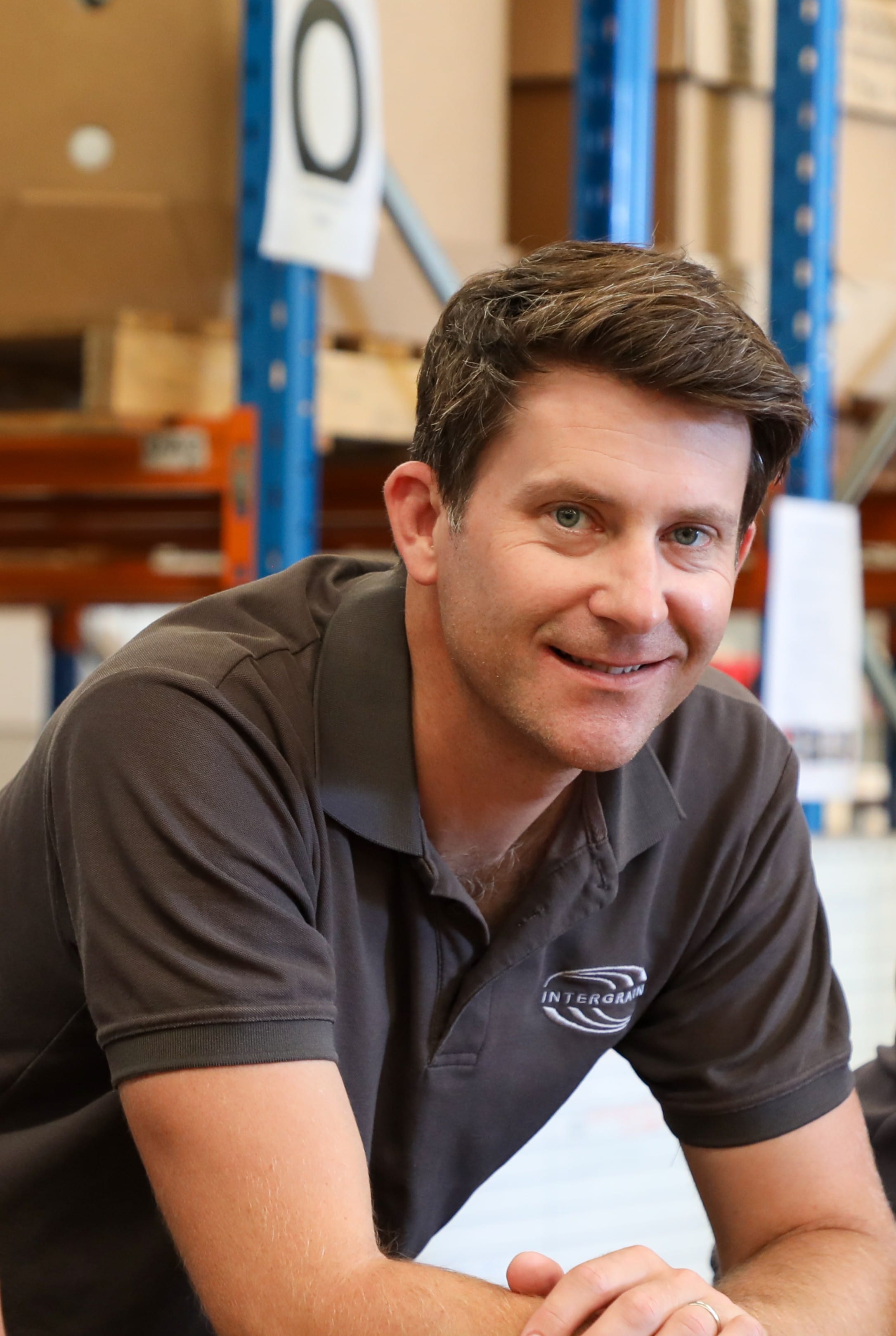
This edition features Dr Daniel Mullan, Chief Operating Officer at InterGrain.
From his roots on a family farm in the WA Wheatbelt to senior leadership in one of Australia’s largest cereal-breeding companies, his career spans continents, research disciplines, and the full pipeline from discovery science through to industry impact.
Influenced by a childhood in the Wheatbelt
Dr Mullan grew up in the town of Dudinin, where life on a mixed-farming enterprise shaped his early understanding of the agricultural world.
Those formative years built an intuitive understanding of the realities growers face – the unpredictability of seasons, the pressure of markets, and the constant pursuit of improvement on-farm.
“This early exposure to agriculture instilled a deep appreciation for the challenges and opportunities faced by farming communities,” Dr Mullan said.
That connection to the land guided him toward agricultural studies at The University of Western Australia (UWA), where he completed a Bachelor of Science in Agriculture.
As he settled into his studies, new experiences began to broaden his view of what a future in agriculture could look like.
The academic environment exposed him to disciplines he had not encountered on the farm, and the possibilities within research started to come into focus.
“Initially, my interest was practical, how to improve crop performance and farm profitability,” he said.
“However, as I moved through university and began to engage with research, I became fascinated by the genetic challenges underlying crop improvement.”
His growing interest in the science behind adaptation, resilience and yield set him on a path toward postgraduate research, laying the foundation for the career that followed.
A scientific path takes shape
Having learned about plant breeding as a career, Dr Mullan pursued a PhD on the topic at UWA, supported by the Grains Research and Development Corporation (GRDC), and began exploring the deeper mechanisms that influence how plants respond to their environment.
“My doctoral research allowed me to explore the genetic basis of improving salt tolerance in wheat, and gave me the technical skills to contribute to breeding programs,” he said.
After completing his PhD, Dr Mullan sought opportunities that would broaden his expertise and expose him to new production systems.
He joined CSIRO in Canberra as a postdoctoral fellow, where he worked on durum wheat breeding and the integration of drought tolerance traits into locally adapted germplasm.
The role took him into extensive fieldwork across New South Wales and introduced him to new collaborative networks of breeders, physiologists and agronomists.
“During both my PhD and postdoctoral work, I was exposed to the global nature of agricultural science,” Dr Mullan said.
“Collaborating with researchers from different countries and backgrounds, I saw how advances in genetics, physiology, and breeding could have far-reaching impacts.”
Seeking further challenge, Dr Mullan moved to the International Maize and Wheat Improvement Center (CIMMYT) in Mexico, where he led projects on the genetic dissection of drought and heat adaptation in wheat.
Working with scientists from around the world, he was exposed to large-scale phenotyping, diverse environments, and the complexities of global food security.
It highlighted to him the importance of international cooperation and the potential for Australian research to contribute to global food security.
“It was a time in my career that offered development both at a professional and personal level, with exposure to cultural diversity and challenge,” Dr Mullan said.
“These experiences shaped my approach to agricultural science, emphasising both technical excellence and the importance of collaboration.
“Over time, my passion shifted from a focus on local farming issues to a broader commitment to advancing agricultural science nationally and supporting the next generation of scientists.”
Returning home to deliver impact to growers
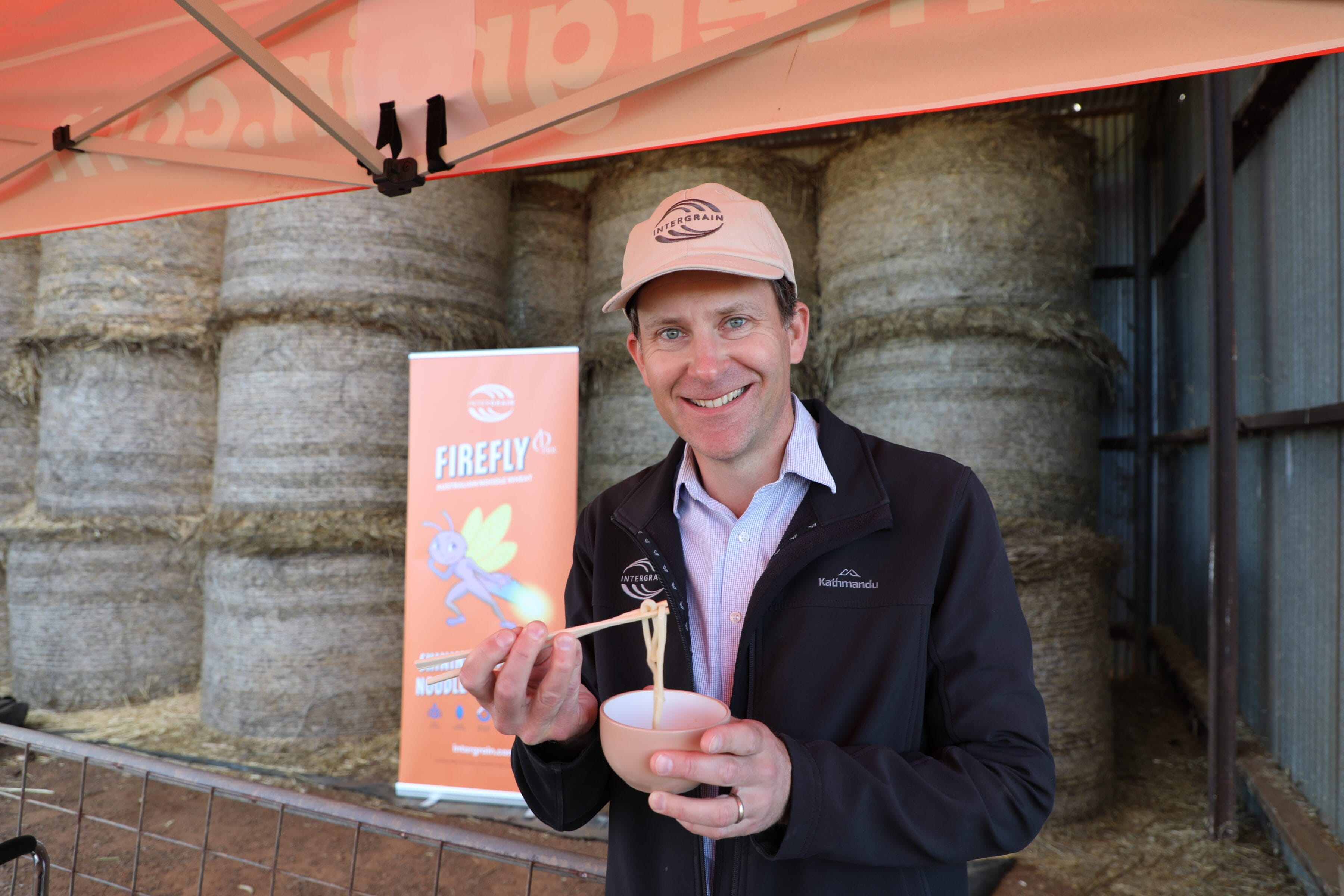
When Dr Mullan returned to Western Australia, he joined InterGrain as a wheat breeder, taking on responsibility for national programs including bread wheat, udon noodle wheats and soft wheat.
The role placed him at the interface of scientific discovery and commercial delivery, with a focus on meeting the needs of growers and markets.
It is work that has seen him contribute to the development of more than 20 wheat varieties grown across Australia.
“The most fulfilling aspect of my career is seeing the tangible impact of research and breeding on grower profitability and industry sustainability,” Dr Mullan said.
“Developing successful wheat varieties that improve yield, disease resistance, and quality, and knowing these varieties are grown across Australia and valued in international markets, is deeply rewarding.”
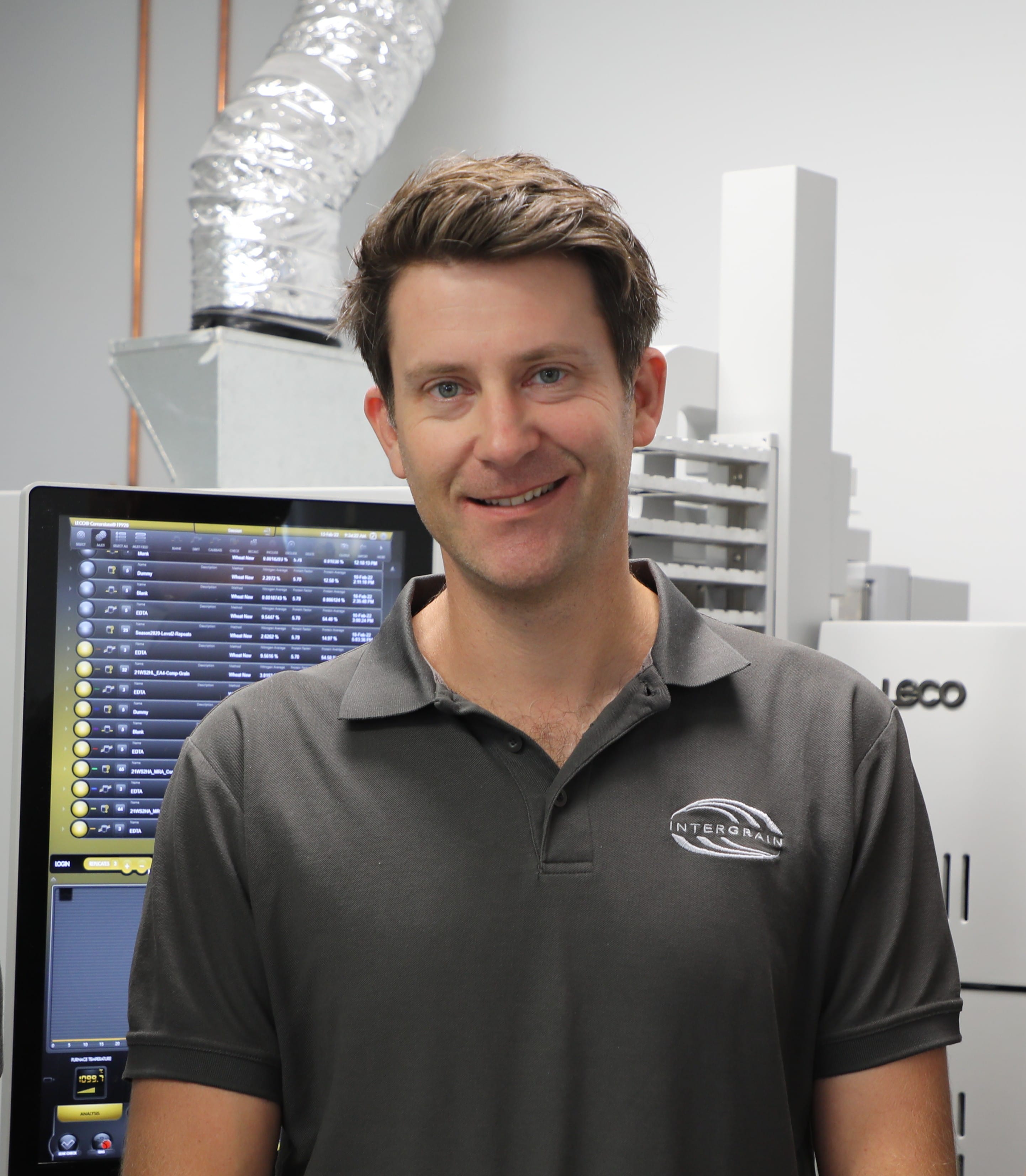
In 2023, he transitioned to the role of Chief Operating Officer at InterGrain, where he now oversees the management of commercial seed operations, cereal chemistry laboratories, glasshouses, infrastructure, and the field-testing network.
It’s a role that has allowed Dr Mullan to combine technical expertise with leadership and strategic vision, supporting both the company and the broader grains industry.
“I contribute to the company’s strategic direction, supporting the development of new breeding programs and ensuring our products meet both domestic and export market needs,” he said.
“I am also involved in market development activities, advocating for the benefits of Australian grain in key international markets and supporting initiatives to expand our reach and impact.”
Driving innovation through technology and mentoring
In his role, Dr Mullan’s focus is on accelerating genetic gain through the integration of advanced breeding technologies and improved operational systems.
It is an area that blends scientific insight with strategic decision-making, and one that has become increasingly important as breeding programs grow more complex.
“New tools are rapidly being developed that can transform breeding operations and approaches,” he said.
“The challenge lies in the selection of those that will have the greatest impact, and being able to integrate them into an existing framework.”
Ensuring that research remains aligned with real-world needs, both on-farm and in the market, is central to this work.
The feedback loop between growers, breeding teams and commercial partners is a critical driver of the company’s direction.
“Ultimately, my interest in these areas stems from the need to align breeding outcomes with requirements, both in the paddock and in the market,” he said.
“By integrating feedback from growers into our breeding programs, the business can ensure that our products remain competitive and responsive to changing conditions.”
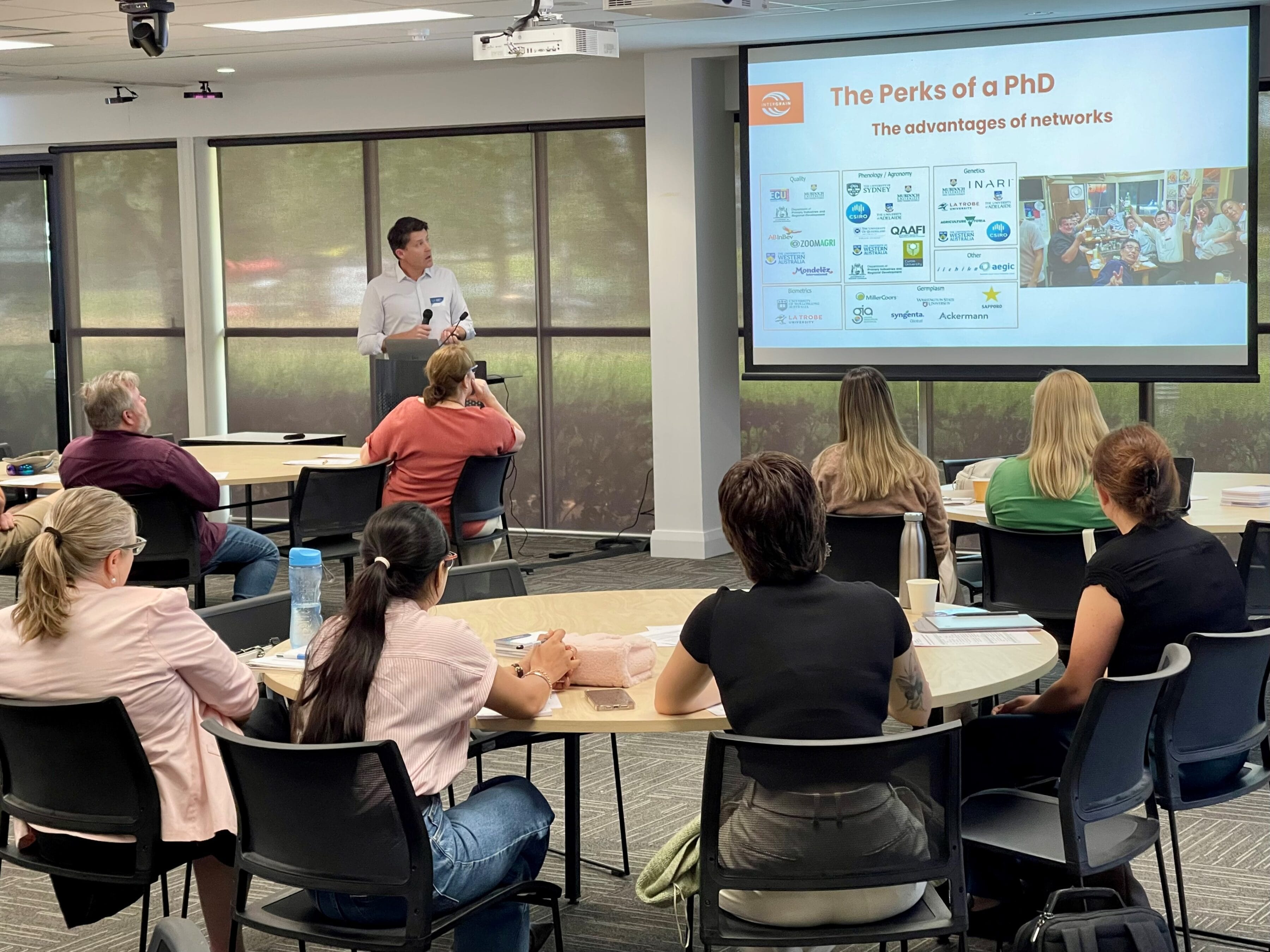
Alongside the technical research of his career, Dr Mullan has found great fulfilment in mentoring emerging researchers.
Supporting the next generation of scientists has become a deep source of satisfaction and one of the most rewarding dimensions of his work.
“I have supervised PhD students and contributed to educational initiatives, helping young researchers develop the skills and confidence needed to succeed in agricultural science,” he said.
However, it is the numerous wheat varieties – those that offer improved yield, resilience, and quality – he has helped develop and release which he is most proud of.
These varieties have reignited interest in specific wheat classes, provided valuable genetics for future breeding, and delivered tangible benefits to growers across Australia.
“Locally, these varieties support the profitability and sustainability of farming enterprises, helping growers adapt to climate variability and market changes,” Dr Mullan said.
“Internationally, collaborations with major institutions have helped address global challenges such as drought and heat adaptation, and efficient use of nitrogen, contributing to food security and resilience in diverse environments.”
Advice for the next generation of agricultural scientists
With a career that has taken him from the Wheatbelt to international research centres and back into Australian industry leadership, Dr Mullan is well placed to offer guidance to young scientists entering the field.
“Agriculture offers a dynamic and fulfilling career with global impact,” he said.
“My advice is to embrace opportunities for learning, build strong networks, and seek out mentors who can provide guidance and support.”
He encourages emerging researchers to welcome diverse experiences – whether in the field, the lab, industry roles or international collaborations.
For him, the greatest motivator remains the difference agricultural science can make to people, communities and food systems.
“I encourage early-career scientists to engage with industry stakeholders, participate in collaborative projects, and seek out opportunities to contribute to both local and global challenges,” Dr Mullan said.
“Most importantly, stay curious and committed to making a positive difference for growers, rural communities, and the broader food system.”
His career reflects the power of scientific curiosity paired with a deep commitment to growers and the broader grains industry.
As WA continues to face new challenges and opportunities, leaders like Dr Mullan will remain central to shaping a productive, resilient, and innovative agricultural future.
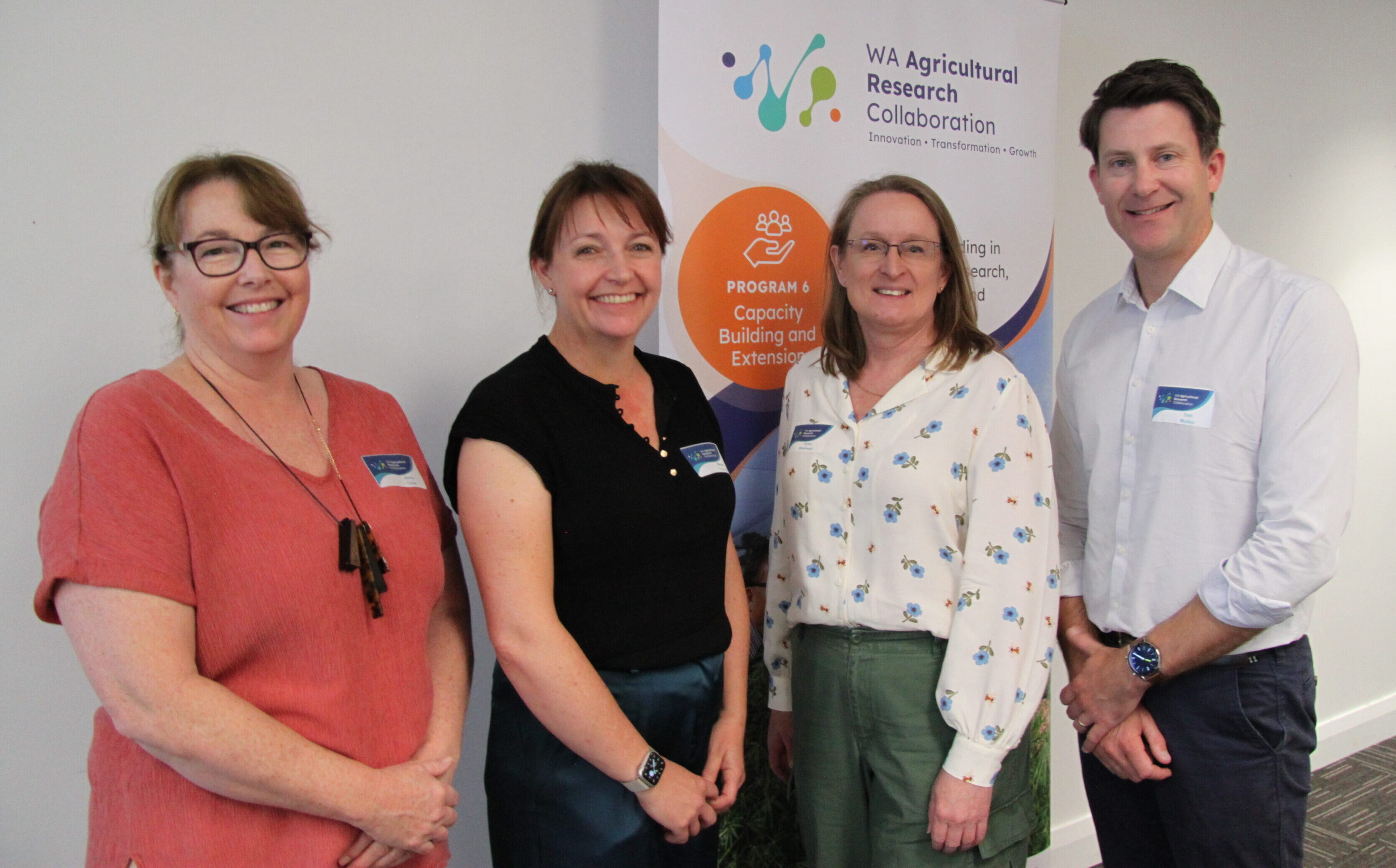
Through the WA Agricultural Scientist Spotlight series, WAARC celebrates the contributions of researchers like Daniel Mullan, whose work exemplifies the dedication and innovation needed to advance agricultural science in Western Australia.
By sharing their stories, the series aims to inspire a new generation to pursue careers in this vital field, ensuring the State remains at the forefront of agricultural research and sustainability.