


Each fortnight, the WA Agricultural Scientist Spotlight profiles one of Western Australia’s leading researchers, exploring the people behind the science and work shaping the future of the state’s agriculture and food systems.
The series highlights diverse career pathways into agriculture, reflecting the increasingly interdisciplinary nature of the sector and the many ways research contributes to resilient farming systems.
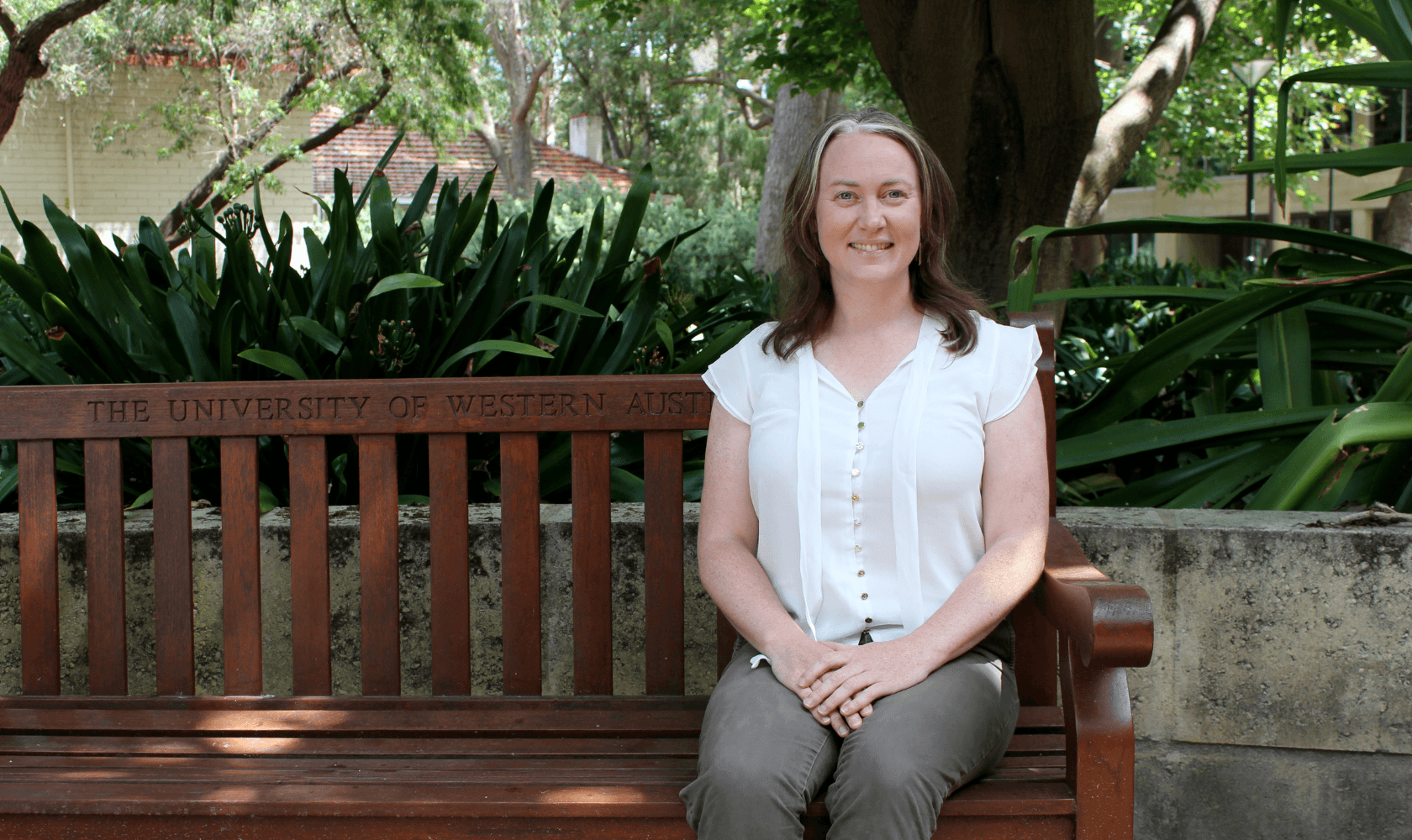
This edition features Dr Caitlin Moore, Senior Lecturer in the School of Agriculture and Environment at The University of Western Australia (UWA), whose work sits at the intersection of agricultural and environmental science.
Dr Moore is involved with the WA Agricultural Research Collaboration (WAARC), leading a project investigating how solar energy production can be combined with farming systems to boost productivity while reducing emissions, known as agrivoltaics.
Early influences and a lifelong connection to agriculture
For Dr Moore, agriculture has always been a central part of life rather than a career discovered later.
Growing up as a farm kid in country Victoria, she was immersed in farming systems from an early age, with strong connections to both dairy and beef production through her family.
“I grew up with pet cows, a token pet sheep each year, eventually a horse, and a host of other pets,” she said.
“I spent my weekends as a kid generally running wild on the farm – riding my horse or motorbike, playing with my pet cows, exploring the part-bush property.”
Those experiences were reinforced through stories that reflected her own upbringing, including children’s books that captured farm life with familiarity rather than romanticism.
“Alison Lester’s My Farm was a story book that always resonated with me as a kid and still does to this day,” Dr Moore said.
Together, these early influences established agriculture not as an abstract industry, but as a lived environment, one that continues to inform how Dr Moore approaches both science and farming systems today.
An indirect path shaped by environmental science
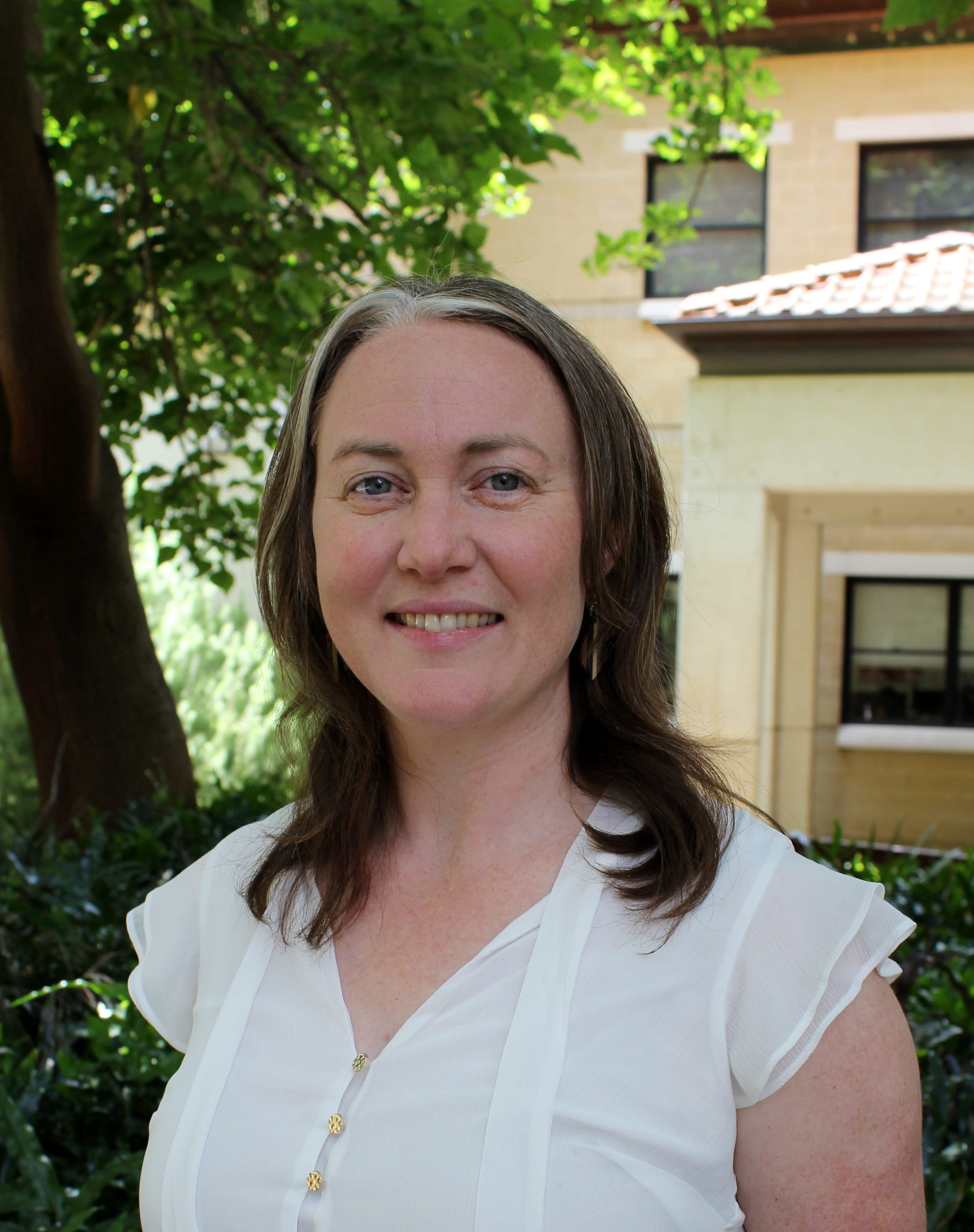
Although agriculture was a constant in Dr Moore’s early life, her university training was shaped first by a desire to work outdoors and understand how Australian landscapes function, rather than by a clear intention to pursue agricultural science.
Her academic pathway began at Monash University in Victoria where she undertook a Bachelor of Science, entering university with an entirely different career plan in mind.
“I actually went to university with the goal of becoming a physiotherapist but didn’t get the entry score to get directly into the degree,” Dr Moore said.
Environmental science quickly emerged as a natural fit, offering the combination of fieldwork and ecological understanding she was seeking.
“I enrolled in a Bachelor of Science and got hooked on environmental science pretty quickly,” she said.
That training led her into research focused on native ecosystems, with doctoral work centred on intensive field studies in northern Australia examining how tropical savanna systems respond to climate variability.
While this work sat outside traditional agricultural research, it provided the technical grounding that would later allow her to move confidently between native and managed ecosystems.
“My PhD was very native ecosystem focused, with lots of fieldwork in the wet season investigating tropical savanna carbon cycling near Darwin,” she said.
“When I finished that, I was looking for opportunities to broaden my research interests into agricultural research.”
That decision led to the next formative stage of her career which took her overseas and firmly into the world of agricultural science.
Building an agricultural research career in the United States
The opportunity to expand her research into agricultural systems came via a postdoctoral role in the United States, marking a turning point in Dr Moore’s career.
She joined the University of Illinois Urbana–Champaign, one of the country’s land-grant universities, located in the heart of the US Midwest’s high-production cropping region.
Dr Moore was immersed in large-scale, highly managed farming systems, gaining exposure to cropping practices and research approaches that differed markedly from those she had previously encountered.
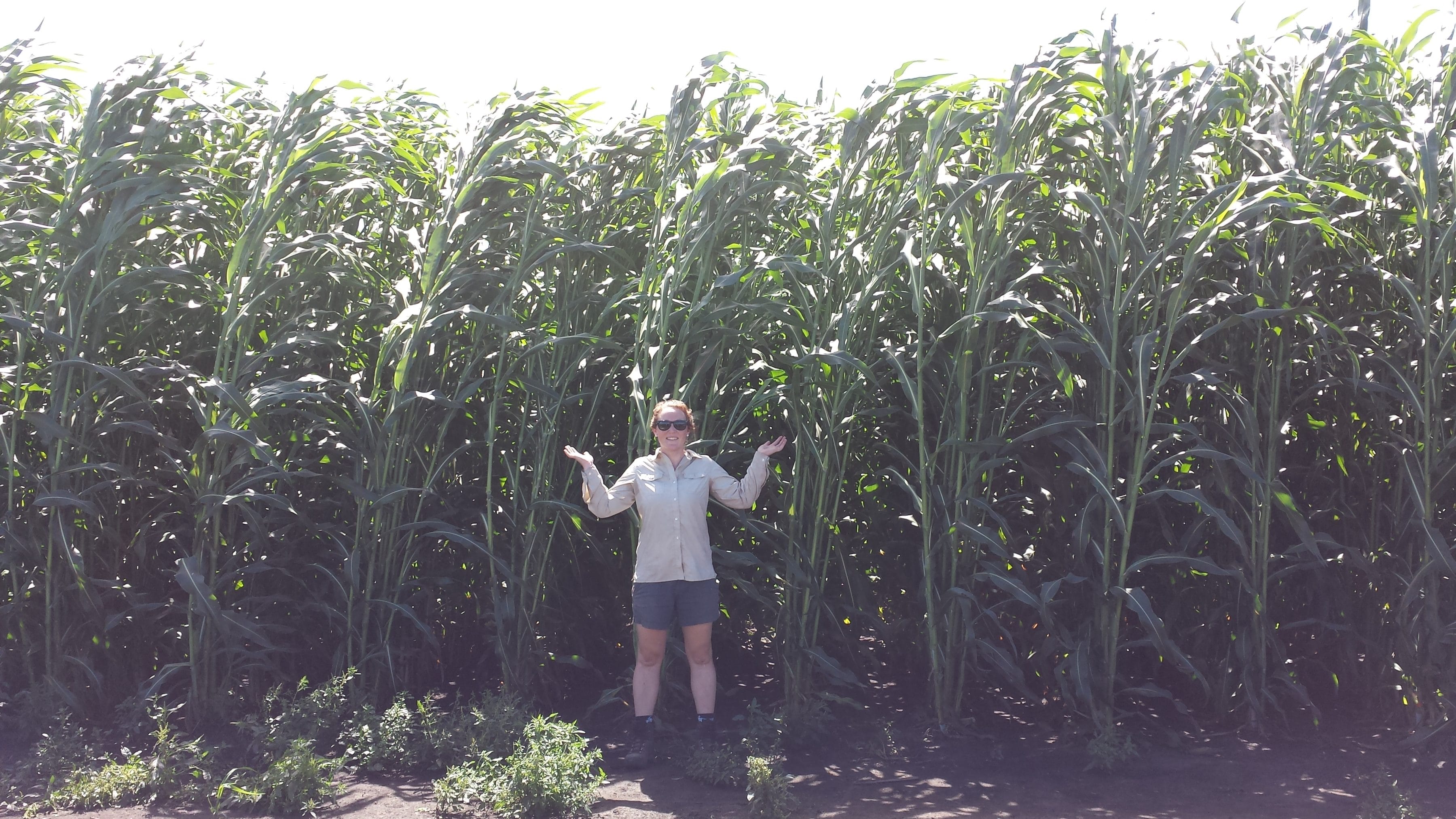
“I spent four years there learning about and contributing to research that pushed forward our understanding of food and bioenergy cropping systems and their response to climate variability and extreme events,” she said.
“This gave me a crash course in cropping systems and their management, primarily corn and soybean, but also perennial grasses such as miscanthus and switchgrass.”
Alongside the research, Dr Moore built strong professional relationships across academia, industry and farming communities, gaining valuable insight into how research translates into practice.
“My time in the US reawakened my passion for agricultural science, and made me realise my skills in environmental science could be applied to improve understanding of both native and managed ecosystems,” she said.
By the time Dr Moore returned to Australia, she had developed a clear sense of how her background could contribute meaningfully to agricultural research, setting the direction for the next phase of her work.
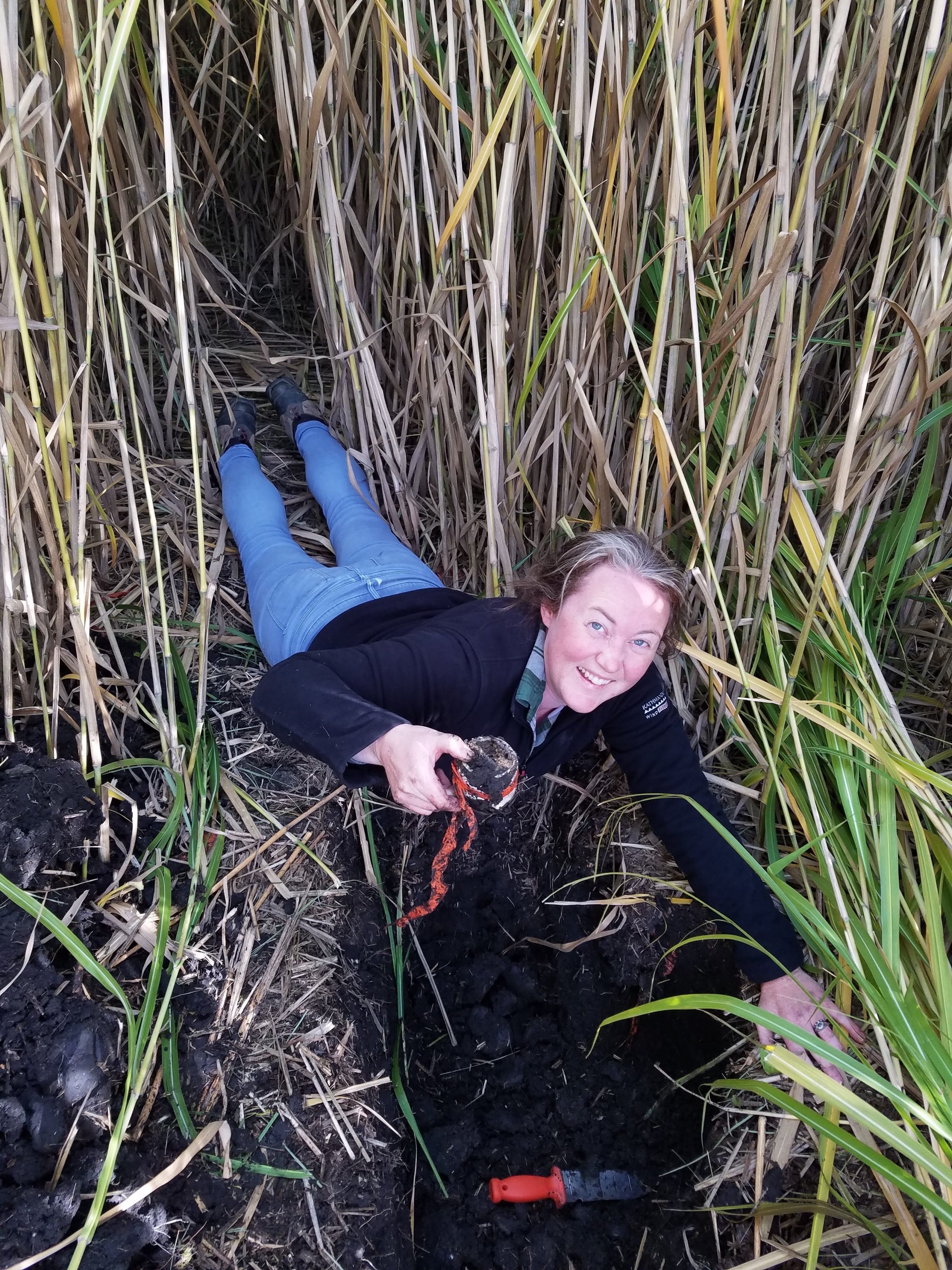
Returning to Australia and measuring ecosystem–climate interactions
After returning to Australia, Dr Moore joined the School of Agriculture and Environment at UWA, where she is now a Senior Lecturer in agricultural and environmental science.
Her research focuses on understanding ecosystem and climate interactions, with projects designed to capture processes operating across different spatial and temporal scales.
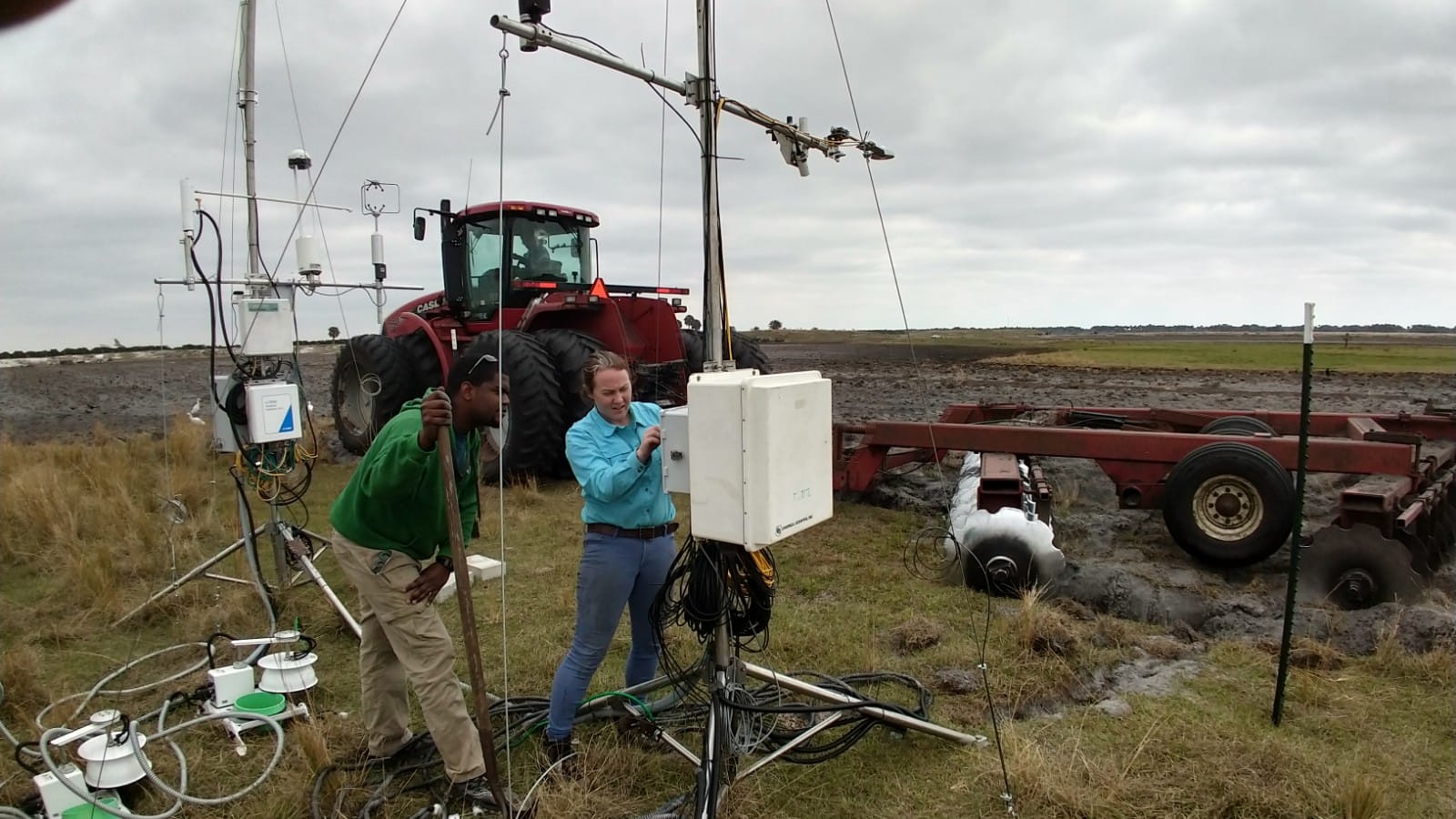
“My projects are typically field based, using lots of instrumentation and gadgets to understand how ecosystems are interacting with and responding to climate at various scales,” she said.
Dr Moore also teaches undergraduate and masters classes, supervises student projects, manages technicians and postdocs, and serves on several UWA-based and external committees.
She has a background in climatology and ecophysiology, which she uses to piece together the story of how native and managed ecosystems respond to climate variability and extreme events.
That work involves building and maintaining flux towers, which include all the measurements of a weather station, plus soil sensors, solar sensors, and instruments that measure carbon, water and energy fluxes (or exchange) between ecosystems and the atmosphere.
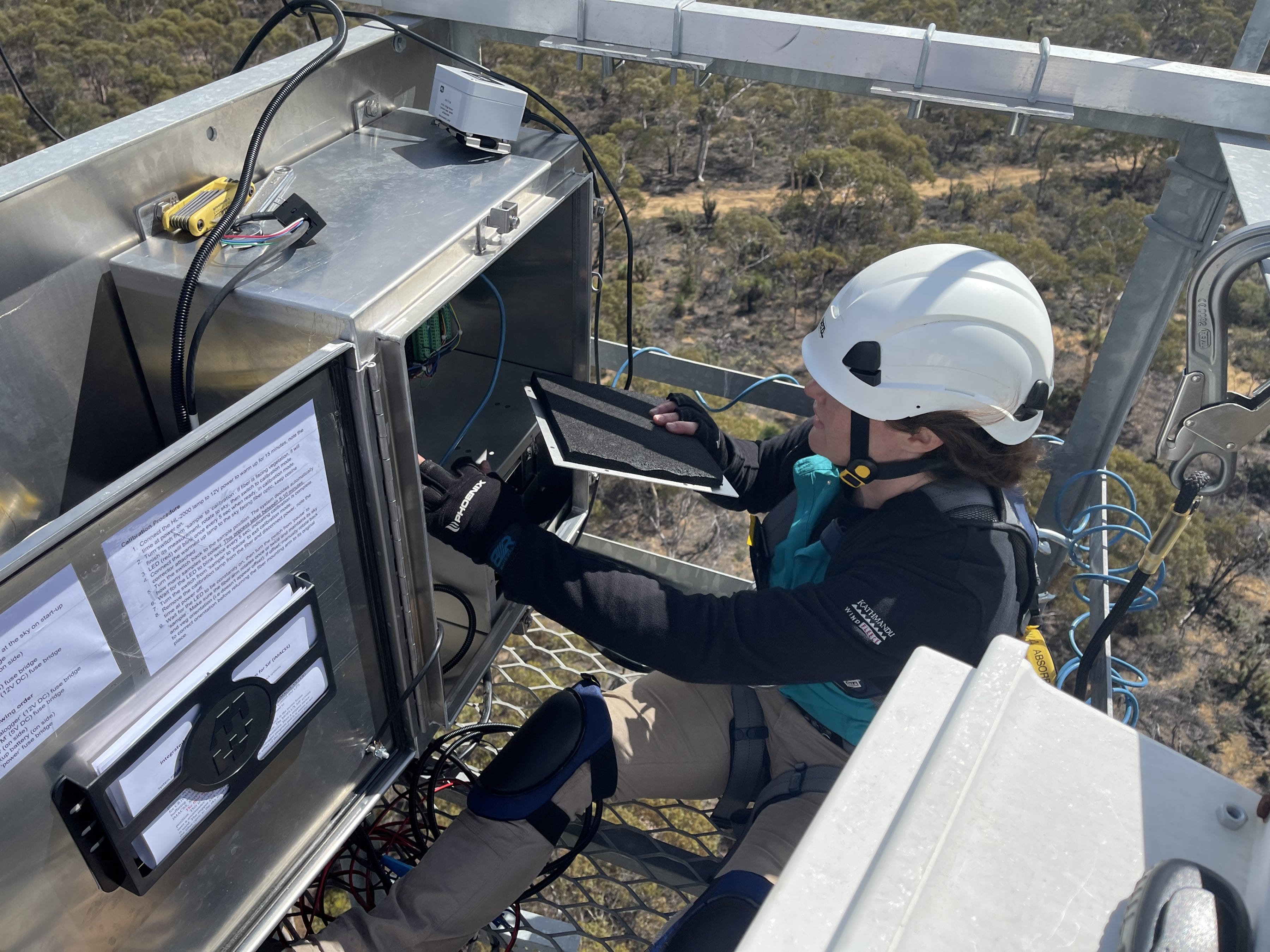
“The flux tower observatories I manage provide important information about carbon and water cycling from the ecosystems they measure, which feed into the global network of flux tower observatories, FLUXNET,” Dr Moore said.
“Data from this network is used for testing, calibrating and validating remote sensing data products and various modelling tools that look at a wide range of ecosystem processes and responses to climate over time and space.
“By managing the sites in WA and making the data available to this global network, I am helping to ensure WA is represented in global research efforts.”
Dr Moore is also a research leader for Australia’s Terrestrial Ecosystem Research Network (TERN) node in Western Australia, overseeing a network of ecosystem observatories across the South West.
Agricultural systems form an important part of this monitoring effort, with a site at UWA Farm Ridgefield contributing to the Australian Long-term Agroecosystem Research (ALTAR) network, which sits within TERN.
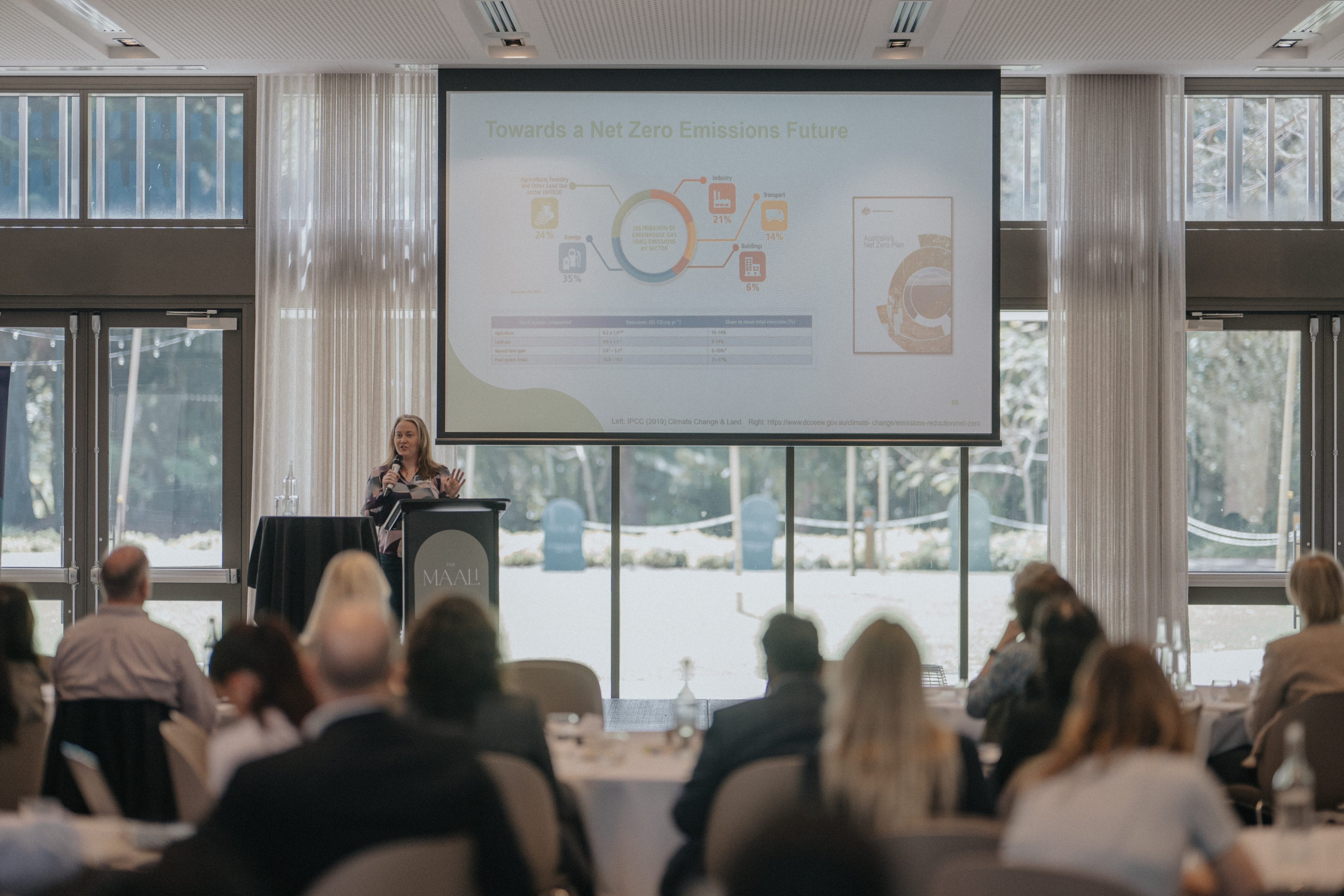
Alongside her work with TERN, Dr Moore is actively involved with WAARC and the CRC for Zero Net Emissions in Agriculture, leading a project exploring agrivoltaics alongside industry lead Neil Canby from Sunrise Energy Group – the integration of solar energy production with farming systems to improve productivity while reducing emissions.
From research to impact and the next generation
For Dr Moore, the most rewarding aspect of her work lies in seeing research translated into outcomes that matter on farm, particularly through direct engagement with growers and farming communities.
“Being able to test novel techniques to improve or safeguard productivity of farming systems, or help quantify the benefits of existing novel practices in the agricultural sector is really rewarding,” she said.
“I remember my dad saying to me once ‘don’t forget your roots, sport’ in reference to me choosing environmental science as my major.
“He didn’t want me to move to the city and forget about my connection with agriculture, and I think it’s safe to say he’s not worried anymore.”
Looking ahead, Dr Moore’s advice for those considering a career in agriculture centres on curiosity, flexibility and allowing interests to evolve over time.
She encourages students not to feel constrained by degree titles or linear pathways, noting that meaningful contributions to agriculture come from a wide range of disciplines.
“Follow your passion, and if you’re not sure what your passion is yet, then do what interests you,” she said.
“If you’re not sure, a general degree is fine and can still lead you towards a fulfilling career.
“I don’t have a formal ag science qualification, but I’m still contributing to agricultural research and development.”
By combining a strong foundation in environmental science with applied agricultural research and a willingness to follow opportunity, Dr Moore’s career highlights the important role flexible pathways play in shaping meaningful contributions to agriculture in Western Australia and beyond.
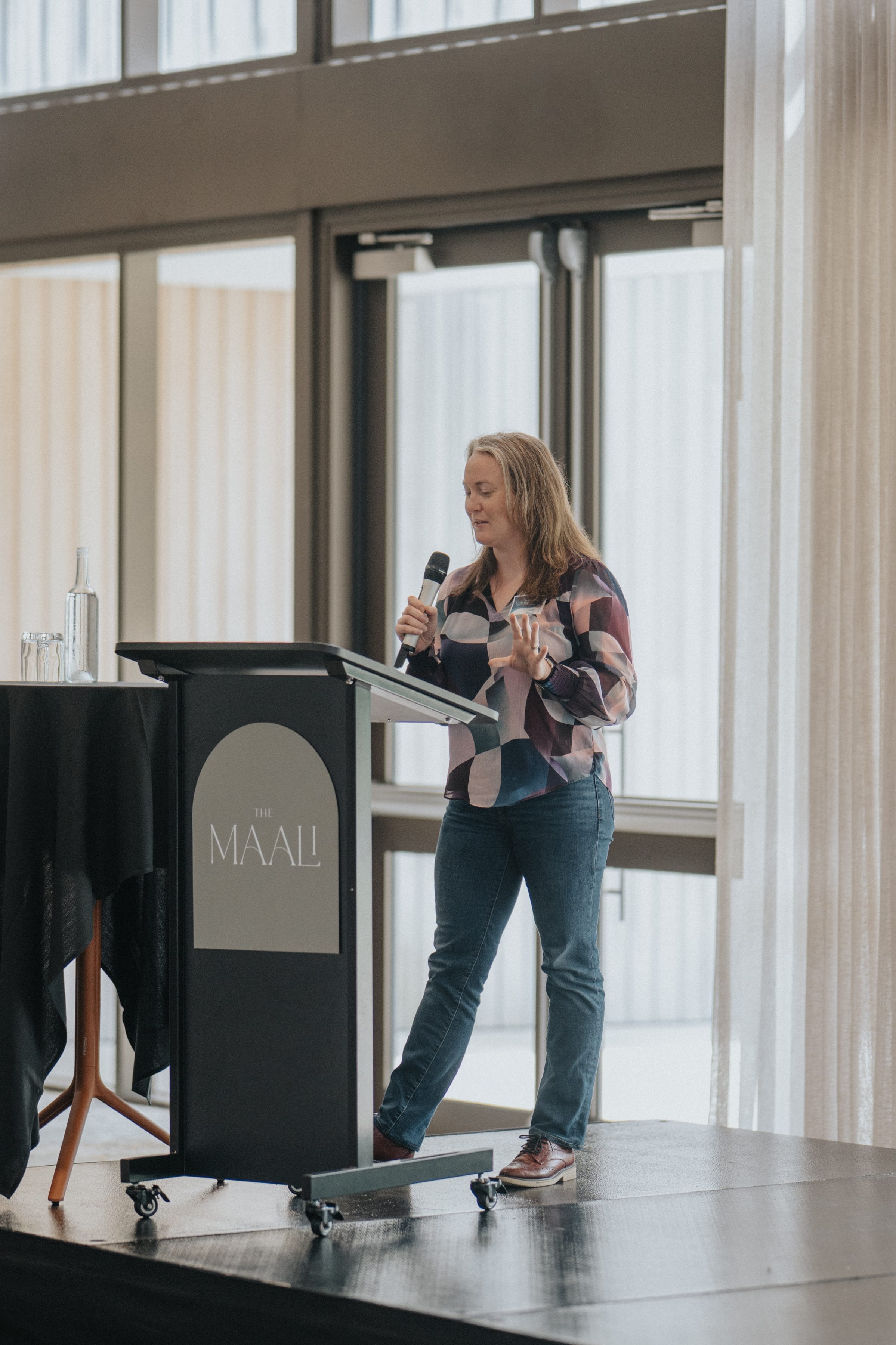
Through the WA Agricultural Scientist Spotlight series, WAARC celebrates the contributions of researchers like Caitlin Moore, whose work exemplifies the dedication and innovation needed to advance agricultural science in Western Australia.
By sharing their stories, the series aims to inspire a new generation to pursue careers in this vital field, ensuring the State remains at the forefront of agricultural research and sustainability.