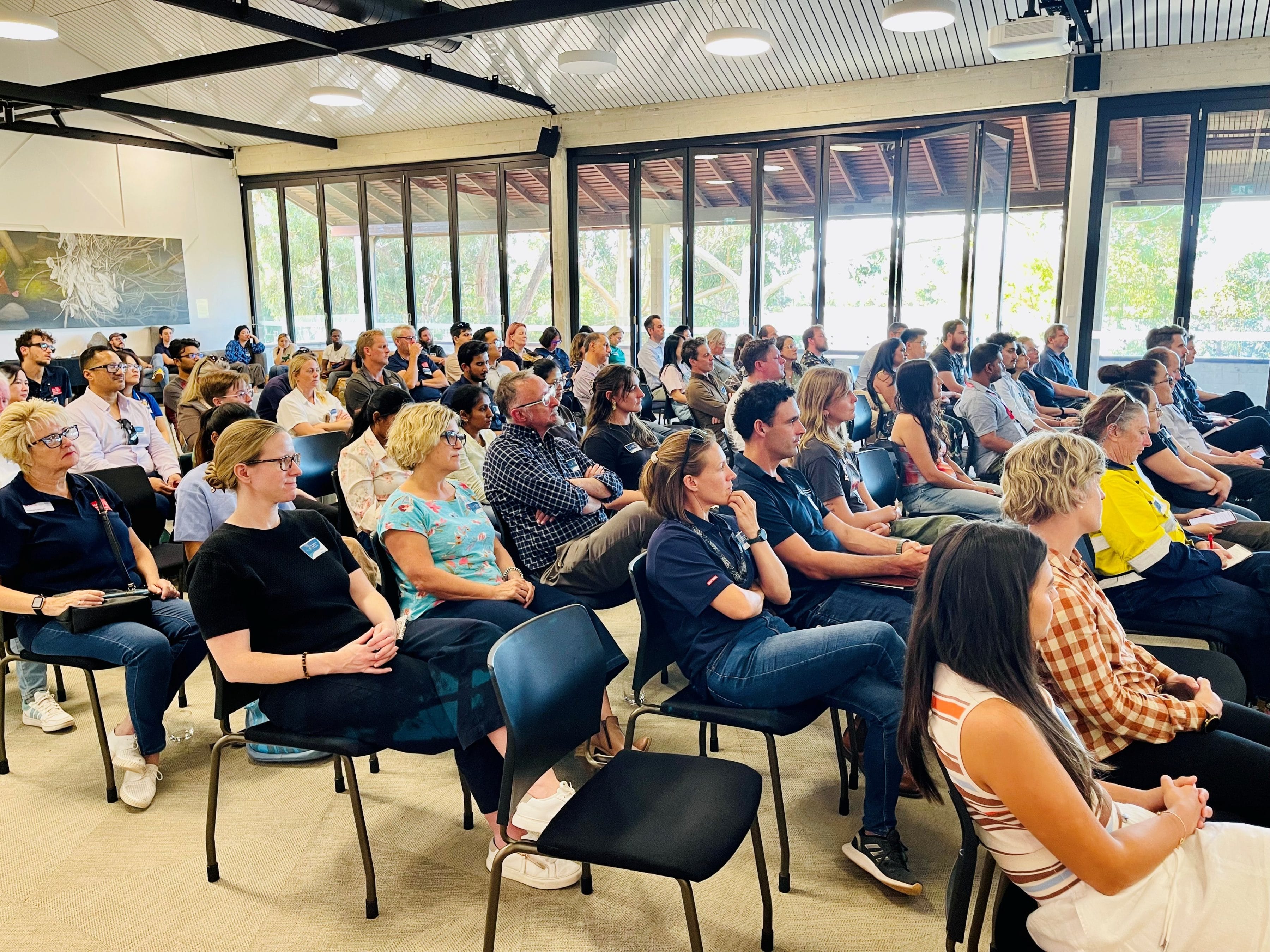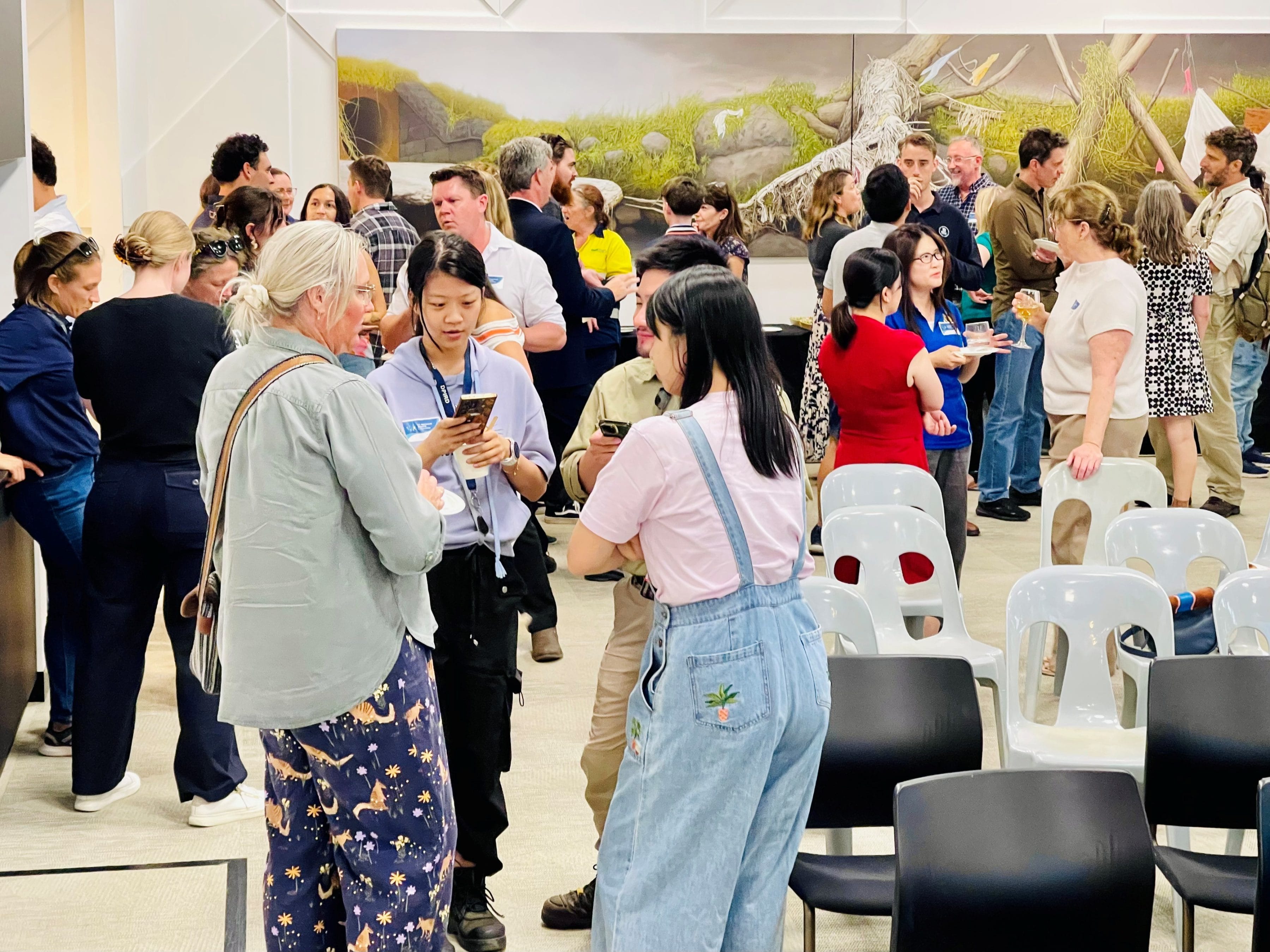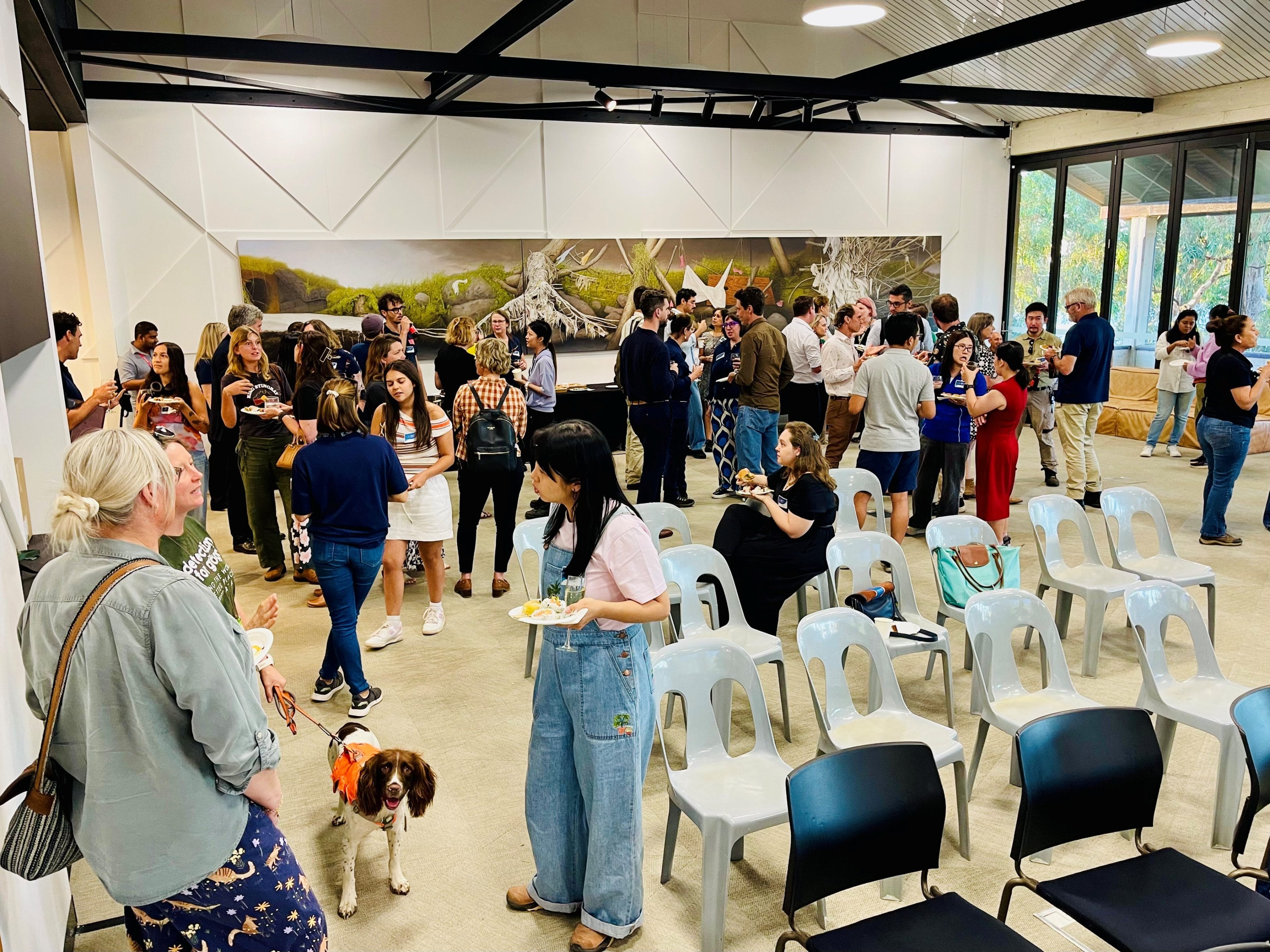

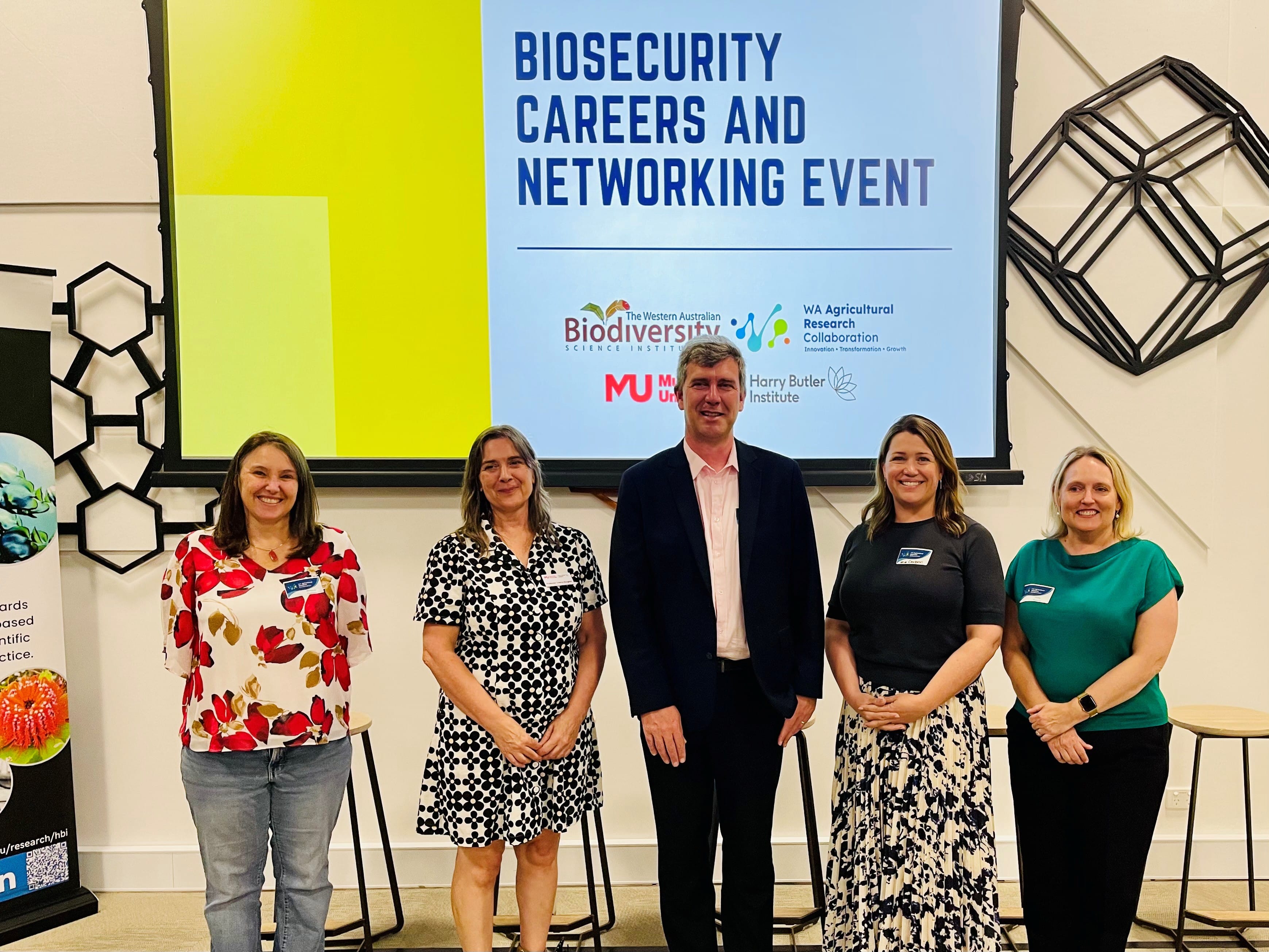
The second annual WA Biosecurity Careers and Networking Event held on 12 March 2026 at Murdoch University, highlighted growing interest in building Western Australia’s biosecurity sector and reinforced the value of a dedicated forum focused on biosecurity careers, collaboration and capability building.
Co-hosted by WAARC alongside Murdoch University’s Harry Butler Institute and The Western Australian Biodiversity Science Institute (WABSI), the event attracted strong cross-sector attendance.
The passion, interest and energy in the room were tangible, with attendees ranging from senior government leaders including the Deputy Director General of Biosecurity, through to postgraduate and undergraduate students.
Engagement from students was especially strong, with many undergraduates expressing interest in pursuring careers in biosecurity. Attendance from software and computer science students also highlighted growing interest in applying AI and computational skills to biosecurity challenges.
WAARC Director Kelly Pearce said the Collaboration was committed to supporting capacity building in biosecurity, recognising it as a critical area for WA.
“WAARC currently supports related research through the polyphagous shot-hole borer program and continues to invest in strengthening skills and networks across the sector,” Dr Pearce said.
Sincere thanks to Dr Mia Carbon, Deputy Director General of Biosecurity and Emergency Management at the Department of Primary Industries & Regional Development, for guiding the event and enriching the program with her valuable insights as a leader of biosecurity and our event MC.
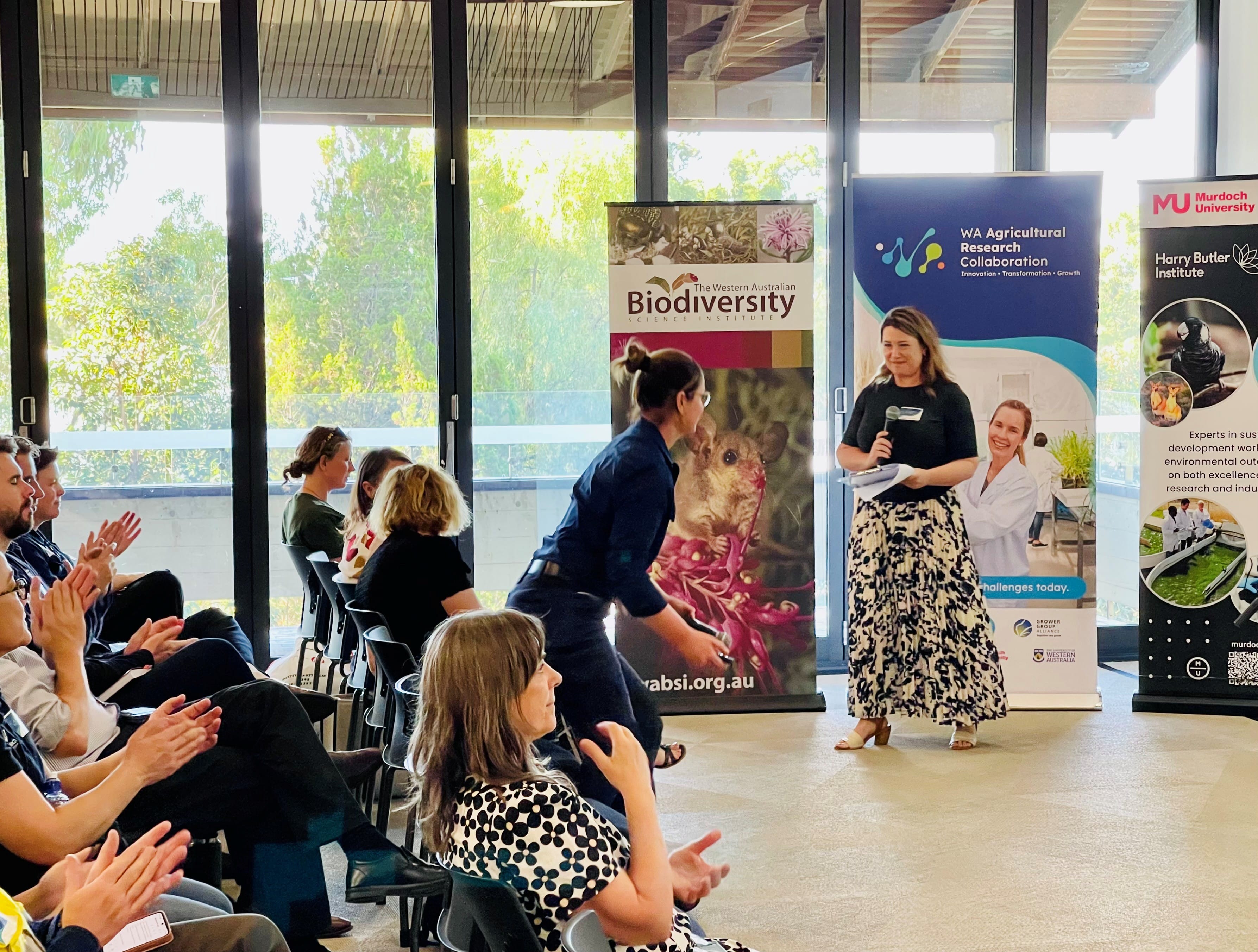
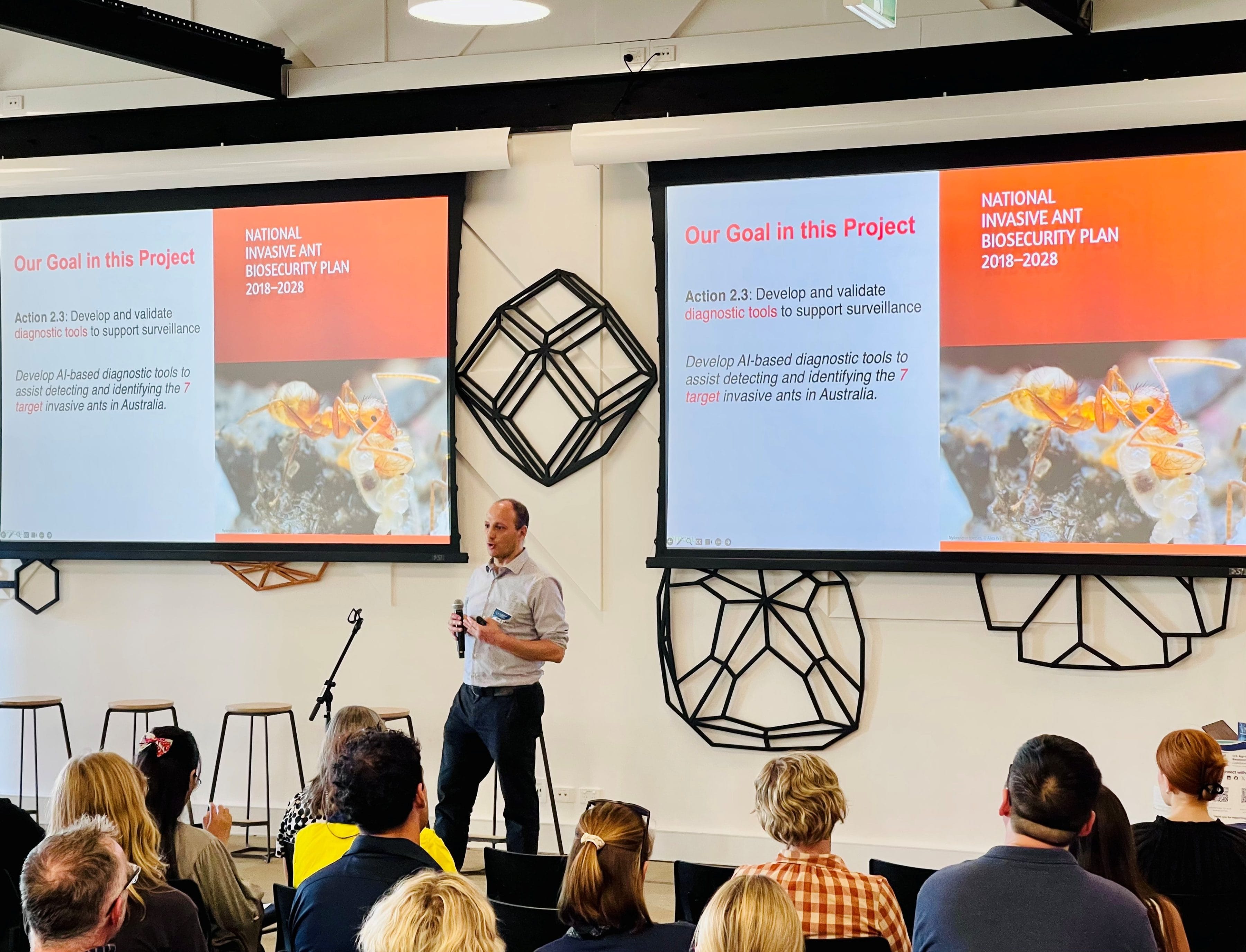
Presentations showcased the breadth and diversity of biosecurity careers across research, government and conservation, including:
- Professor Hamid Laga (Murdoch University) – who shared his insights into emerging applications of artificial intelligence and computer vision in biosecurity and environmental monitoring, including the development of a citizen science platform for the identification of invasive ants.
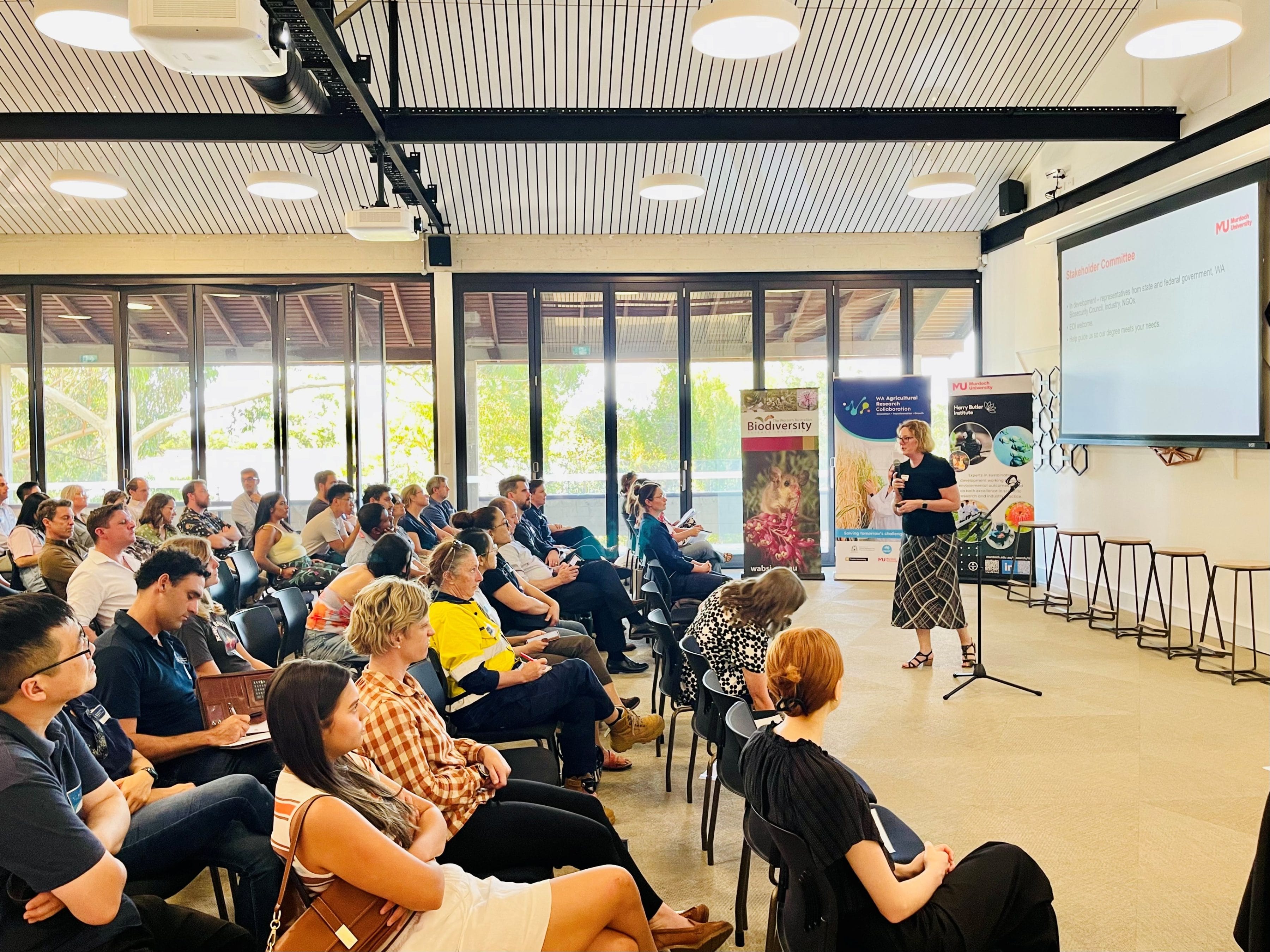
- Associate Professor Kirsty Bayliss (Murdoch University) — who discussed career pathways available through the Master of Biosecurity and the diverse opportunities across the sector, including sharing career updates and testimonials from former graduates.
- Dr Kylie Ireland (Department of Biodiversity, Conservation and Attractions (DBCA)) – who shared her interesting and varied career journey across plant pathology, agriculture and international research, and her current work protecting WA’s ecosystems from threats such as Phytophthora dieback.
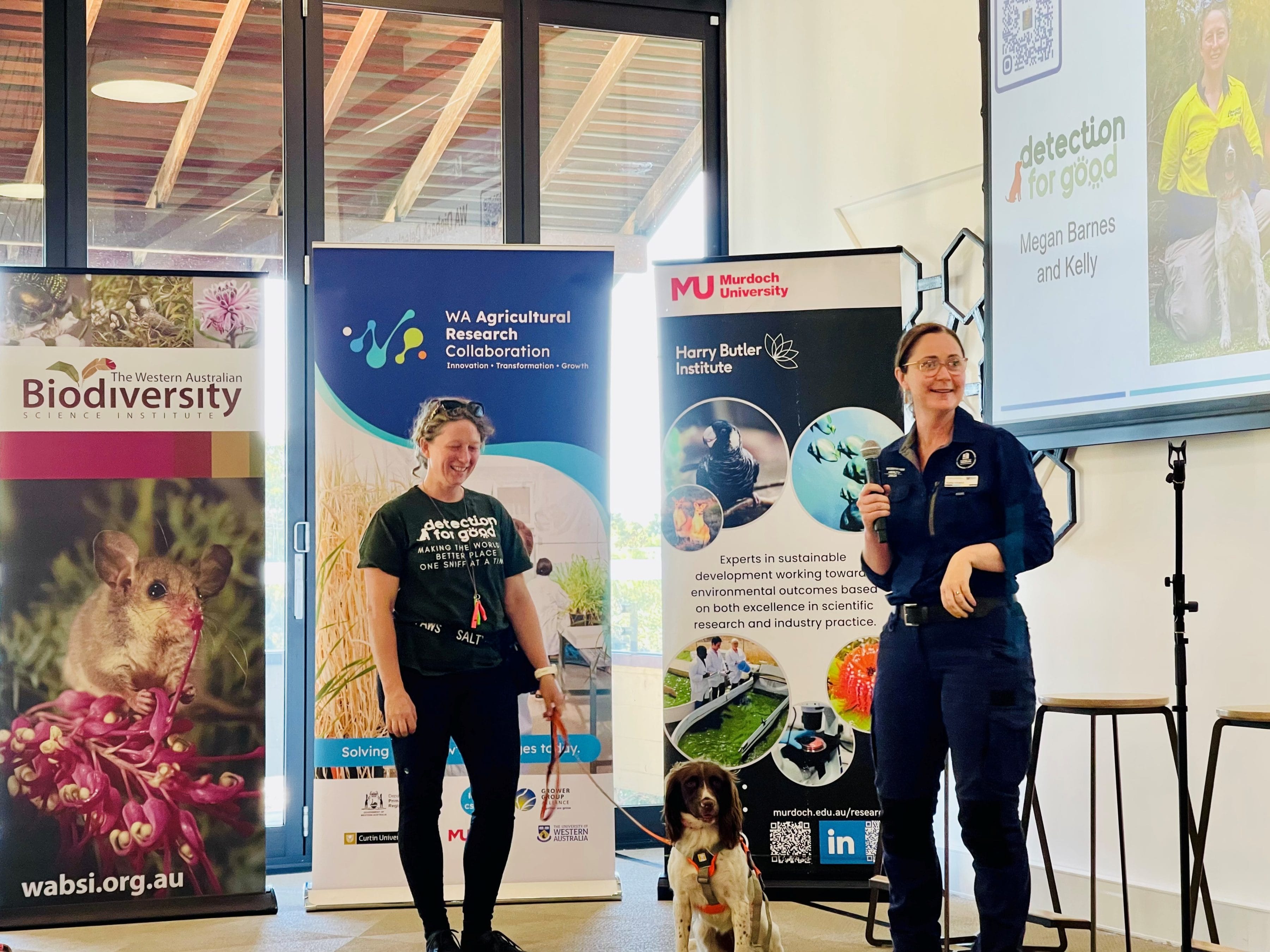
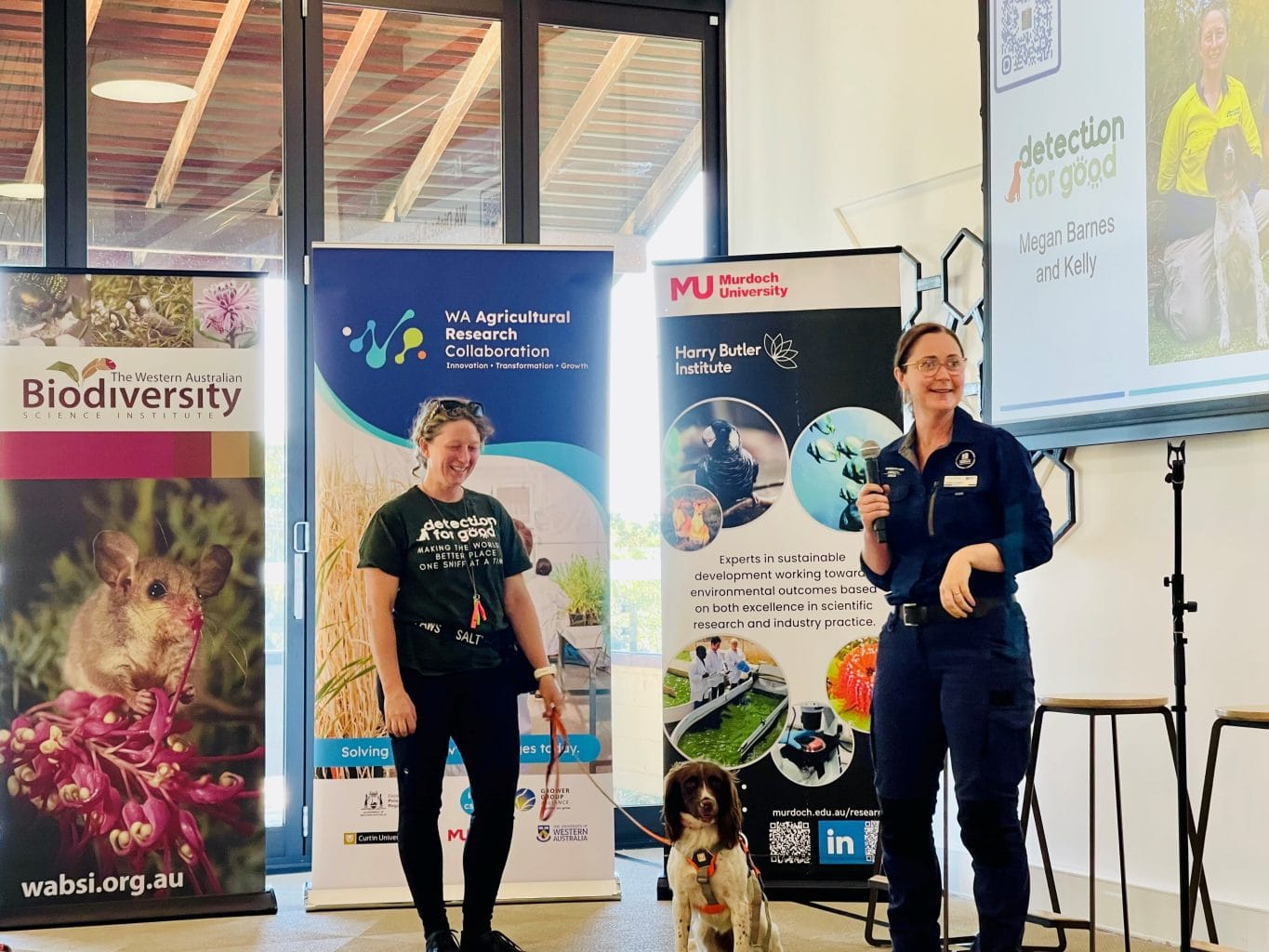
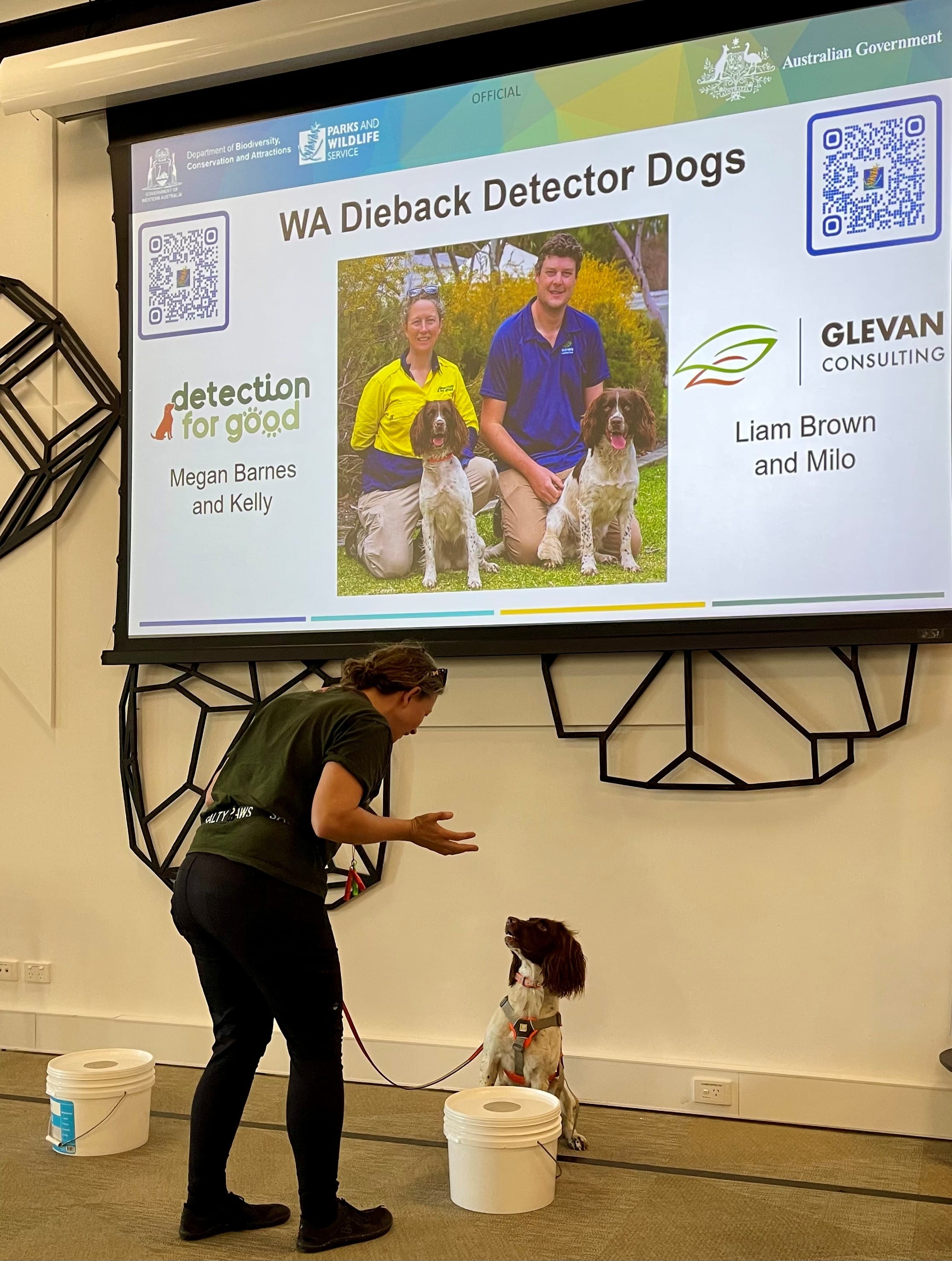
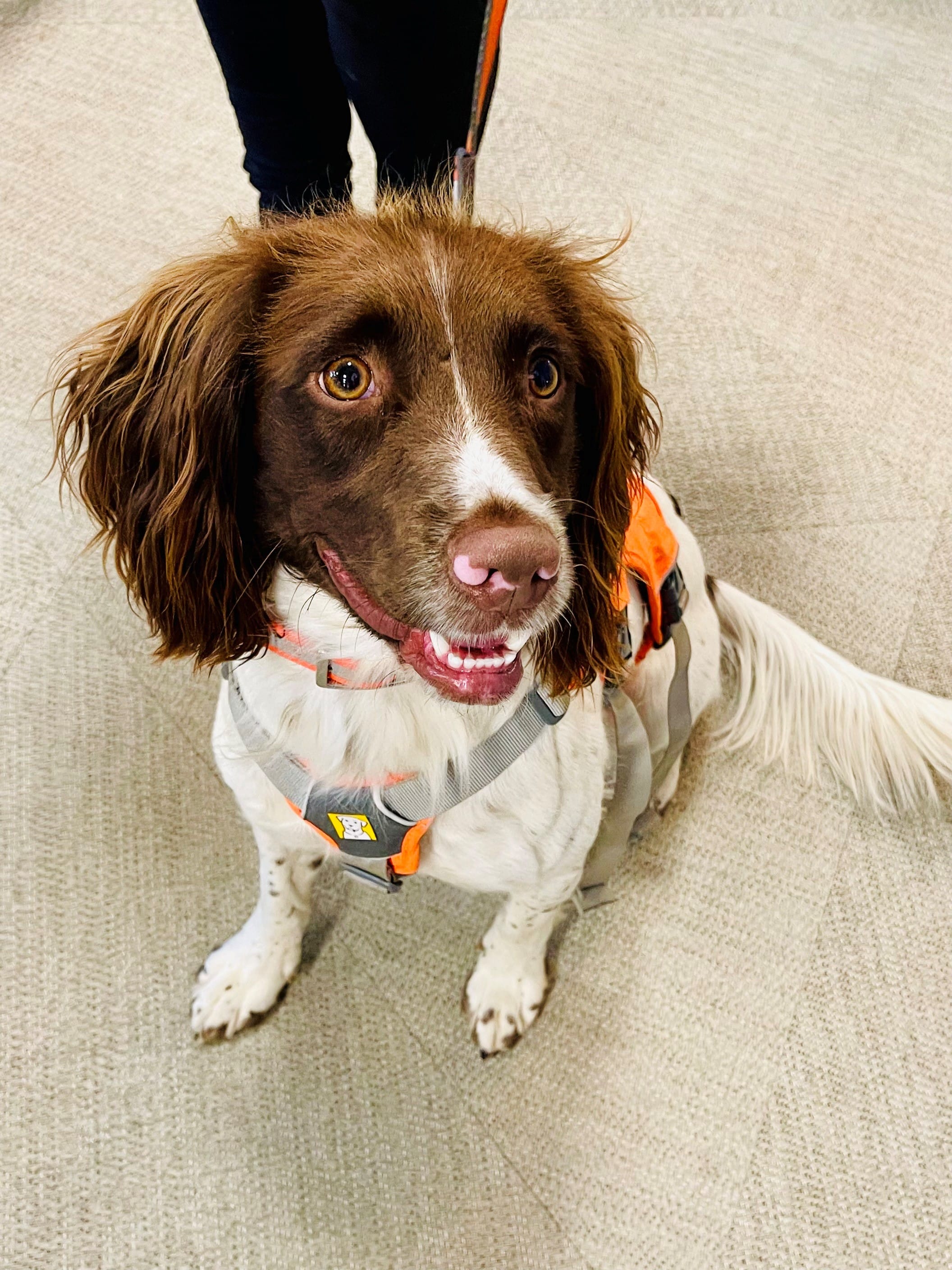
A major highlight of the evening was meeting biosecurity detection dog Kelly and her handler Dr Megan Barnes from Detection for Good, who demonstrated the growing role of trained detection dogs in identifying biosecurity threats. The session showcased the innovative work being undertaken with DBCA to train dogs for detecting Phytophthora dieback, highlighting the remarkable capabililities of detection dogs and their potential as a powerful tool in biosecurity surveillance and protection of Western Australia’s natural assets.
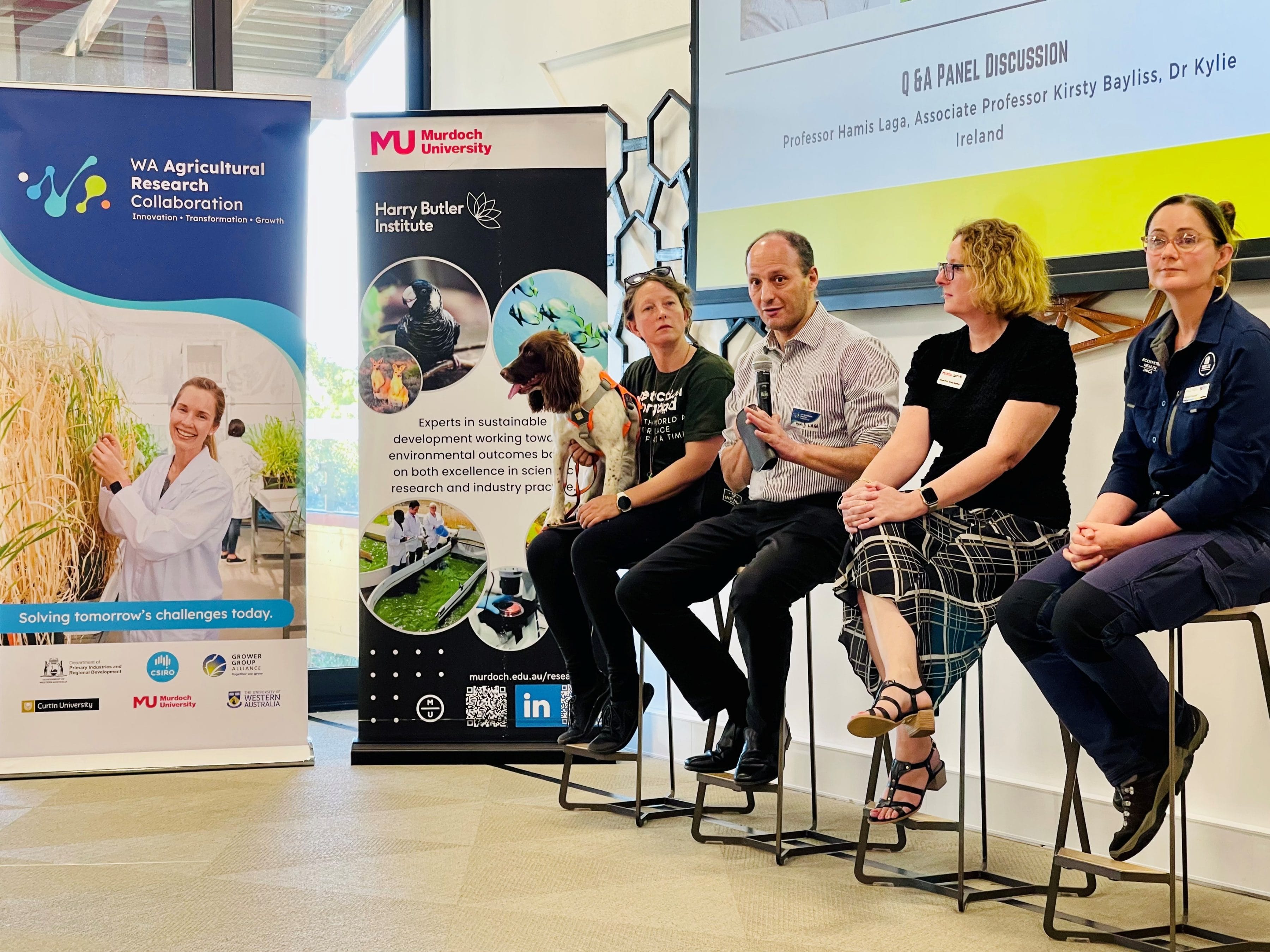
Before refreshments and mingling, attendees embraced the opportunity to ask questions during a panel session where all four presenters shared further insights into their career experiences and learnings across their diverse fields of biosecurity.
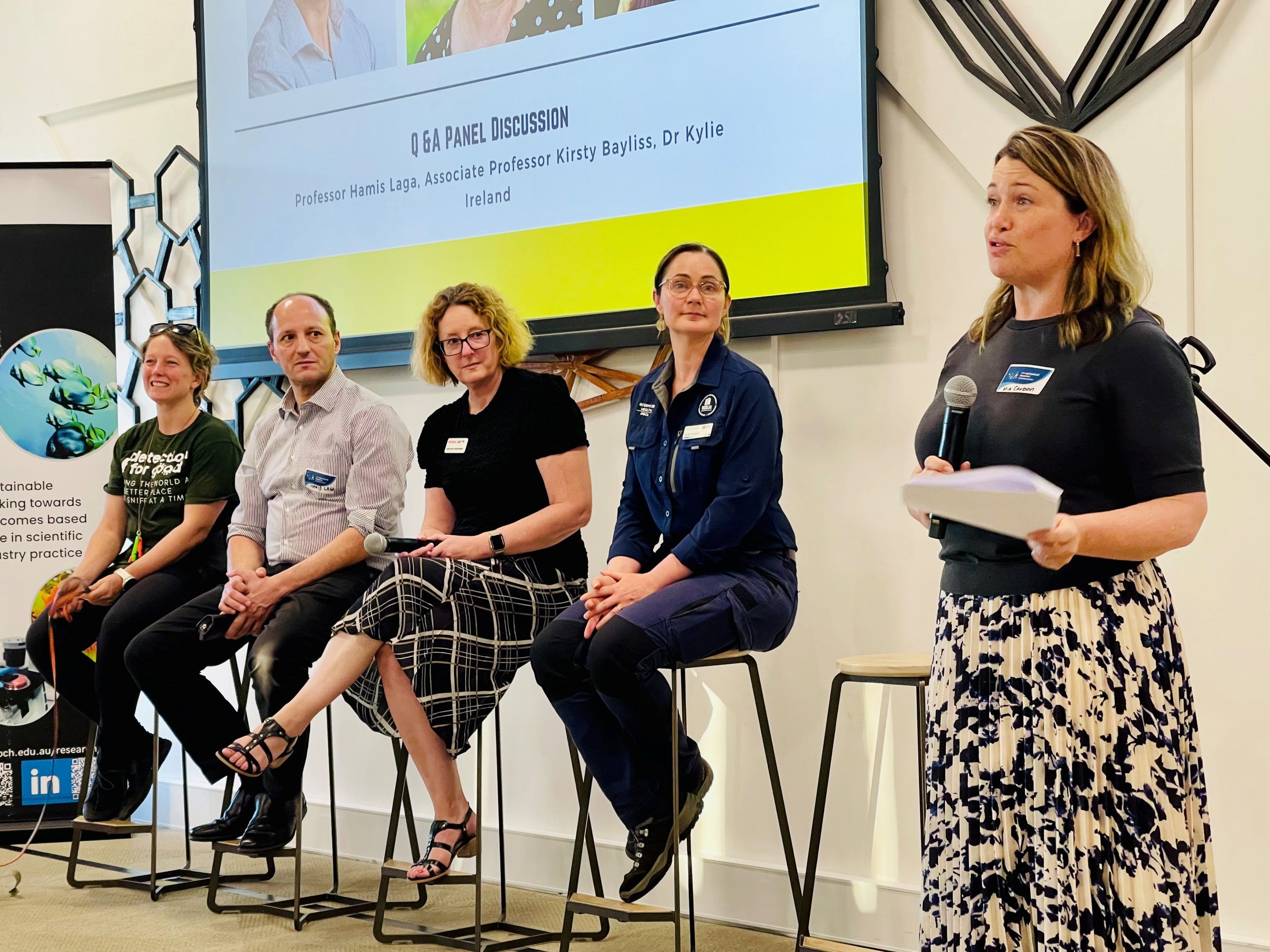
The event created valuable networking opportunities across research, government and industry, with several attendees noting that connections made at last year’s event had already led to new collaborations and employment opportunities.
WAARC was proud to again support the event alongside WABSI and the Harry Butler Institute, and looks forward to continuing this collaboration in the years ahead.