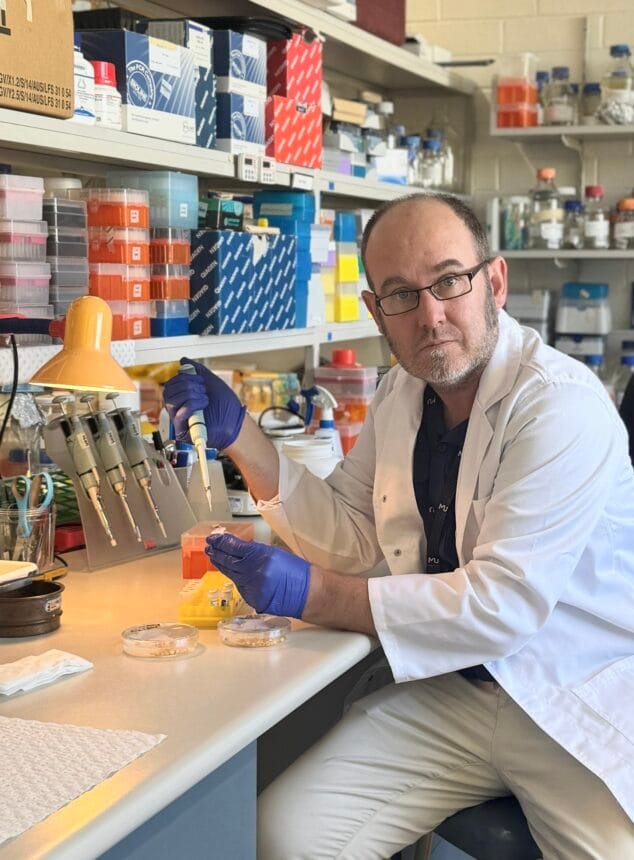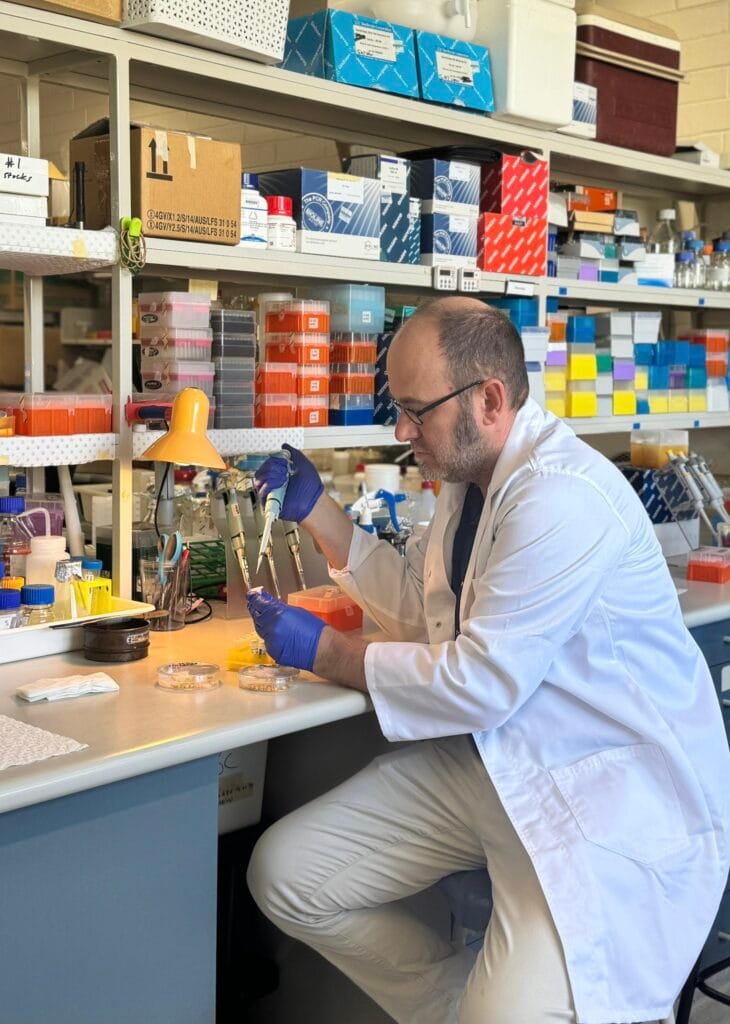

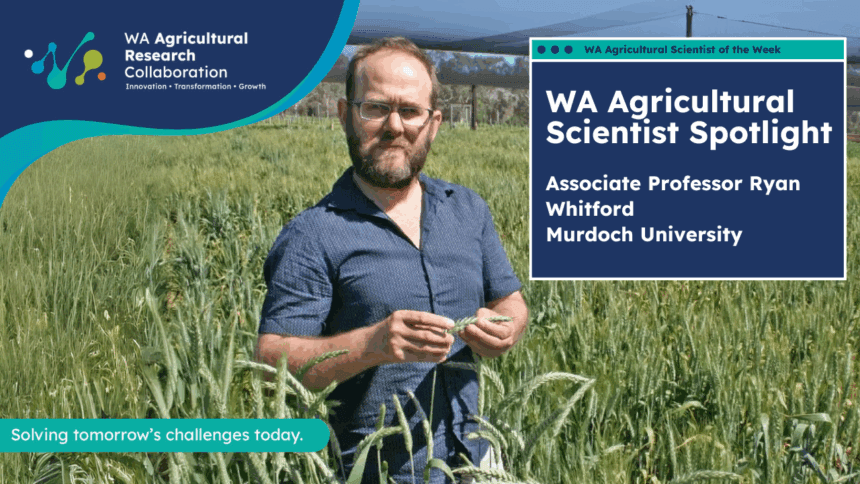
Each fortnight, the WA Agricultural Scientist Spotlight series shines a light on the talented researchers shaping the future of agriculture in Western Australia.
In this edition, we feature Associate Professor Ryan Whitford, a globally recognised crop geneticist who recently returned to WA after nearly three decades of research and leadership roles in South Australia, Europe, and beyond.
Now based at Murdoch University’s Centre for Crop and Food Innovation, Prof Whitford is working to unlock the full potential of hybrid wheat technologies to support more resilient and productive agriculture.
From Cuballing to crop genetics
Ryan Whitford’s agricultural roots run deep.
Raised on Springhill Farms, a mixed cropping and sheep property in Cuballing, his early years were steeped in the rhythms of farm life and family enterprise.
“Outside my schooling, much of my youth was contributing to the on-farm fertiliser distribution business (Whitford Fertilisers) as well as typical farmwork,” he said.
“I was that extra pair of hands for bagging fertiliser, driving front-end loaders and loading trucks, whilst helping the business transition to a larger operation based out of Kwinana.”
This grounding in practical agriculture gave Prof Whitford a unique perspective on the industry and shaped the direction of his future studies.
His passion for agriculture led him to pursue a degree in Agricultural Science at The University of Western Australia, majoring in plant sciences.
His interests began to focus more specifically on crop genetics during his Honours year, under the mentorship of barley breeder Dr Rodger Boyd.
“My interest focused on genetics and pre-breeding, culminating in an Honours project aimed at discriminating local malting from feed barley varieties,” Prof Whitford said.
With support from CBH Group and the then Grain Pool of WA, he travelled to the Waite Campus at the University of Adelaide to learn cutting-edge DNA fingerprinting techniques.
The project was a success, opening doors to a Grains Research and Development Corporation (GRDC) Junior Research Fellowship and an AgWA top-up scholarship that enabled him to pursue a PhD in cereal reproductive biology.
International science with local roots
His PhD studies, undertaken through the Cooperative Research Centre for Molecular Plant Breeding, focused on understanding the genetic control of meiosis and recombination in wheat – key processes breeders use to integrate traits from wild wheat relatives.
These studies sparked what would become a long-standing commitment to international collaboration and cutting-edge research.
“I spent research periods in Wilmington, USA at DuPont-Pioneer learning large-scale DNA sequencing, then Hamburg, Germany conducting wheat transformation, as well as a short stint at the University of Zurich in Switzerland decoding the DNA,” he said.
The work laid the foundation for breakthroughs in gene mapping and genome analysis, which are now routine tools in wheat breeding.
In collaboration with colleagues in France and the Czech Republic, his research team ultimately identified the target meiotic gene – a process that took 20 years.
“Seeing such progress in our understanding of wheat genome complexity still amazes me today,” Prof Whitford said.
His career trajectory has spanned academia and industry – a combination that has given him a rare ability to translate fundamental science into practical solutions.
In 2003, he joined Bayer CropScience in Frankfurt, leading a program to identify chemical stimulants for crops.
He later moved to Belgium’s Flemish Interuniversity Institute of Biotechnology (VIB) to further explore genetic analysis techniques.
“Experiencing both academic and industry research provided me with unique insights into how to translate basic research into commercially relevant outcomes,” Prof Whitford said.
Upon returning to Australia, he joined the Australian Centre of Plant Functional Genomics in Adelaide, leading public-private programs focused on drought tolerance genes and developing hybrid wheat technologies with DuPont-Pioneer.
This work brought him into contact with the latest genomics tools, including CRISPR genome editing, and connected him with major global seed companies.
“I now spend much of my time coordinating public-private efforts to improve wheats’ floral biology for both hybrid breeding and line variety development,” Prof Whitford said.
His return to Western Australia came courtesy of a prestigious Australian Research Council Industry Fellowship in partnership with BASF, which he now holds at Murdoch University.
There, he leads a diverse team of researchers focused on crop genetic improvement.
A life in research and collaboration
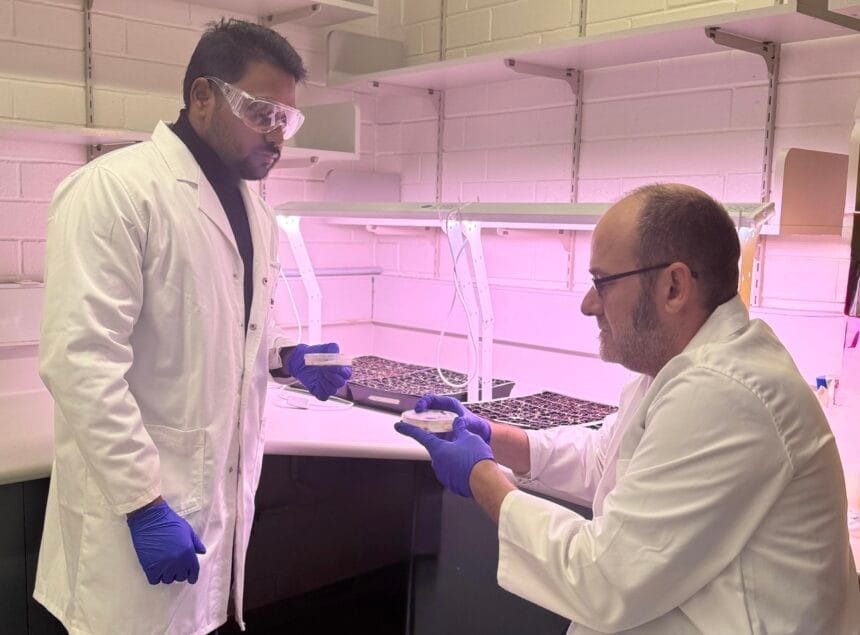
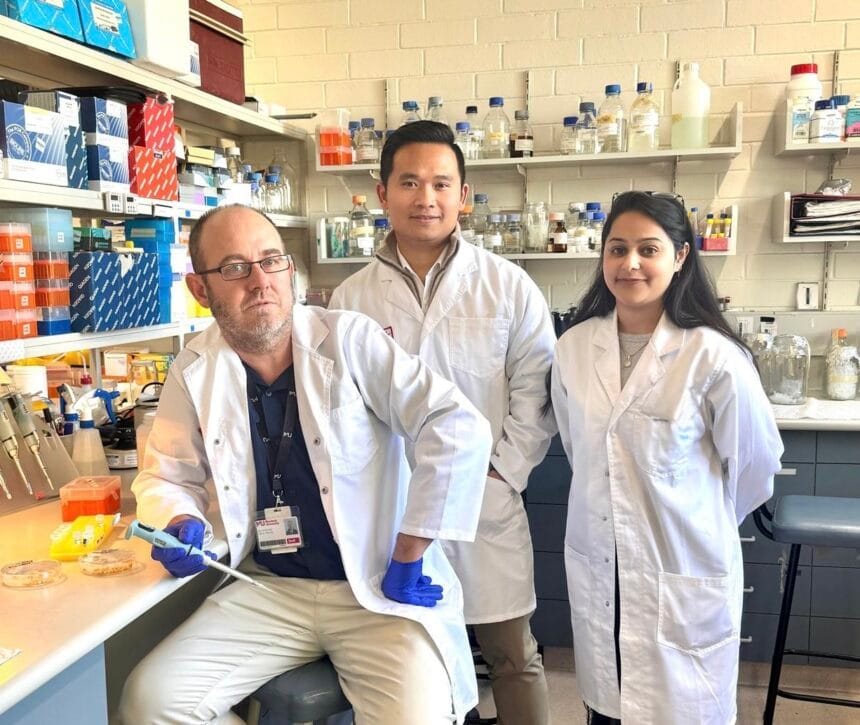
In his current role, Prof Whitford leads a team of postdoctoral researchers, technical staff, and postgraduate students, mentoring them while coordinating complex international research collaborations.
“We typically come together to discuss research progress, identify challenges, and then find solutions to any pressing problems, tapping into my extensive experience in genetics and genomics,” he said.
Much of his work takes place across time zones, connecting with colleagues and startups from the USA to Europe, China, and New Zealand.
He also contributes to the wider scientific community through grant reviews and editorial responsibilities for international journals.
“This keeps me abreast of the latest developments both nationally and internationally,” Prof Whitford said.
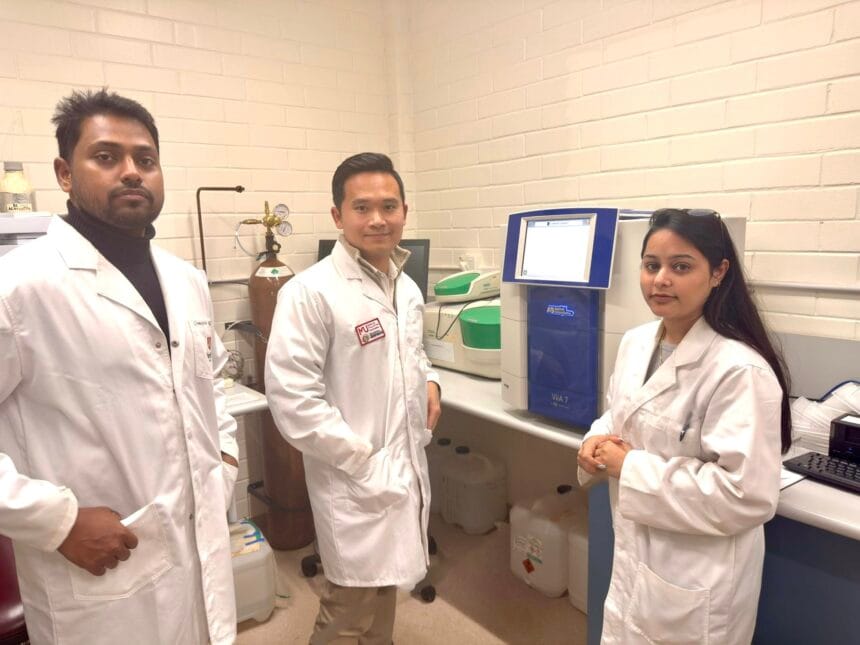
Prof Whitford’s main area of research is wheat hybrid technologies, which has become an increasingly important focus in global crop breeding.
“This is where crossing genetically distinct line varieties is used to exploit hybrid vigour in the resulting seed, like what’s used to improve canola, rice, and corn yields,” he said.
Global trials have shown yield increases of 10 to 15 per cent from wheat hybrids, with the added benefit of greater yield stability under environmental stress.
However, challenges in seed production, especially due to wheat’s self-pollinating nature, have limited wider adoption.
His work seeks to overcome these barriers.
“My research aims to overcome this bottleneck by developing wheats better adapted to cross-pollination whilst also improving resilience to environmental stressors like frost, heat, and drought,” Prof Whitford said.
Making a global and local impact
Whether improving hybrid breeding or developing traditional line varieties, reproductive biology is central to achieving yield gains, and Prof Whitford believes WA growers stand to benefit directly from advances in this space.
“Understanding how flowers respond to the environment is fundamental to identifying and selecting the very best genetics needed to breed varieties of the future,” he said.
“In wheat, for example, understanding how flowers respond to changes in temperature and water status will help select genetics better suited to local environmental stressors like frost, heat, and drought.”
Using genomics, he aims to fast-track the breeding of high-yielding, climate-resilient varieties adapted to Western Australian conditions.
Of all his achievements, Prof Whitford is most proud of a breakthrough that illustrates the power of team science.
“My proudest accomplishment so far has been successfully leading a team of super talented researchers to the quintessential eureka moment, whereby we were the first to discover a key wheat gene sequence required for the development of a cutting-edge hybrid breeding technology,” he said.
That discovery has since catalysed an international public-private alliance working to deliver transformational gains in wheat productivity.
Prof Whitford encourages aspiring agricultural scientists to engage deeply with industry to ensure their research has real-world impact.
“My advice for students and early-career scientists is to take the time to engage and listen to industry representatives, and focus your training on finding solutions to their pressing problems,” he said.
“Having strong industry relationships is a sure-fire way to ensure a successful scientific career in agriculture, and to see your research findings have real-world impact.”
Now back home in Western Australia, Prof Whitford is enjoying reconnecting with the local grower community, and bringing the power of global science back to the paddock.
“It gives me the opportunity to explain how our cutting-edge science is developing crop varieties of the future,” he said.
From a childhood on a WA farm to leading international research initiatives, his journey reflects both the depth of his scientific expertise and his enduring commitment to improving agriculture.
With a focus on translating advanced genetics into real-world outcomes, Prof Whitford is not only helping to future-proof wheat production but also inspiring the next generation of agricultural scientists to think big, collaborate widely, and stay grounded in the needs of growers.

Through the WA Agricultural Scientist Spotlight series, WAARC celebrates the contributions of researchers like Ryan Whitford, whose work exemplifies the dedication and innovation needed to advance agricultural science in Western Australia.
By sharing their stories, the series aims to inspire a new generation to pursue careers in this vital field, ensuring the State remains at the forefront of agricultural research and sustainability.