This website may not work correctly in Internet Explorer. We recommend switching to a more secure modern web browser such as Microsoft Edge which is already installed on your computer.
Agrivoltaics: Integrating Profitable Agricultural Production and Renewable Energy Generation brings together leading researchers, growers and energy experts from across Australia to explore the co-location of solar panels and agricultural production – known as agrivoltaics.
The research team is evaluating how solar panels can improve farm conditions by identifying the best setups for crops and pastures, as well as modelling how to boost food and energy production.
Collaborators
Project leads
The Agrivoltaics project is led by Dr Caitlin Moore from The University of Western Australia and Neil Canby from Sunrise Energy Group.
They are supported by a multidisciplinary team with expertise in climatology, agronomy, economics, engineering and outreach from The University of Western Australia, Grower Group Alliance, Curtin University, the WA Agricultural Research Collaboration, Sunrise Energy Group, University of Melbourne, Australian National University and Agriculture Victoria.
Timeline
This 3.5-year project will continue through to 2028, allowing time for data collection, modelling, trials and outreach activities across multiple sites and regions.
Investment
The Zero Net Emissions Agriculture CRC (ZNE-Ag CRC) will invest about $3.2 million nationally, over the life of the project. ZNE-Ag CRC is funded by the Australian Government through the Cooperative Research Centres (CRC) Program and the contribution of partners. WAARC is contributing more than $388,000 to support the Western Australian component of this research initiative.
Background
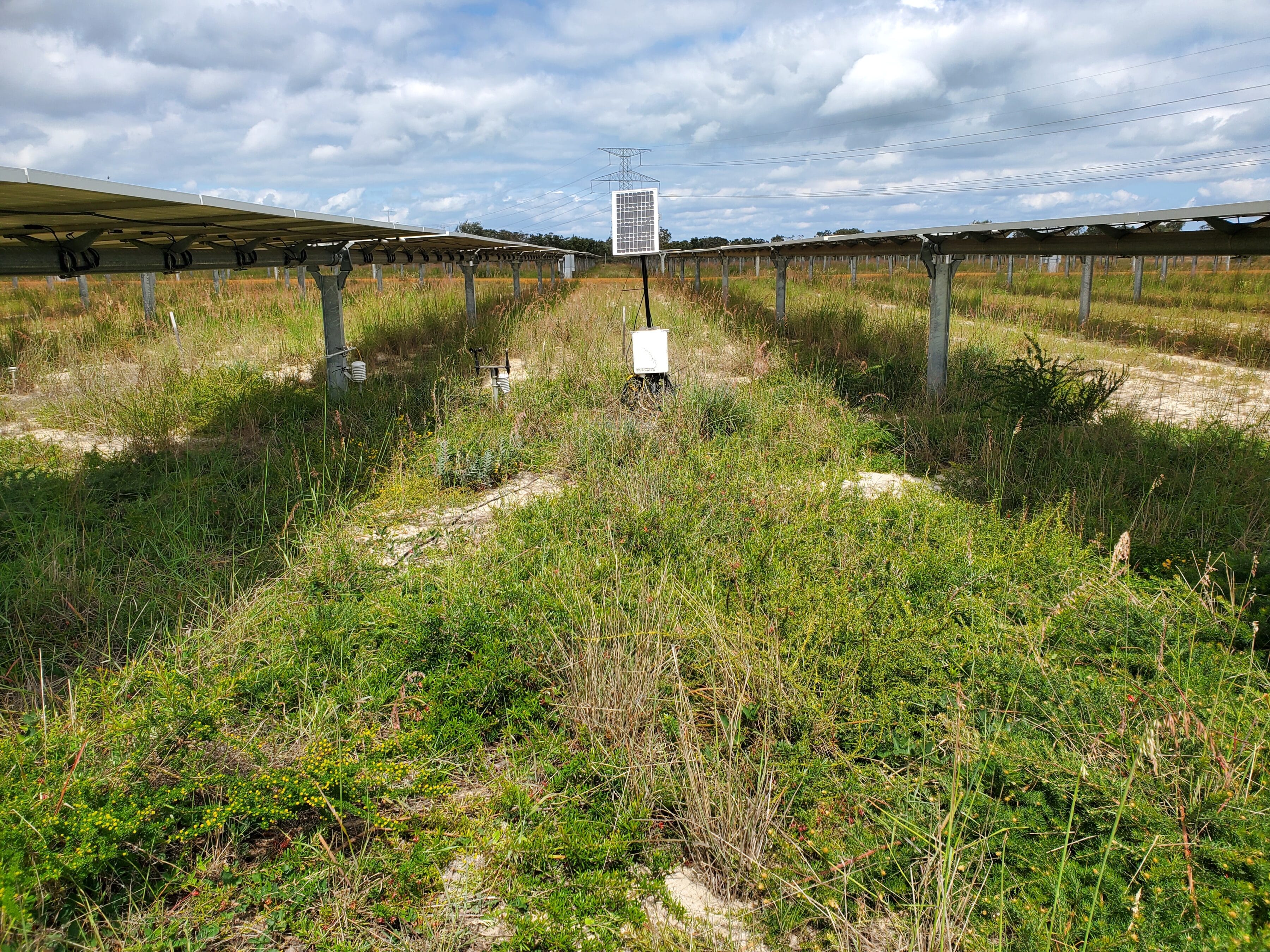
Solar panels provide shade for livestock and crops, reduce evaporation from soil and water as well as transpiration from plants, and they can also improve pasture production.
Beyond these practical benefits, the integration of agrivoltaics can also support dual income streams for farmers from their land, supporting economic growth and greenhouse gas mitigation.
Agrivoltaics offers a transformative solution to decarbonise agriculture by powering electric machinery, irrigation and cool storage with renewable energy. The project addresses concerns about land competition, by demonstrating the feasibility of co-locating solar energy and food production in Australian conditions.
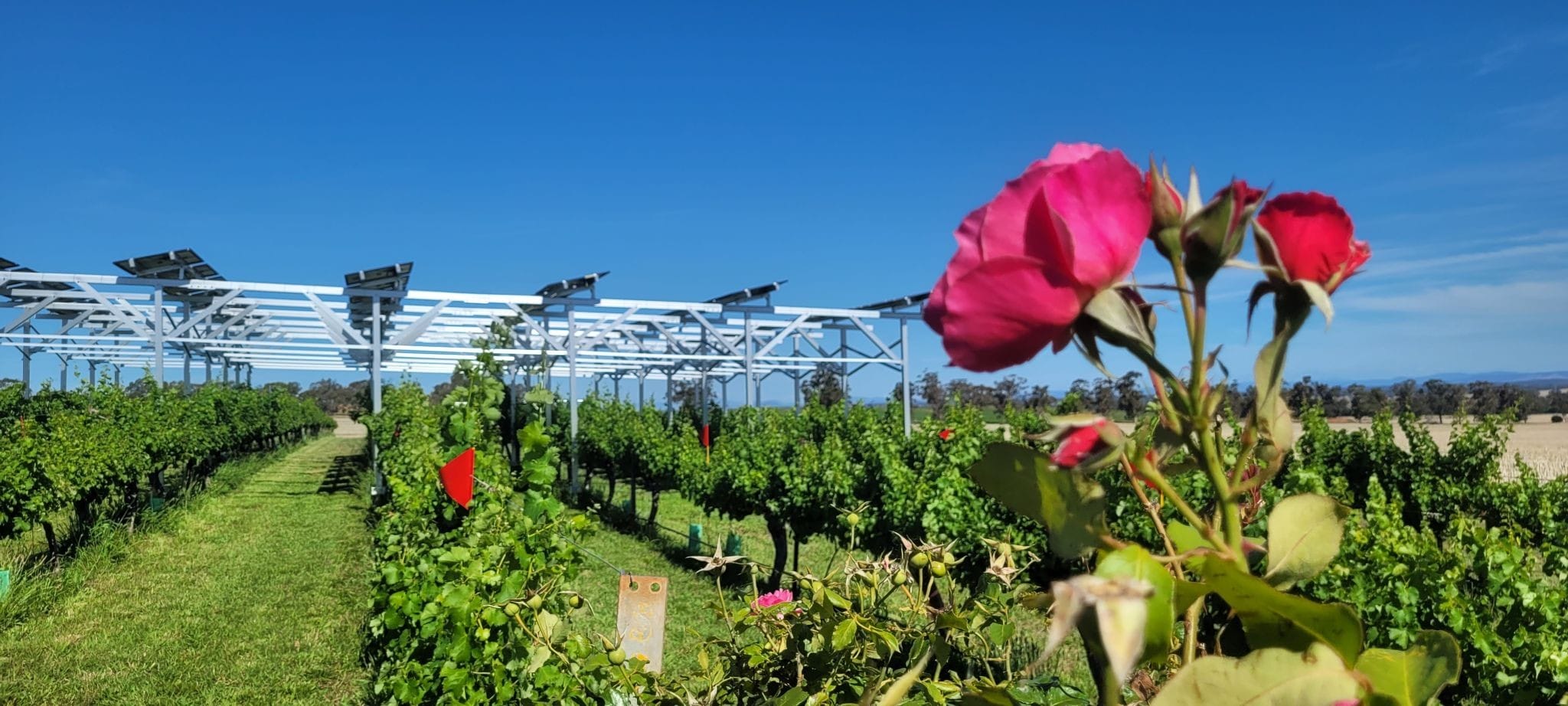
Utilising the AgriFutures funded agrivoltaics demonstration site in Victoria, this site will showcase how solar panels can be successfully integrated into an existing vineyard, thereby reducing on-farm emissions, generating energy, and maintaining grapevine productivity – all on the same land.
Objective
By integrating renewable energy into productive agricultural systems, the Agrivoltaics project will:
Help reduce on-farm emissions
Enhance food and energy security for regional communities
Support the transition to net zero farming.
The project objectives are twofold: to study how land under existing solar farm installations can be used for agricultural production, as well as how solar production can be integrated into existing farming operations to help lower emissions without compromising on profit.
Key project outcomes
Evaluate the impacts of solar panels on microclimatic conditions in Australian farming systems
Identify optimal agrivoltaics configurations for horticulture, viticulture and pastures
Perform techno-economic-environmental modelling to co-optimise food production, energy generation and emissions reduction
Conduct cost-benefit analyses across Australian regions and develop education and outreach materials to support adoption.
From concept to practice
This project is designed to move agrivoltaics from concept to practice, by embedding research directly into commercial farming systems across Australia.
By partnering with grower groups and Drought Hubs, the Agrivoltaics project will ensure innovations are co-designed with farmers and tested in conditions they know – building confidence and capability for change.
Field trials at a solar farm and other farms in Western Australia and Victoria will test how crops and pastures perform under solar panels, generating real-world data. These sites will showcase how agrivoltaics can reduce emissions, generate energy and maintain productivity – all on the same land.
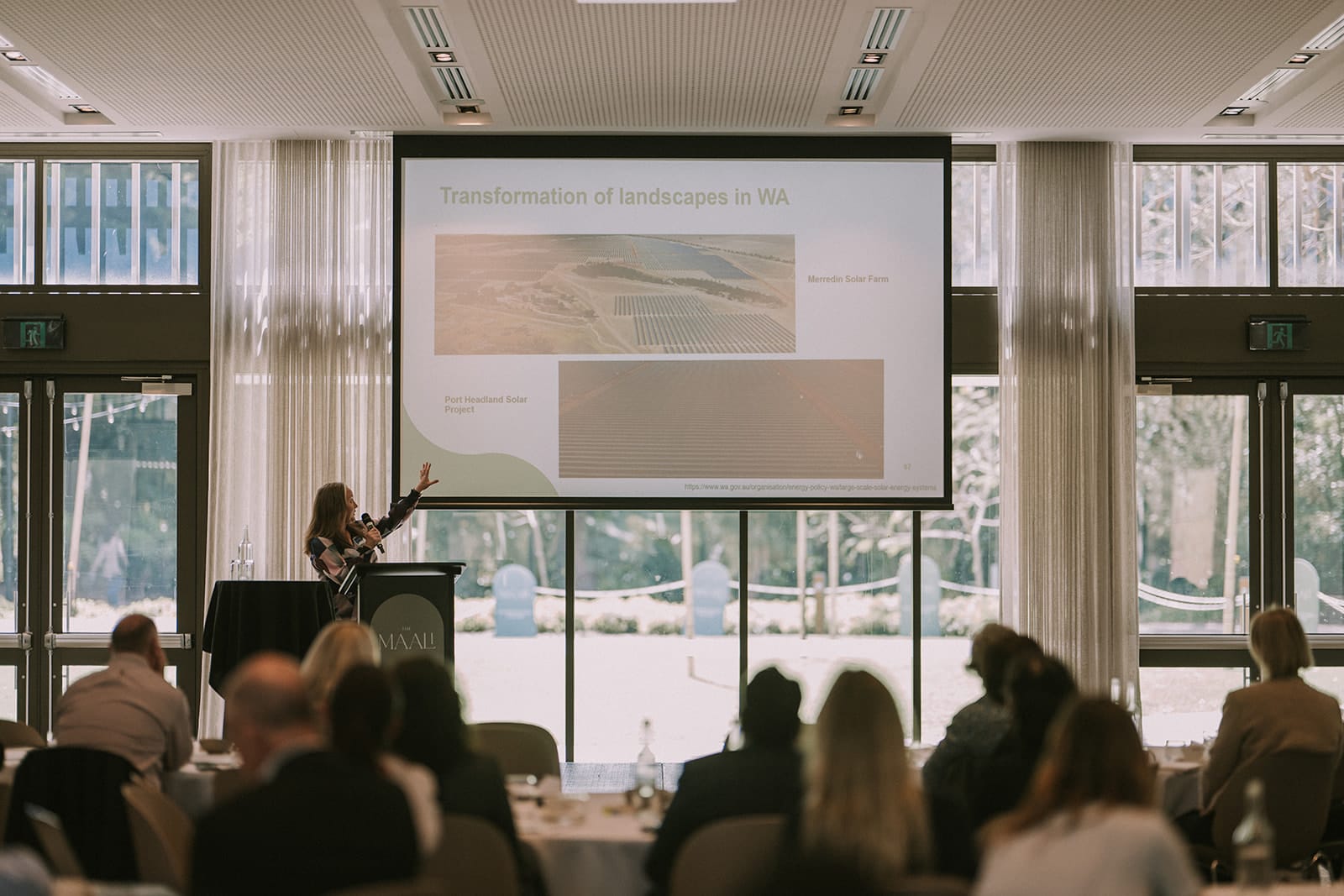
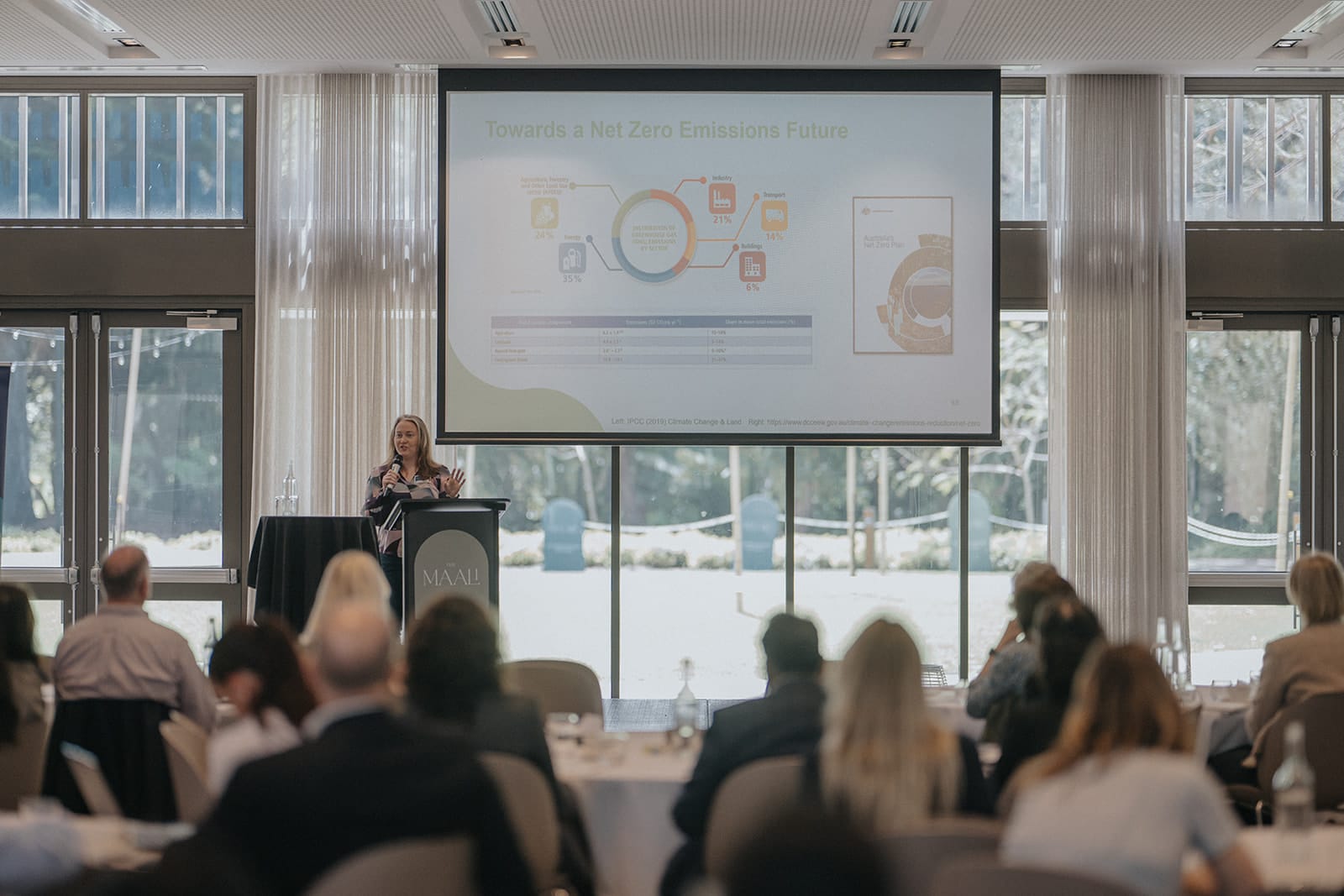
Dr Caitlin Moore (The University of Western Australia) provides an overview of the Agrivoltaics project at the WAARC Showcase 2025 in Perth.
Capacity building
Three PhD scholarship students will be supported and trained throughout the project, providing a unique opportunity for them to explore how solar panels and agriculture can work together to create sustainable, profitable farming systems while contributing to Australia’s transition to net zero emissions.
They will join WAARC’s student cohort, becoming part of a professional development program designed to build their knowledge, skills, networks and hands-on experience in agricultural research and development.
Scholarship student 1 (The University of Western Australia): Focused on microclimatic and techno-environmental modelling. This student will be involved in developing predictive models using ecohydrological and computational approaches to optimise agrivoltaics system design for energy, productivity and emissions reduction.
Scholarship student 2 (The University of Western Australia): Focused on agronomy and crop ecophysiology. This student will explore how solar panels affect crop performance across pasture, vegetable and orchard systems through field trials and physiological assessments.
Scholarship student 3 (The University of Western Australia): Focused on economic evaluation. This student will look at evaluating the benefits and costs to farmers in implementing solar energy production in their farming enterprise, as well as farmer and community perceptions towards adopting renewable energy production in the sector.
A post-doctoral researcher will also be supported to investigate how agrivoltaics can be integrated with profitable production systems, enabling farmers to lower emissions while generating multiple value streams.